
Quick answer: what is cbiri?
Cbiri has no single, settled meaning — and that is the most important thing to know about it. Depending on where you meet the word, it can mean a traditional Turkish strategy board game, a slow-cooked meat dish shared at family tables, or the Center for Biomedical Informatics Research and Innovation (CBIRI), a real research centre run by the University of Nebraska system in the United States. A fourth, vaguer use presents it as a philosophy of balance and harmony, but that version comes with no sources at all. If a page tells you it is definitely one thing and one thing only, it is oversimplifying. The honest picture is a word with several lives, only some of them well documented.
This guide separates those lives, checks what each claim actually rests on, and explains what you can safely say about each one. Like our look at Uncuymaza, where several online definitions turned out to rest on very thin evidence, the story here is less about one hidden truth and more about learning to spot which version of a word is real, which is reconstructed, and which is invented.
The three lives of cbiri at a glance
| Version | What it is said to be | How solid is the evidence? |
|---|---|---|
| The board game | A two-player Turkish strategy game, compared to chess and checkers | Weak to moderate: described on several culture blogs, but no standard rulebook or academic source |
| The dish | A slow-cooked lamb or beef dish served with rice or bread | Weak: described in general terms only, with no fixed recipe or named regional source |
| The research centre (CBIRI) | University of Nebraska Center for Biomedical Informatics Research and Innovation | Strong: documented by the University of Nebraska at Omaha and its own site |
| The philosophy | A way of living in balance, harmony and presence | None offered: poetic claims with no text, scholar or tradition cited |
Keep this table in mind as you read. It is the difference between repeating what the internet says and understanding what is actually known.
Is cbiri a real word?
That depends on what you mean by “real”. The letters C-B-I-R-I are certainly real as an acronym: the Nebraska research centre uses them officially, and its own pages spell the name out in full. The spelling with a cedilla, çbiri, appears on culture and lifestyle blogs as a Turkish-flavoured word, sometimes also written çebiri. But no major Turkish dictionary entry, academic paper or ethnographic study is cited by any of the pages that use it that way, and the pages themselves disagree with each other about basics such as the board layout, the number of pieces and even whether the dish is a specific recipe or a general style of cooking.
That pattern — confident detail, zero citations — is a familiar warning sign online. It does not prove the cultural uses are invented; folk games and home dishes often live in oral tradition long before anyone writes them down. But it does mean you should treat the game and the dish as reported traditions, not established facts, and be suspicious of any page that states their ancient history as certain. The research centre, by contrast, can be checked in minutes, and it checks out.
Cbiri as a traditional strategy board game
According to the blogs that describe it, the game is played by two people on a square board, often imagined as an 8×8 grid like a chessboard. Each player controls a set of pieces, sometimes described as warriors or tribal tokens, and the aim is to capture all of the opponent’s pieces or to block them so they have no legal move left. Movement is described as a blend of chess and checkers: simple pieces move one square at a time, in some versions forward, sideways or diagonally, and captures are often made by jumping over an opponent’s piece, sometimes in chains.
Its supposed origins are traced to the nomadic Turkic tribes of Central Asia, where it is said to have taught foresight, patience and tactical planning to young tribespeople before travelling with settled communities into Anatolia. That is a plausible-sounding story, and it fits a real pattern — many peoples do carry strategy games with them — but plausibility is not proof. At least one of the pages describing the game is honest about this: it lists “limited historical documentation” and “lack of academic recognition” as open problems, noting that much of the origin story rests on oral tradition and modern reconstruction rather than archaeological or textual sources.
What the game is said to teach
- Strategic planning: thinking several moves ahead instead of reacting move by move.
- Piece economy: knowing when a capture is worth the piece you give up for it.
- Blocking and position: winning not only by taking pieces but by leaving the opponent with nowhere to go.
- Patience and respect: the slow, social pace of play in tea houses and family gatherings.
The social setting matters as much as the rules in these accounts. The game is described as something played in tea houses, village squares and living rooms, with onlookers watching quietly, commenting softly and sharing tea. Whether or not the ancient history holds up, that social picture is recognisable: it is how countless traditional games — from backgammon in Turkish coffee houses to chess in parks — are actually played today. If you want to try the game as described, treat the common version as a starting point and agree the details with your opponent first: board size, piece count, movement directions and whether chained jumps are allowed. Because there is no canonical rulebook, the house rules are the rules.
Where the game pages fall short
The main weakness of the game pages is that they repeat each other. One page’s “8×8 board” becomes the next page’s fact, and a comparison to chess and backgammon stands in for an actual description of play. None gives a complete, playable rule set you could follow without guessing: piece numbers, starting positions and promotion rules are left vague or contradictory. None names a player, a club, a tournament or a book where the game can be verified. A genuinely useful guide would do those things, or admit it cannot. That gap is exactly what this article is trying not to repeat.
Cbiri as a traditional dish
The second cultural meaning is a dish: a rich, slow-cooked meat meal, usually lamb or beef, cooked with onions, garlic and regional spices until it falls apart into a thick, savoury sauce, then served with rice or flatbread and shared from the centre of the table. It is described as food for special days — family visits, celebrations, cold evenings — where the cooking itself is part of the occasion and the meal stretches into long conversation.
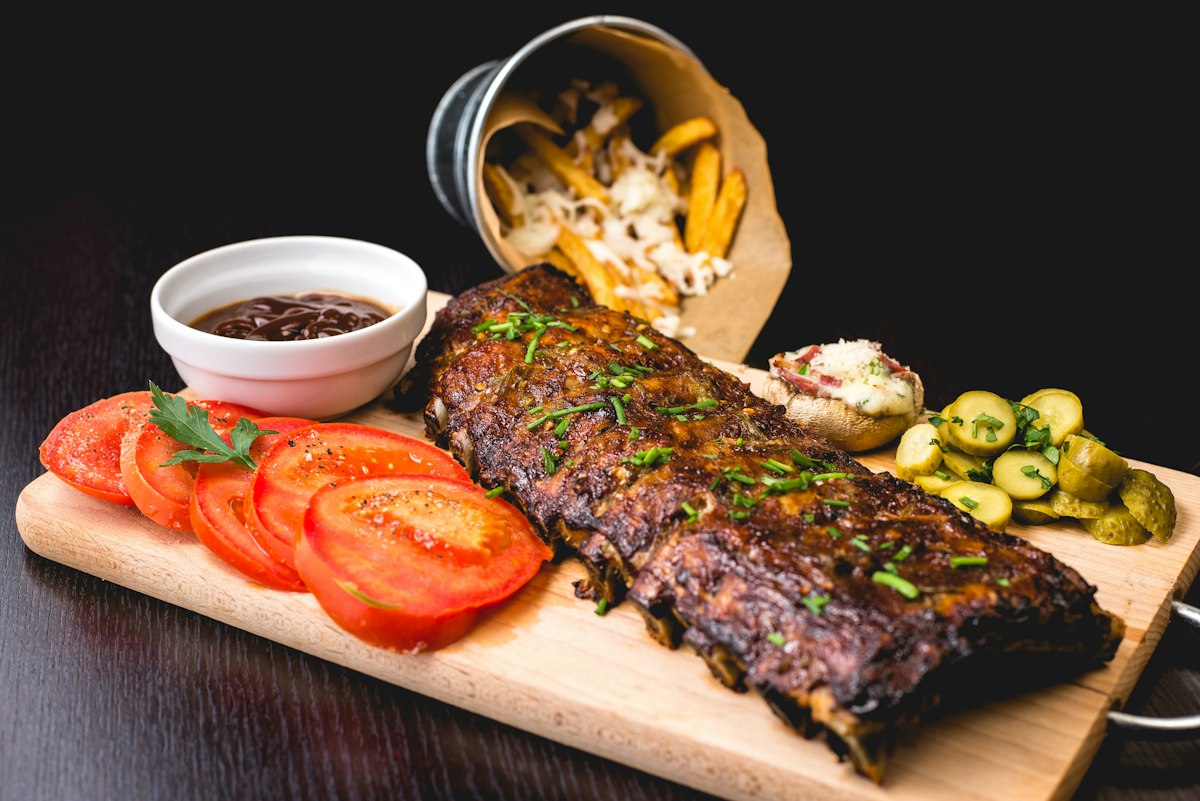
As with the game, the honest caveat applies: no page gives a measured recipe, a named region of origin or a source you could cook from with confidence. The ingredients listed are generic to dozens of slow-cooked meat dishes across Turkey and Central Asia, and the dish’s identity dissolves a little the closer you look. That does not make it worthless as a cooking idea — slow-cooked lamb with onions, garlic and warm spices, served with rice or bread, is a sound and delicious template — but it does mean you should not quote it as a documented traditional recipe. If you cook “it”, you are really cooking your own version of a described style, and there is nothing wrong with saying so.
How to cook in the spirit of the dish
- Choose the cut, not the label: a slow-cooking cut such as lamb shoulder or beef chuck, cooked low and long, matters more than any claimed authentic name.
- Brown first, then braise: sear the meat, soften onions and garlic, add spices, then cook covered on low heat until tender.
- Keep the sauce thick: the dish is described as rich and savoury, not soupy — reduce the liquid at the end if needed.
- Serve it shared: rice or flatbread, fresh herbs and simple sides, placed in the centre of the table.
- Give it time: the one consistent claim across the pages is that this is slow food, and rushing it defeats the point.
The same caution that applies to the game applies here: the “game and dish share one word, therefore one spirit” argument made by some pages is poetry, not evidence. Patience and togetherness are admirable themes, but they do not prove a historical connection between a board game and a stew. Enjoy both ideas on their own merits instead.
CBIRI: the research centre you can actually verify
Here the ground firms up completely. The Center for Biomedical Informatics Research and Innovation — CBIRI — is a University of Nebraska centre formally approved by the university’s Board of Regents and launched in 2021, linking researchers across the university system’s campuses. It is co-directed from the University of Nebraska at Omaha and the University of Nebraska Medical Center, and its stated purpose is to connect faculty with biomedical informatics expertise: the use of computing and data analysis in biology, medicine and health care.

Its work covers bioinformatics, clinical informatics and public health informatics — in plain terms, making sense of genetic data, medical records and population health data so that research moves faster. The university’s own reporting gives concrete examples of the ambition: tracking and predicting the spread of viruses, designing cancer treatment plans around a patient’s genetic makeup, and detecting diseases such as Alzheimer’s from medical imaging years earlier than symptoms appear. Those are goals and research directions, not promises of cures, and it is worth keeping that distinction. The centre also organises events such as the Great Plains Bioinformatics Conference, bringing researchers together across the region.
Why does this matter for someone searching the word? Because if you arrived at “cbiri” looking for the centre — a student, a researcher, a collaborator — the cultural blog posts are noise, and if you arrived looking for the game or the dish, the university pages are a different subject entirely. Search engines mix them because the letters match, not because the meanings are related. Knowing which one you want saves you from citing a board game blog in a research email, or quoting a university press release as evidence for a folk tradition.
Do not confuse it with CBir1
One more lookalike is worth a warning. In Crohn’s disease research, “CBir1” (usually written with a lowercase “ir” and a “1”) refers to a bacterial flagellin antigen used in antibody testing, and it appears in patent and medical literature about diagnosis. It is a different term, a different field and a different spelling convention from both the game and the Nebraska centre, and conflating them is an easy mistake when search results are skimmed rather than read.
The “philosophy of balance” version — and why to be sceptical
Several lifestyle pages present the word as a philosophy: a state of intentional presence, harmony between people and the earth, the “breath of balance”, honoured in ancient ceremonies through music, dance and storytelling. The writing is often beautiful. It is also entirely unsourced. No ancient text is named, no scholar is quoted, no community is identified as practising it, and the same pages that claim centuries of history offer no way to check a single detail. That is the signature of content written to rank for a keyword rather than to inform: warm, general, unverifiable.
There is a useful lesson here that runs through many of these obscure-word articles. When a word has no dictionary entry and no documented history, the internet fills the vacuum with confident prose, and each new page copies the last until the invention looks like a tradition. The same pattern showed up in our earlier article on Simbramento, where several competing meanings each lacked a source. The defence is simple and worth practising: ask “says who?” and see whether an answer exists. For the Nebraska centre, it does. For the philosophy, it does not.
What is verified, what is reported, what is unproven
| Claim | Status | Why |
|---|---|---|
| CBIRI is a University of Nebraska research centre | Verified | University announcements and the centre’s own pages confirm it |
| A two-player strategy game is played under this name | Reported, not verified | Described on multiple blogs, but no rulebook, club or study cited |
| A slow-cooked meat dish carries this name | Reported, not verified | Described only in general terms, with no fixed recipe or region |
| The game dates to ancient nomadic Turkic tribes | Unproven | Even the friendliest page admits documentation is lacking |
| The word names an ancient philosophy of balance | Unproven | No text, scholar or community cited anywhere |
| The game and dish are historically one tradition | Unproven | A poetic link, offered without evidence |
How to use the word without misleading anyone
- Searching for the centre? Add “Nebraska”, “biomedical informatics” or “UNO” to your search, and use the full name on first mention.
- Writing about the game? Say it is “described in online accounts as” a traditional game, and note that rules vary — do not present one blog’s version as the official rules.
- Cooking the dish? Present it as a slow-cooked lamb or beef dish in the described style, with your own measurements, rather than as a documented heritage recipe.
- Quoting the philosophy? Attribute it honestly (“lifestyle blogs describe it as…”) or leave it out; unattributed, it reads as fact.
- Seeing a new “ancient word” article? Check for a single named source before sharing it. If there is none, treat the whole piece as entertainment.
This habit — separating what is documented from what is merely repeated — is also the practical takeaway from trickier topics we have covered before, from the hidden hazards in Asbestlint to the many claimed meanings of obscure terms: the claim that sounds best is rarely the claim with the best evidence, and the evidence is what deserves your trust.
Verdict
Cbiri is best understood as three separate things sharing similar letters, not one thing with a secret history. The research centre is real and checkable. The board game and the dish are appealing traditions as described online, but their history is unproven and their details vary from page to page — enjoy them as living, flexible customs, not as documented antiquities. The philosophy version should be treated as modern lifestyle writing until someone produces a source for it. If you remember only one sentence from this article, make it this: ask which cbiri someone means before you believe anything about it.
Frequently asked questions
Is cbiri a game or a food?
Online accounts use it for both: a two-player strategy board game and a slow-cooked meat dish. The meaning depends on context, and neither version has a single official rule set or recipe.
Is cbiri a real Turkish word?
It appears as çbiri or çebiri on culture blogs describing Turkish and Central Asian traditions, but no dictionary entry or academic source is cited for that use. The acronym CBIRI is definitely real as the name of a Nebraska research centre.
What is CBIRI at the University of Nebraska?
The Center for Biomedical Informatics Research and Innovation, approved in 2021, which connects researchers across University of Nebraska campuses working on bioinformatics, clinical informatics and public health informatics.
How is the cbiri board game played?
As commonly described, two players move pieces on a square board, capturing by jumping over opponents’ pieces, and win by capturing all enemy pieces or blocking all their moves. Exact rules vary because there is no canonical rulebook, so players should agree house rules first.
What is in the cbiri dish?
As described, slow-cooked lamb or beef with onions, garlic and regional spices, cooked until tender in a thick savoury sauce and served with rice or flatbread. No fixed, sourced recipe exists.
Is cbiri an ancient philosophy?
There is no evidence offered for that claim. Lifestyle pages describe it as a philosophy of balance and presence, but they cite no text, scholar or tradition, so it should be treated as modern writing, not history.
What is the difference between cbiri and CBir1?
CBir1 is a bacterial flagellin antigen studied in Crohn’s disease research — a medical term unrelated to the game, the dish or the Nebraska centre, despite the similar letters.



2 Comments