

Pravi Celer: True Celery, Explained Without the Hype
Quick answer: Pravi celer means “true celery” in Bosnian, Croatian and Serbian. In practice it refers to ordinary celery — Apium graveolens — used as a whole plant: crisp stalks, aromatic leaves, knobby celeriac root and pungent seeds. It is not a new superfood, a separate species or a branded product, and the same name is also used by an unrelated luxury lifestyle magazine.
In this guide: what the phrase literally means, why different websites define it differently, how the stalk, leaf, root and seed compare, what the nutrition figures actually say, how to cook and store every part, who should be cautious, and how to tell a genuine claim about it from marketing hype. Use this pravi celer guide whenever you meet the phrase in a recipe, a shop or a search result.
- The translation is settled; the variety is not. “True celery” is a quality and authenticity label, not a botanical rank.
- Use the whole plant. Stalks give crunch, leaves give aroma, root gives body, seeds give concentrated flavour.
- Nutrition is modest and real. Raw stalks are about 95% water, very low in calories and a useful source of vitamin K, folate and potassium — not a medicine.
- Juice is not the same as eating it. Juice keeps hydration and some compounds but drops most of the fibre.
- Check the context. If the page is about watches, yachts or spot treatments, you have found the magazine, not the vegetable.

What Pravi Celer Means in Plain Language
Break the phrase into its two parts and most of the mystery disappears. In the South Slavic languages where the phrase is used — most often Bosnian, Croatian and Serbian — pravi means true, real or authentic, and celer means celery. Put together, the phrase is a claim about authenticity: this is the real thing, not a pale imitation, not a watered-down version, and not a processed substitute.
In short, pravi celer is a descriptive phrase, not a botanical classification. You will not find it as a separate species in a plant catalogue, and a search that redirects to the general celery article is telling you something important: the plant underneath the phrase is the familiar celery plant, Apium graveolens, a member of the Apiaceae family that also includes parsley, carrot, dill and fennel. What changes from writer to writer is which part of that plant they have in mind — and that is where the confusion on the internet comes from.
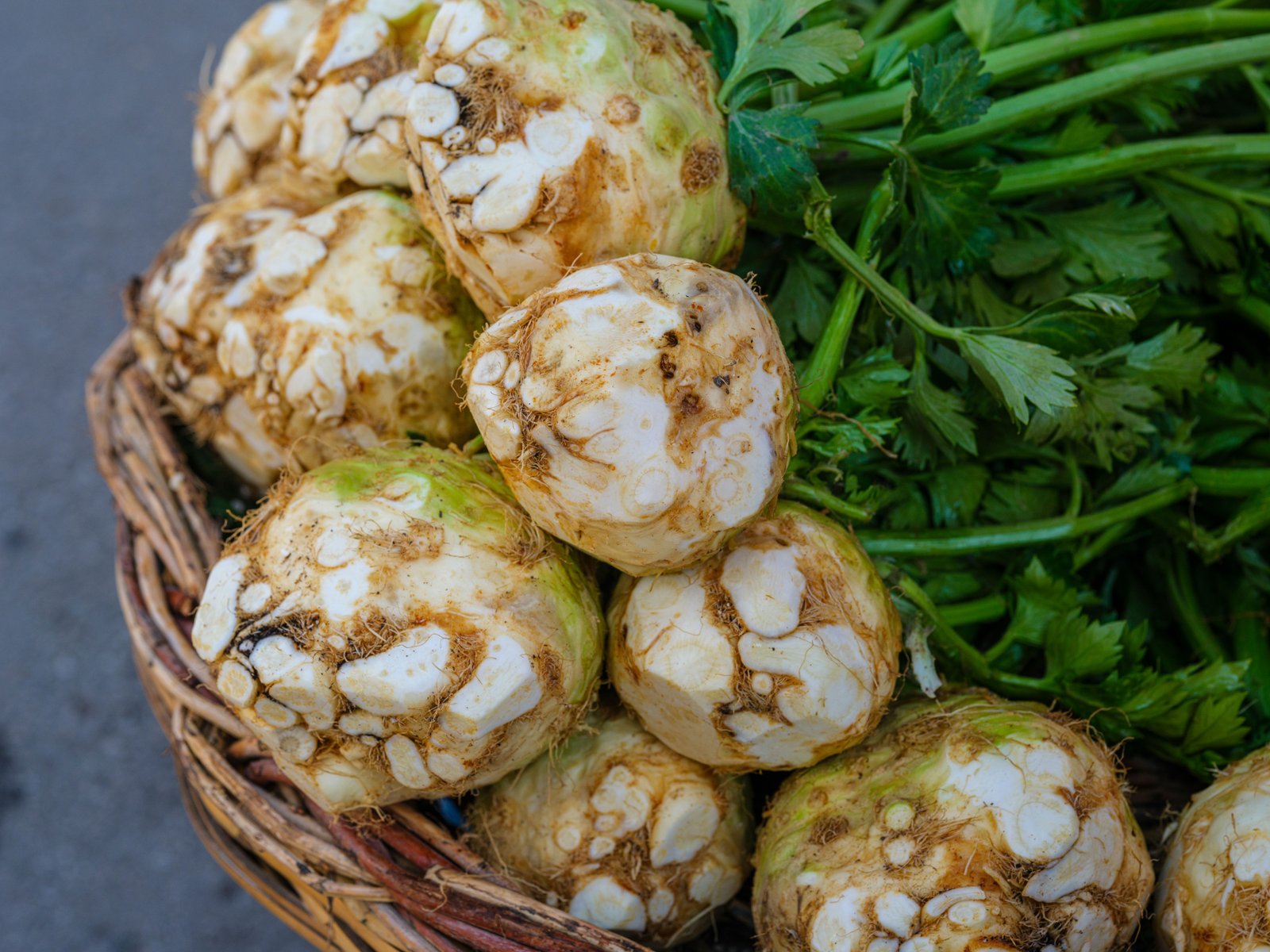
Some writers use the phrase for the green stalks in the supermarket, the variety botanists call var. dulce. Others use it for celeriac, the bulbous root variety called var. rapaceum, which is a staple of Central and Eastern European soups and mashes. Still others use it for the whole plant at once, in the older Balkan kitchen tradition where stalks, leaves, root and seeds all had a job and almost nothing was thrown away. All three uses are understandable, because all three describe the same species grown and harvested for a different part. None of them, on its own, is the whole story.
That whole-plant reading is the most useful one for a home cook. If you buy a head of celery and throw away the leaves, you have discarded the most aromatic part. If you buy celeriac and treat it as a different vegetable altogether, you miss that it is celery in root form: earthier, denser and starchier, but unmistakably celery in flavour. And if you ignore the seeds, you miss the concentrated, warm, slightly bitter note that gives celery salt and many pickling blends their character. The word “true” in this tradition does not mean rare or exotic. It means complete: use the plant, not just the photogenic stalks.
It is also worth saying plainly what the phrase does not mean. It does not describe a genetically distinct super-vegetable, a patented variety, or a supplement with its own clinical trials. Websites that present it that way are usually recycling the same handful of general celery claims — hydration, fibre, antioxidants — and dressing them in a more exotic name. The vegetable underneath is ordinary, affordable and widely available, and that ordinariness is arguably its strength. You do not need a special supplier to eat it; you need to know which part to reach for and what to do with it.
We take the same untangle-first approach in our Buffalo bore ammo guide, where a single unfamiliar name also turns out to hide several different meanings that need separating before any advice makes sense.
The Other Pravi Celer: A Luxury Magazine
There is a second, entirely separate use of the name that explains some confusing search results. The magazine called Pravi Celer, at praviceler.com, is a modern luxury lifestyle publication founded by Sam Sami, with Ayesha Mansha named as co-founder and content strategist in its launch coverage. Its editorial areas, as described in September 2026 press releases, are luxury travel, hotels and resorts, cars and yachts, fashion and style, designer brands, interiors, fine dining, watches and jewellery, wellness and premium experiences. Its beauty coverage includes product-first buying guides that rank products by need and say plainly who should skip them.
This matters for readers because the two meanings now share the same search results. A page ranking “best spot treatments for pimples” or “luxury train journeys” under this name is the magazine, not a food article, and its advice has nothing to do with celery nutrition. Conversely, a recipe or nutrition page using the phrase is almost certainly using the South Slavic food meaning. The quickest check is the subject matter on the page itself: if it is about hotels, supercars or skincare, it is the publication; if it is about stalks, leaves, root or seeds, it is the vegetable. Neither use is “wrong” — they are homonyms, two different things that happen to share a name — but mixing them up is how a reader ends up expecting a vegetable to behave like a brand, or a magazine to offer cooking advice.
The magazine meaning also explains why the phrase has suddenly become more visible online. It is not that a new vegetable was discovered; it is that a new publication chose an evocative name, and a wave of food blogs at the same time began explaining the older food phrase to English-speaking readers. Both trends feed the same search term, which is why a single search can return a soup recipe, a wellness explainer and a luxury-travel guide side by side.
Why Competitors Disagree — and Why That Disagreement Is Useful
If you read five articles about this term, you will get at least three different definitions, and it is tempting to assume that four of them must be wrong. In this case, the disagreement is informative rather than simply sloppy. Each writer has picked the part of the plant that matters most in their own kitchen or tradition, and then presented that part as the definition. A writer focused on salads picks the stalk. A writer focused on Balkan winter cooking picks the root. A writer focused on folk tradition picks the whole plant. All three are describing real uses; the error is only in presenting a partial use as the complete definition.
There is a second source of disagreement: marketing language. “True”, “real” and “authentic” are powerful words, and they invite a story about a purer, older, more potent version of an everyday food. Some pages lean into that story, contrasting an idealised traditionally grown plant with “milder commercial versions bred mainly for pale, crisp stalks”. There may be real differences in flavour between varieties and growing methods — a freshly picked, strongly aromatic head does taste different from a bland, watery one — but that is a difference of variety, freshness and handling, not evidence of a separate species with separate nutrition. A careful reader should ask, whenever a page claims a unique benefit for this term, whether the same benefit would apply to ordinary celery or celeriac. In almost every case, it would.
A third source of confusion is translation. Food names travel badly. The same plant can be called celery in English, ajmood in Urdu (most often referring to the seeds or wild celery in South Asian herbal and culinary use), céleri in French, apio in Spanish and karafs in Arabic. Add regional spellings, transliterations and search-engine autocomplete, and a descriptive phrase in one language can easily look like a mysterious ingredient in another. That is why the most honest summary of the term is also the simplest: it is a familiar vegetable under a less familiar name, plus an unrelated magazine that borrowed the same words.
One Plant, Four Ingredients: Stalk, Leaf, Root and Seed
Understanding the four parts is the fastest way to cook well with this vegetable, because each part behaves differently in the pan and on the plate. The table below summarises the distinctions that every competitor touches on but none lays out this completely.
| Part | Botanical form | Flavour and texture | Best uses | Watch out for |
|---|---|---|---|---|
| Stalks | Stalk celery, var. dulce | Crisp, watery, mildly salty, grassy-aromatic | Raw snacks and salads; soups, stews and flavour bases; stir-fries | Goes limp and stringy if stored unwrapped or overcooked |
| Leaves | Leafy tops of stalk celery; also leaf celery, var. secalinum | More bitter, more aromatic and more concentrated than stalks | Herb-like garnish; blended into pesto and green sauces; stirred into soups at the end; herbal teas and broths | Can dominate a dish if used in stalk quantities — treat as a herb, not a bulk vegetable |
| Root (celeriac) | Celery root, var. rapaceum | Earthy, nutty, savoury; dense and starchy when cooked | Roasted wedges; mash or purée; grated raw in remoulade; hearty soups | Knobby skin needs thorough peeling; oxidises and browns once cut, so use acidulated water if holding it raw |
| Seeds | Dried fruit/seed of the plant | Warm, pungent, concentrated celery flavour | Pickling brines; coleslaw and vinaigrettes; dry rubs; celery salt (ground seeds with salt) | Very strong in small amounts; seed extracts are far more concentrated than the whole food and need extra caution (see Safety) |
Two practical consequences follow. First, shopping by part matters more than shopping by name: ask for “celeriac” if you want the root, “leaf celery” if you want a leafy herb type, and ordinary stalk celery if you want crunch. Second, waste drops sharply once you treat the plant as four ingredients. Leaves that would have been discarded become the garnish, trimmings become stock, and the root becomes a second meal rather than a curiosity. That zero-waste habit is the oldest and most practical part of the whole-plant tradition, and it survives in modern kitchens for a simple reason: it saves money and improves flavour.
Nutrition: What the Figures Actually Say
Raw stalk celery is, by any measure, a light vegetable. The figures most often cited for it — and the ones consistent with United States Department of Agriculture (USDA) food-composition data as republished by nutrition databases — are roughly 14 to 16 calories per 100 grams, about 95% water, around 1.6 grams of dietary fibre, about 260 milligrams of potassium, about 80 milligrams of sodium, about 3.1 milligrams of vitamin C and about 29 micrograms of vitamin K per 100 grams, with smaller amounts of folate, calcium and magnesium. Vitamin K is the standout nutrient: a 100-gram serving provides roughly a quarter to a third of the adult daily value, which is why celery is often mentioned for bone health and normal blood clotting. Folate supports cell growth, and potassium helps balance fluids and supports normal blood pressure as part of an overall diet.
| Nutrient (per 100 g raw stalks) | Amount | Why it matters |
|---|---|---|
| Energy | 14–16 kcal | Very low energy density; useful volume without many calories |
| Water | About 95% | Contributes to daily fluid intake; explains the crisp, juicy bite |
| Dietary fibre | About 1.6 g | Supports regularity and fullness; far less than beans or whole grains |
| Vitamin K | About 29 µg | Needed for blood clotting and bone metabolism |
| Potassium | About 260 mg | Helps balance sodium and supports normal blood pressure in a balanced diet |
| Vitamin C | About 3.1 mg | Modest antioxidant contribution; leaves contain considerably more |
| Sodium | About 80 mg | Higher than many vegetables, but modest in whole-stalk form; celery salt is a different matter |
Three cautions keep these figures honest. First, they describe raw stalks, not the whole plant: celeriac root is starchier and more energy-dense than stalks, and leaves are more concentrated in several vitamins, so a single “nutrition of pravi celer” number that pretends all parts are identical is misleading. Competitor tables that give separate stalk, root and leaf figures are directionally right — root higher in carbohydrate, leaves richer in vitamin K and vitamin C — but their exact leaf and root numbers vary between sources and should be treated as indicative, not as USDA-verified to the decimal point. Second, daily-value percentages depend on which reference values a source uses, which is why reputable pages give ranges (for example, vitamin K at roughly 25–37% of daily value) rather than a single false-precision figure. Third, none of this makes celery a treatment. Its compounds — including the flavonoids apigenin and luteolin and the aroma compounds called phthalides — are genuinely interesting to researchers studying oxidative stress and vascular function, but research on isolated compounds or animal models is not proof that eating celery will lower your blood pressure, cure inflammation or “detox” your body. The liver and kidneys already perform detoxification; a vegetable can support a balanced diet, it cannot replace medical care.
The “negative calorie” idea deserves a direct correction, because several competitor pages repeat it and one correctly debunks it. No food has negative calories in any practical sense: digestion uses roughly a tenth of a food’s energy, so a 100-gram serving at 16 calories still yields a net energy gain. Celery helps with weight-conscious eating for a much simpler reason — it is bulky, watery, crunchy and satisfying for very few calories — not because eating it burns more than it provides.
Health Benefits, Stated Carefully
With that restraint in place, the genuine pravi celer benefits are still worth listing, because they explain why this vegetable has stayed in kitchens for centuries without needing exaggeration.
- Hydration and volume. High water content plus crunch makes celery an easy way to add volume to salads, soups and snacks without adding much energy or sugar.
- Digestive support. Fibre supports regularity, and the plant’s natural bitterness and aroma have traditionally been used to stimulate appetite and digestion. This is support for normal digestion, not a treatment for digestive disease.
- Heart-friendly pattern. Potassium, fibre, low fat and low energy density fit well in dietary patterns associated with heart health, and phthalides — the compounds behind celery’s distinctive aroma — are studied for their possible role in relaxing blood-vessel walls. That is a reason to include celery in a balanced diet, not a reason to stop prescribed medication.
- Antioxidant intake. Flavonoids such as apigenin and luteolin, plus vitamin C and beta-carotene, contribute to the diet’s overall antioxidant intake. They do not, on their own, neutralise disease.
- Versatility for restricted diets. Celery fits Mediterranean, plant-forward and low-carbohydrate eating patterns, adds flavour without cream or excess fat, and gives vegetarians and omnivores alike a savoury, aromatic base note.
The traditional uses recorded across Balkan, Mediterranean and South Asian practice — celery teas and broths for sluggish digestion, leaves and seeds as warming, aromatic remedies, celeriac as a winter staple when leafy greens were scarce — are best understood as folk and culinary history, not as clinical evidence. They tell us how people valued the plant, which is culturally interesting, and they suggest hypotheses that modern nutrition can test, but they do not by themselves prove efficacy. A reader who wants therapeutic advice should talk to a clinician or dietitian, especially if they take medication or manage a chronic condition.
Cooking With Every Part: From Flavour Base to Mash
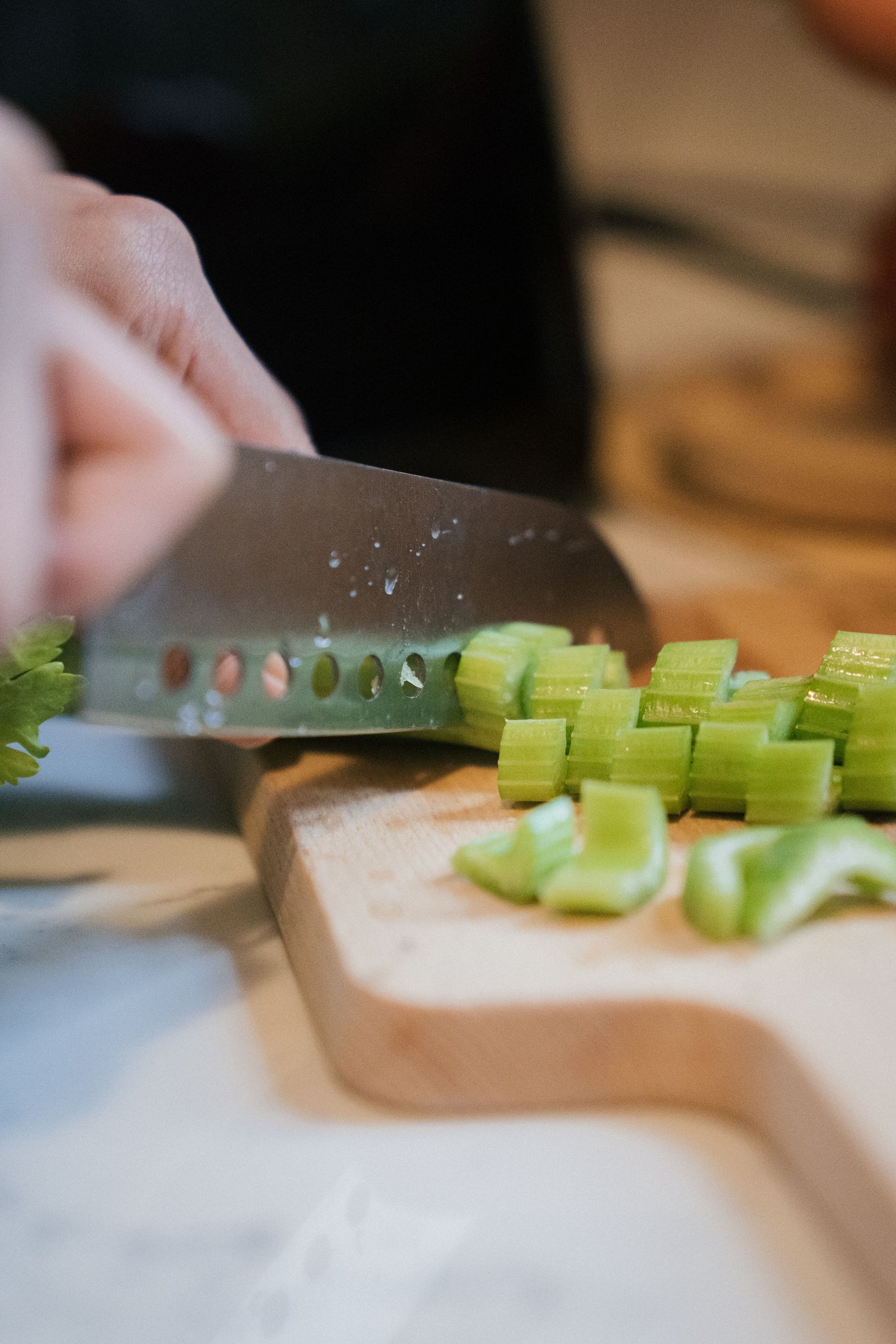
When cooking with pravi celer, almost every cuisine has a version of the same trick: start with diced celery, onion and carrot, cook them gently in fat until fragrant, and build the dish on that foundation. The French call it mirepoix, the Italians soffritto, and the Cajun and Creole tradition uses a “holy trinity” of celery, onion and bell pepper. The proportions and the fat change — butter in France, olive oil in Italy — but the role is identical: celery supplies a savoury, slightly salty, aromatic depth that neither onion nor carrot can supply alone. If your soups taste flat, the missing ingredient is often not more salt but a proper celery base, cooked long enough for its aroma to develop and not so long that it turns to mush.
Beyond the base, each part earns its place. Raw stalks, sliced thin on the bias, add crunch to salads and slaws and pair well with apple, pear, fennel, walnuts, citrus and sharp cheese; a classic combination is thin celery with lemon juice, olive oil, chilli flakes, shaved Parmesan and torn leaves. Leaves, treated as a herb, brighten roasted vegetables, grain bowls, omelettes and green sauces, and blitzed with parsley they make a more savoury pesto. Celeriac, peeled thoroughly and cubed, roasts beautifully with olive oil, paprika and cumin and served with tahini, mashes into a lighter, more aromatic alternative to potato, and grated raw with lemon, mustard and mayonnaise becomes the French remoulade that is arguably the root’s finest showcase. Seeds, used by the pinch, season pickles, coleslaw, vinaigrettes and dry rubs, and ground with flaky salt they make a celery salt whose sodium you control — unlike the commercial version.
Juice deserves a separate note, because it is where most hype concentrates. Celery juice is refreshing, hydrating and low in calories, and many people enjoy it as a morning drink. But juicing removes most of the fibre, which is precisely the component that supports fullness and digestive benefits, and it concentrates the remaining liquid without adding new nutrients that were not already in the stalks. A fair summary is that juice is a pleasant, hydrating way to consume celery, while eating the whole stalk — or better, the whole plant across a week — gives you fibre, texture and a broader nutrient mix. If you enjoy juice, pair it with a protein-rich food rather than treating it as a meal or a cleanse.
For another example of how a single everyday name can conceal a richer story, see our Inter Miami vs Tigres timeline, which follows the same pattern of separating what a term sounds like from what it actually denotes.
Buying, Storing and Growing: The Practical Guide Competitors Skim
Buying pravi celer well is mostly a matter of touch, smell and sight. Choose stalks that feel firm and snap cleanly rather than bending, with bright, pale-to-mid green colour, vibrant leaves and no browning or soft spots. Smaller, thinner stalks tend to be sweeter and more tender; larger, thicker stalks give stronger flavour and more crunch, so choose according to the dish rather than assuming bigger is better. For celeriac, pick a root that feels heavy and firm for its size, with smooth skin and minimal cracks; a light, soft root is likely old or dried out. Fresh celery should smell clean, peppery and distinctly of celery — a faint or musty aroma is a sign it has been stored too long.
Storage is where most home waste happens, and the fixes are simple. Keep stalks wrapped — in a damp cloth, paper or a reusable bag — in the crisper drawer, rather than loose, where they wilt quickly. Wilted stalks can often be revived by soaking in ice water for about ten minutes. Cut sticks keep best in a sealed container with a splash of water, changed every couple of days. Leaves freeze well chopped, either loose or frozen in olive oil in ice-cube trays for dropping into soups, and they also dry well for seasoning. Celeriac stores best cool and dry, traditionally in sand or a root cellar, and once cut it should be refrigerated and used promptly. Trimmings and ends should go into a freezer bag for stock, not the bin — with onion skins and carrot ends they make a genuinely good vegetable broth.
Growing it at home is rewarding but not instant, which is why competitor pages that promise quick results mislead. Celery prefers rich, moist, high-organic-matter soil, steady watering and a temperate climate; drought makes it bitter and stringy. Seeds are typically started indoors eight to ten weeks before the last frost, transplanted once seedlings are sturdy, and given consistent moisture and compost feeding through a long season. Stalks can be cut outer rib by outer rib as needed, leaves snipped regularly for seasoning, and celeriac harvested in autumn after roughly 100 to 120 days. Container growing is possible, but the root type needs deep soil to develop properly, and all types suffer if watering is irregular. Patience, in this case, is not a platitude — it is the growing instruction.
Safety: Allergies, Medication and the Seed Exception
Most people eat celery without any problem, and normal culinary amounts of stalks, leaves and root are safe for most diets. The exceptions matter, and they are more specific than the vague “generally safe” line found on several competitor pages.
- True celery allergy exists and can be serious. Celery is a recognised food allergen, and in the European Union it must be declared as an allergen in food labelling. People with birch-pollen or mugwort-pollen sensitivity may experience cross-reactivity — tingling, itching, hives or swelling — and people with existing sensitivities to carrot or parsley, fellow Apiaceae members, should introduce it gradually. Any reaction involving swelling, breathing difficulty or widespread hives needs prompt medical attention.
- Seed extracts are not the same as the food. Concentrated celery-seed extracts, sometimes marketed for blood pressure or joint health, are far more potent than a pinch of seeds in cooking. Traditional cautions — repeated across competitor pages — advise care with seed extracts during pregnancy and for people taking diuretics or blood-thinning medication, because of potential interactions. This is a reason to discuss supplements with a clinician, not a reason to fear celery in soup.
- Photosensitivity is rare but real. Celery contains natural furocoumarins. Heavy skin contact with raw juice followed by strong sunlight can irritate the skin in sensitive people. Washing hands after extensive preparation is a sensible, low-effort precaution.
- Sodium and potassium need context. Whole stalks are modest in sodium, but celery salt and processed foods using it can be high in sodium. Conversely, the potassium in celery is a benefit for most people but a consideration for anyone on a strict potassium limit, for example in advanced kidney disease — another case where portion advice belongs to a healthcare team, not a blog.
None of this should put a healthy reader off celery. It should put them off the idea that a food can be simultaneously a cure-all and risk-free. Real foods have real profiles: benefits, limits and a small set of people for whom caution is warranted. An article that hides the second half of that sentence is not being positive; it is being incomplete.
How to Verify Any Claim About It: A Reader’s Checklist
Because this term attracts recycled claims, use this five-question check before repeating or buying on the basis of anything you read about it — including this article.
| Question to ask | What a trustworthy answer looks like | Red flag |
|---|---|---|
| Is it naming a species or a description? | It gives the botanical name (Apium graveolens) and says which variety or part it means | It calls it a “newly discovered” or “unique” species with no botanical name |
| Does the benefit apply to ordinary celery? | It says so, and cites nutrition data or a recognisable food database | It implies only this named version has the benefit |
| Is the evidence a food, an extract or an animal study? | It distinguishes eating the vegetable from taking a concentrated extract or a lab result | It turns a compound study into “it cures / lowers / detoxes” |
| Which meaning is this page using? | It is clearly about stalks, root, seeds — or clearly about the magazine | It mixes food claims with luxury, fashion or skincare content without explanation |
| Does it mention risks? | It notes allergy, seed-extract caution and sodium in celery salt | It claims “no side effects” or “safe for everyone” |
If a seller, influencer or article fails two or more of those checks, treat its claims as marketing until you find a primary source — a food-composition database, a botanical reference or a clinician’s guidance — that supports them. If a page cannot tell you which part of the plant it is selling, you do not yet know what you are buying, however attractive the label sounds.
Substitutes: What to Use When You Cannot Find It
Substitution is straightforward because celery’s job in a dish is usually one of three things: crunch, aroma or body. Match the substitute to the job, not just to the name.
| If you need… | Best substitute | What changes |
|---|---|---|
| Crunch in salads and snacks | Fennel bulb | Similar crunch with a mild aniseed note |
| Earthy root for soups and mash | Parsley root, or parsnip | Earthy and aromatic; parsnip is sweeter |
| Aromatic base for stews | Carrot + onion + a little fennel or parsley stems | Loses some of celery’s salty edge; add a pinch of salt |
| Crunch in Cajun-style dishes | Green bell pepper or bok choy stems | Different flavour, but the textural role survives |
| Herb garnish | Flat-leaf parsley | Closest aromatic match for the leaves |
For readers with a celery allergy, these substitutes are not just culinary conveniences — they are the safe route to a similar dish. Fennel, parsley root, carrot and parsnip are all in or near the same botanical neighbourhood, so anyone with multiple Apiaceae sensitivities should still check tolerance individually rather than assuming every substitute is automatically safe.
Frequently Asked Questions
What does pravi celer mean in English?
It translates as “true celery” or “real celery”. In everyday use it refers to ordinary celery, most helpfully understood as the whole plant — stalks, leaves, celeriac root and seeds — rather than to a separate species.
Is it different from regular celery?
No, not botanically. It is the same species, Apium graveolens. The difference is emphasis: the phrase stresses authenticity and whole-plant use, whereas supermarket shorthand often means only the trimmed stalks.
Is celeriac the same thing as celery?
It is the same species grown for a different part. Celeriac (var. rapaceum) is cultivated for its enlarged root, while stalk celery (var. dulce) is cultivated for its ribs. They taste related but cook very differently: one gives crunch, the other gives body.
Is celery juice better than eating whole celery?
Not for most purposes. Juice is hydrating and convenient, but it removes most of the fibre. Whole stalks — and, across a week, leaves and root as well — give you fibre, texture and a broader mix of nutrients for the same ingredient.
Can I eat celery every day?
Most people can, in normal culinary amounts, as part of a varied diet. The exceptions are people with celery allergy, people on strict potassium or sodium limits, and anyone considering concentrated seed extracts — all of whom should seek professional advice rather than following a general article.
Where does the confusion with the magazine come from?
The luxury lifestyle publication of the same name, founded by Sam Sami, shares the search term but not the subject matter. If a page is about travel, yachts, fashion or skincare, it is the magazine; if it is about stalks, leaves, root or seeds, it is the vegetable.
Conclusion: An Ordinary Vegetable, Worth Taking Seriously
The most honest verdict on pravi celer, this much-hyped phrase, is also the least dramatic one: it is ordinary celery, described with an affectionate adjective, used completely, and recently joined in search results by an unrelated magazine that liked the sound of the same words. That ordinariness is not a disappointment. A vegetable that is cheap, widely available, low in calories, useful in flavour bases, salads, soups, mashes and garnishes, and rich enough in vitamin K, folate and potassium to earn its place — without needing to cure anything — is already doing a great deal.
Buy firm stalks and leaves, do not discard the leaves, try celeriac roasted or mashed at least once, use seeds by the pinch, store everything wrapped and cold, and treat any claim that goes beyond that practical picture with the checklist above. Eaten that way, this is not a trend to chase. It is a habit to keep — and a reminder that the most useful foods are often the ones already sitting, unglamorous and unmistakable, in the crisper drawer.
For a similarly plain-language untangling of another familiar name, see our Buffalo Bills vs Atlanta Falcons player stats guide.



1 Comments