Veneajelu: Finland’s Slow Boat Ride, Explained
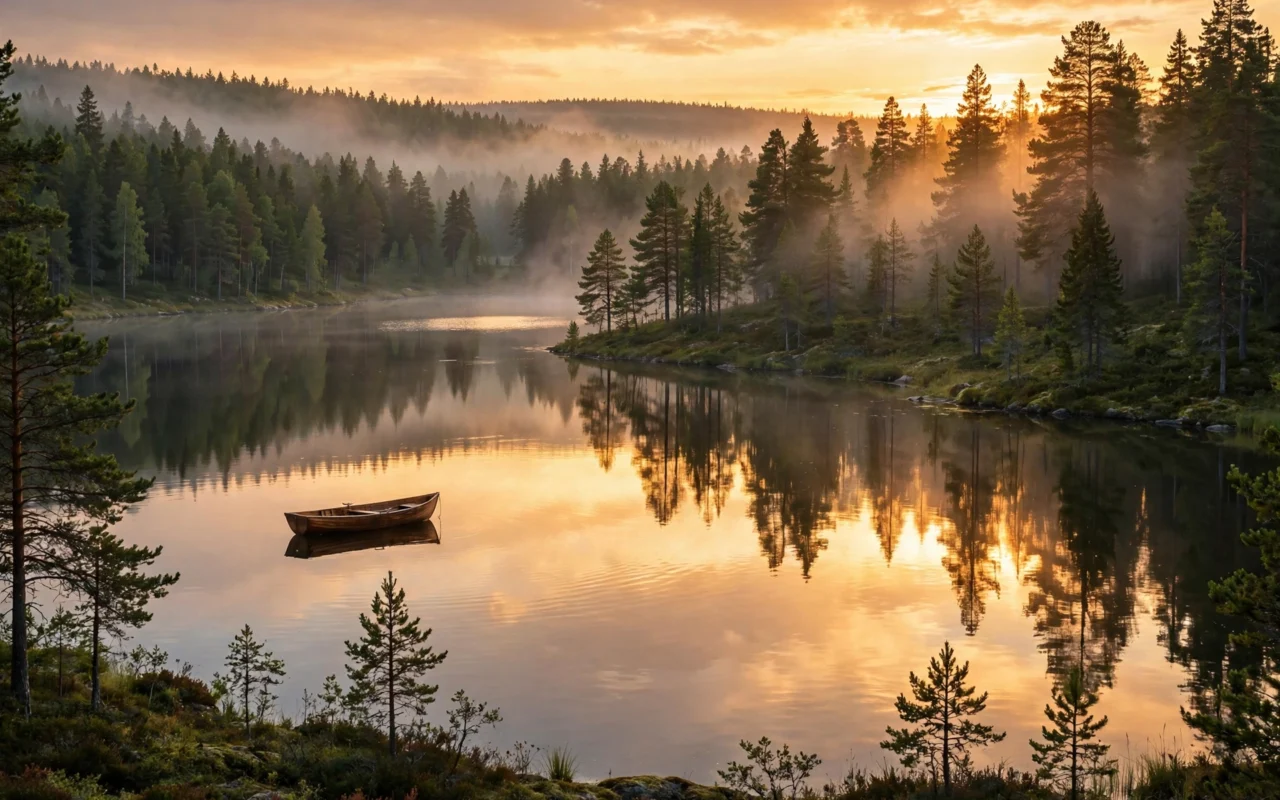
Quick answer: Veneajelu is the Finnish word for a slow, leisurely boat ride taken for pleasure — from vene (boat) and ajelu (a ride or drive). It is not a tour package, a brand, or a boat type. It is the unhurried act of drifting across a Finnish lake or between islands with no destination in a rush, no schedule to keep, and no engine noise drowning out the water. If you have ever wanted to understand why Finland keeps topping the world’s happiness rankings, an afternoon spent this way is a good place to start.
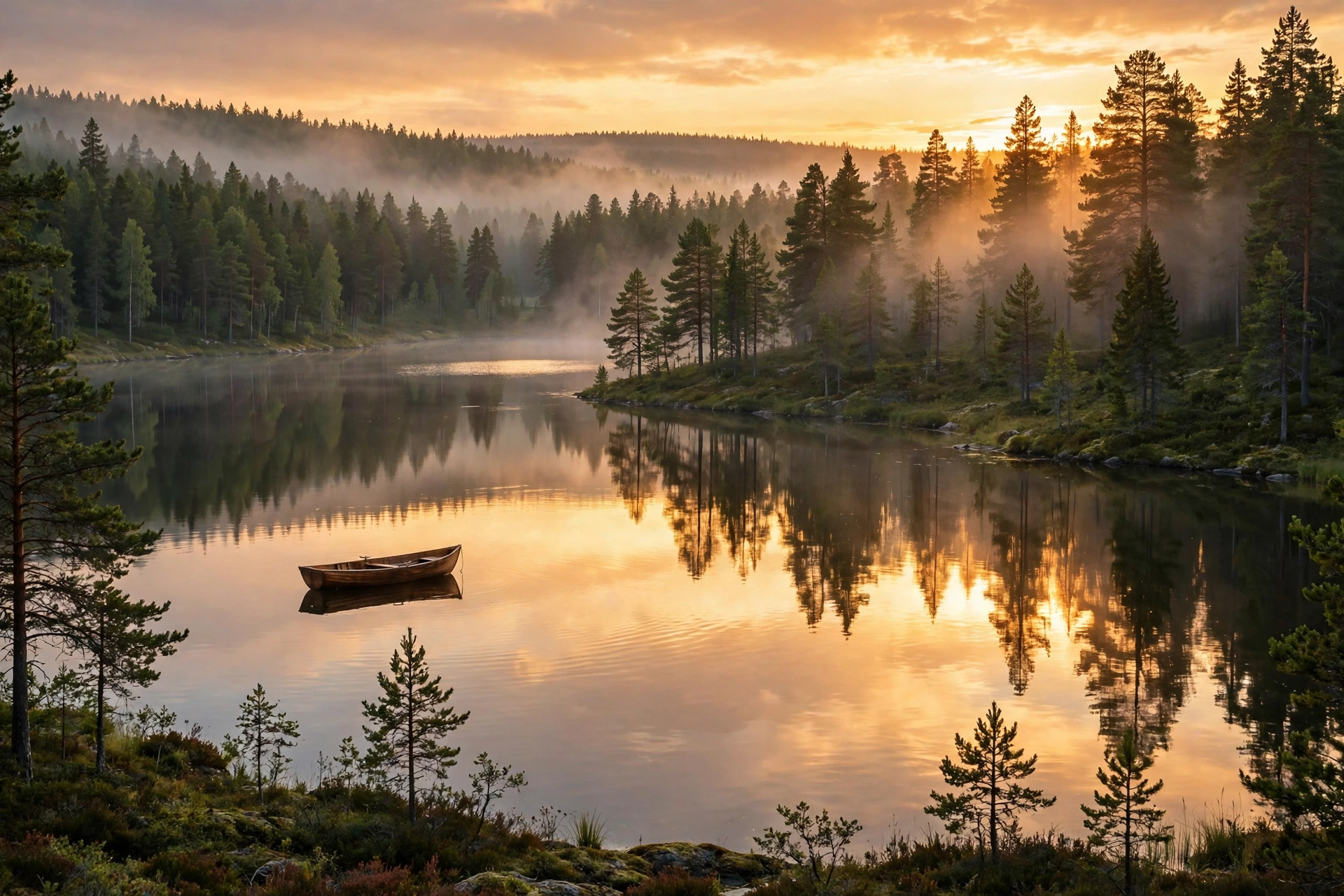
Finland is a country shaped by water. Visit Finland counts almost 188,000 lakes and ponds across the country, and inland waters cover roughly a tenth of Finland’s surface. In a landscape like that, boats were never a luxury. They were the roads. Families rowed to church, to school, to the neighbours’ cottage, and to the fishing grounds. Over generations, that practical relationship with the water softened into something else: a habit of going out on the water simply to be on the water. That habit is what the word describes.
This guide explains what the word really means, what the science says about time on the water, where to go, what it costs, and how to plan your first trip — including the mistakes other guides make, so you can trust what you read here.
What Does Veneajelu Mean?
The word is a transparent compound of two everyday Finnish words. Vene means boat. Ajelu means a ride or a drive, usually a casual one taken for its own sake. Put together, the literal translation is “boat ride” — and that plain translation is actually the honest one.
Pronounced veh-neh-ah-yeh-loo, the word carries no mystery in Finnish. It is the sort of word a Finnish parent uses when suggesting an evening spin around the lake after dinner. What has happened in recent years is that English-language travel writing has discovered the word and dressed it up as a philosophy, a “sacred tradition,” and a wellness secret. Some of that is fair — the practice behind the word really is calming and culturally important — but it helps to know where the word ends and the marketing begins.
At its core, a slow boat ride in Finland has four qualities:
- The journey is the point. There is no landmark to tick off and no arrival time that matters. The ride itself is the activity.
- The pace is slow. Rowboats, small motorboats at a gentle speed, kayaks, and sailboats all fit. Jet skis and speedboats do not.
- The setting is nature. Lakes, rivers, and the Baltic archipelagos — pine forest, open sky, and clean water, not marinas and crowds.
- The mood is unhurried. Coffee from a thermos, a sandwich on a rocky islet, silence, and conversation. Nothing to perform, nothing to post.
What Veneajelu Is Not
Clearing up a few misunderstandings will save you money and disappointment:
- It is not a company or a tour brand. Nobody owns the word, and no ticket labelled with it is more authentic than a rented rowboat.
- It is not a specific boat. Any small boat works, from a wooden rowing boat to a rented motorboat.
- It is not a religion or an ancient ritual. Boating has deep roots in Finland, but the word describes an ordinary, modern pleasure — families do it on summer evenings, not as a ceremony.
- It is not only for Finland. The word is Finnish, but the experience — a slow, quiet ride on calm water — can be found on lakes anywhere in the world.
Why the World Is Suddenly Talking About It
Three long-running travel trends meet in this one small word. Slow travel, which values depth over distance, has grown steadily as travellers tire of packed itineraries. Wellness travel has moved beyond spas toward nature-based calm. And the digital detox — time deliberately spent away from screens — has become a selling point in itself. A quiet boat ride on a Finnish lake delivers all three at once, which is why veneajelu keeps appearing in travel writing.
Finland’s reputation helps too. The World Happiness Report 2025 ranked Finland the world’s happiest country for the eighth consecutive year, and the country’s relationship with nature is usually given much of the credit. The connection is not mystical. Finns spend a remarkable amount of time outdoors, and water is never far away: the country has about 5.6 million people and nearly 188,000 lakes, which works out to roughly one lake for every 30 residents.
None of that makes the boat ride a cure for anything. It makes it a pleasant, low-cost way to spend a summer evening — and in a world that rewards speed, that is quietly radical.
The Setting: 188,000 Lakes and the Mökki
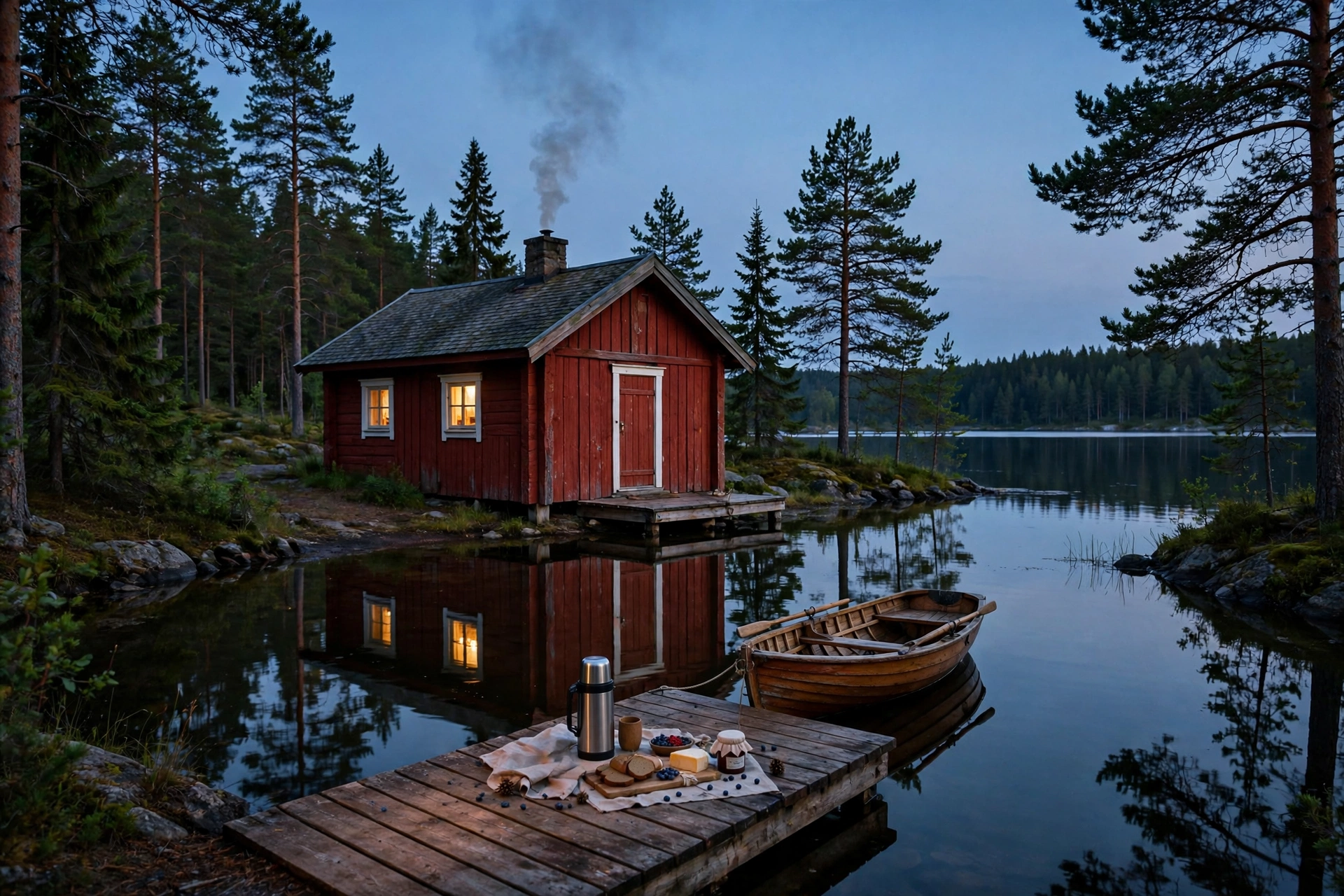
To understand the Finnish boat ride, you have to understand the Finnish summer cottage, the mökki. Hundreds of thousands of Finns own or share a simple wooden cottage by a lake. The classic summer evening at a mökki follows a rhythm that has barely changed in a century: sauna, a swim, and then a slow row or motor across the lake as the sun hangs low over the pines. Children learn to row before they learn to ride a bicycle. Coffee is brewed on a small stove on a rocky islet. The boat comes back when it comes back.
The landscape makes this possible. Finland’s lakes were carved by the last Ice Age, which ended around 10,000 years ago, leaving a maze of interconnected waterways, forested islands, and quiet bays. The largest lake system, Saimaa, spans about 4,400 square kilometres in the south-east — a labyrinth of islands and channels so large that you could spend weeks exploring it and still find new routes. The Finnish Lakeland, the lake district of central and eastern Finland, is one of the largest lake regions in Europe.
This geography is also why the tradition survived. When water is everywhere, boating never becomes an elite hobby. It stays ordinary, cheap, and open to everyone — which is exactly the point.
Veneajelu vs. a Regular Boat Trip
The difference is not the boat. It is the intention. The table below shows how the two compare.
| Feature | Veneajelu | Regular boat trip |
|---|---|---|
| Primary goal | The journey itself — being on the water | Reaching a destination or an activity |
| Pace | Slow, drifting, flexible | Planned, often fast |
| Typical vessel | Rowboat, kayak, sailboat, small motorboat | Speedboat, ferry, party boat, jet ski |
| Soundtrack | Water, wind, birdsong, silence | Engine noise, music, conversation |
| Schedule | None — turn back when you feel like it | Fixed departure and arrival times |
| Success looks like | Feeling rested and unhurried | Covering distance or ticking off sights |
Put simply, a commute by boat is not it, even if the boat is beautiful. A boat ride becomes a veneajelu when you stop caring how far you get.
What Science Says About Time on the Water
It is easy to overstate the science here, and many guides do. So here is what is actually supported, with sources you can check.
Researchers call environments dominated by water “blue space,” and a landmark systematic review published in Health Promotion International (Britton and colleagues, 2018) found that mental health, especially psychological well-being, can be improved by investment in blue spaces. The review looked at interventions involving coasts, rivers, and lakes, and its conclusion was cautious but positive: being in and around water is associated with better well-being.
Separately, the Finnish Institute for Health and Welfare (THL) has noted that even 15 minutes spent in a natural environment can significantly lower stress levels. Note the wording: in nature, not specifically on water. Several popular guides attribute the 15-minute figure to time “on water” or claim it “reduces cortisol” directly. That is an overstatement of what THL actually says. The honest version is still encouraging — a short spell outside genuinely helps — but it is a claim about nature in general, not about boats in particular.
What is also true is that the experience removes the usual sources of stress by design. Mobile reception is patchy or absent on many Finnish lakes, so notifications simply stop. The gentle rocking of a boat and the wide horizon give the mind very little to process, which is the opposite of a busy street or a crowded inbox. You do not need a study to notice the effect, but it helps to know that researchers have found one.
Claims to Be Careful About
Because this topic has attracted a lot of hastily written guides, a few unreliable claims keep circulating. Here is what we found when we checked them:
- “Only 400 Saimaa ringed seals remain.” Outdated. Metsähallitus, the Finnish state agency that monitors the species, estimated the population at 530 individuals in 2025, up from 495 in 2024, with 114 pups born that year. The seal is still endangered, but the trend is improving.
- “You need a licence for boats over 25 kW.” Wrong. Finland has no compulsory licence for recreational boating. What Traficom, the Finnish transport agency, does require is registration: a watercraft must be registered if its hull is at least 5.5 metres long or its engine is at least 15 kW. Skill and common sense are expected instead of a certificate.
- “80% of Finns go boating every year.” Widely repeated, never sourced. No official statistic supports the figure, so we do not repeat it as fact.
- “Water exposure cuts anxiety by 23%.” This figure appears in one popular guide attributed to a named researcher at the Finnish Institute for Health and Welfare. We could find no such study or statement, so treat the number as invented.
A guide that invents statistics is not a guide. The real numbers — 530 seals, 188,000 lakes, eight years at the top of the happiness ranking — are impressive enough without embellishment.
Types of Boat Rides: Which Vessel Fits You
Every veneajelu is shaped by the boat you choose. There is no best option, only a best fit for your mood, your company, and the water you are on.
| Vessel | Best for | The feeling | Keep in mind |
|---|---|---|---|
| Rowboat (vene) | Silence, tradition, fishing, sunrise | The purest and quietest form | Slow; best on calm, sheltered lakes |
| Kayak or canoe | Solo trips, narrow channels, wildlife | Intimate and physical | Light packing only; some effort required |
| Small motorboat | Families, island hopping, longer days | Easy, flexible, comfortable | Fuel and engine noise; check rental rules |
| Sailboat | Coastal waters, multi-day trips | Silent and graceful when the wind is right | Needs some sailing knowledge |
| Guided cruise | First-timers, groups, city archipelagos | Relaxed; someone else handles the boat | Fixed route and timetable |
For a first time, a rowboat on a calm lake or a small rented motorboat is the easiest way in. Both remove the pressure of navigation and let you focus on the water. If you want company and local stories, a guided cruise through the Helsinki archipelago is a good introduction — you get the scenery without any of the responsibility.
The Best Places to Go
Finland offers a different kind of water in every direction. These are the five places that define the veneajelu experience, with what each one does best.
1. Lake Saimaa — the classic
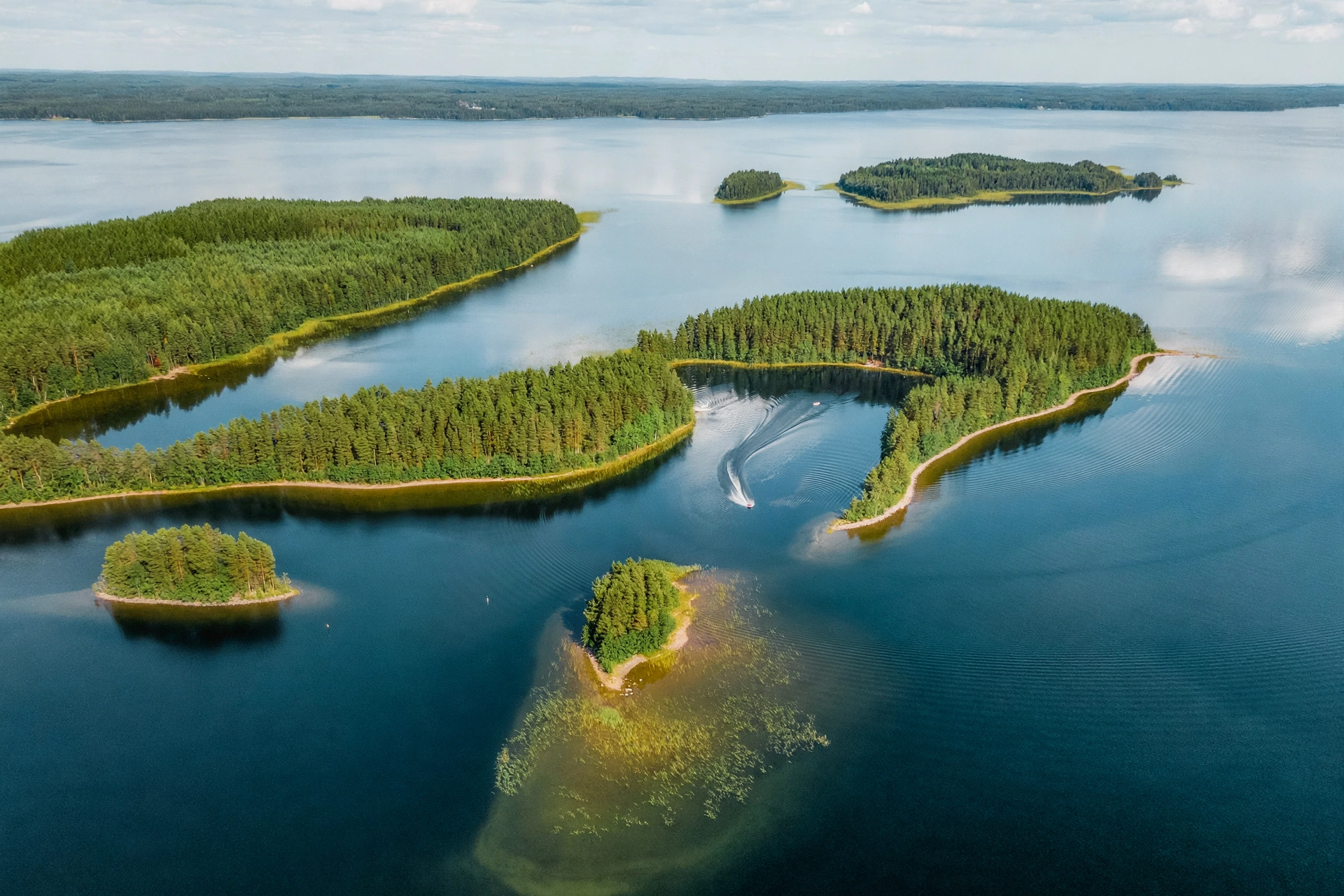
Finland’s largest lake system is the definitive setting. Its maze of islands and channels covers about 4,400 square kilometres, and its shoreline is so long and folded that you can spend a week on the water without repeating a route. Saimaa is also home to the Saimaa ringed seal, one of the world’s rarest seals, found nowhere else on Earth. Metsähallitus estimated the population at 530 animals in 2025, a slow recovery from fewer than 150 in the 1980s. If you are lucky enough to see one, keep your distance and your engine quiet — the seals are most sensitive during the spring pupping season. Good starting points are Savonlinna, Lappeenranta, and Puumala.
2. Helsinki Archipelago — the urban escape
Helsinki sits on the Baltic with more than 300 islands in its surrounding waters. You can step off a tram in the city centre and be gliding past rocky islets within half an hour. The popular canal cruise from Market Square passes Suomenlinna Sea Fortress, the old icebreaker ships, and Korkeasaari Zoo, and evening cruises in midsummer run under a sky that barely darkens. For a do-it-yourself version, rowboats and small motorboats can be rented near the city centre.
3. Turku Archipelago and the Archipelago Sea — the maze
Off the south-west coast lies one of the largest archipelagos in the world: more than 20,000 islands scattered between Turku and Åland, and over 40,000 islands and skerries if you count the whole sea area. The Archipelago Trail, a roughly 200-kilometre loop of roads and ferries starting in Turku, is the classic way to explore it by land and water. Guest harbours sit every 10 to 15 kilometres along the sailing routes, so multi-day trips are easy to plan.
4. Åland Islands — the in-between
Åland is an autonomous, Swedish-speaking island region between Finland and Sweden, with a maritime culture all of its own. The waters are calm, the distances short, and the pace of life slower even than the Finnish mainland. It is ideal for relaxed family boating and longer island journeys, with red granite shores and fishing harbours at every turn.
5. Kolovesi National Park — the silence
For the purest version of the experience, Kolovesi in the Saimaa region is a motorboat-free national park of cliffs, clear water, and ancient rock paintings. You paddle or row between steep rock walls in near-total silence, and the stillness is the whole point. It is the closest thing to a meditation retreat that a boat can offer.
Further north, Lapland’s lakes add a different magic: from June to July the sun barely sets, so an evening boat ride can stretch past midnight in full daylight, with reindeer grazing on the shoreline and Arctic terns diving overhead.
When to Go: A Month-by-Month Guide
| Month | What it is like | Best for |
|---|---|---|
| May | Ice has melted, lakes open up, fresh green everywhere, few people | Seal watching on Saimaa, quiet first trips |
| June | Long days, mild weather, midnight sun begins in Lapland | Midsummer evenings, first warm swims |
| July | Warmest water, busiest harbours, long golden evenings | Families, island hopping, festivals |
| August | Warm and settled, crowds thinning, late-summer calm | The most reliable all-round month |
| September | Crisp air, autumn colours, mirror-calm water, very few boats | Photography, solitude, ruska foliage |
| October–April | Lakes freeze over; the boating season ends | Ice skating and winter activities instead |
The classic veneajelu season runs from May to September, with June to August as the peak. July is the warmest and busiest month, so book rentals early. September is the connoisseur’s choice: the autumn colours, known as ruska, set the shorelines on fire, and you may have an entire lake to yourself.
Planning Your First Veneajelu: A Step-by-Step Guide
1. Choose calm water. A sheltered lake or a protected archipelago channel is the right start. Big open water and strong wind are for later.
2. Pick your boat. Rent a rowboat if you want silence, a small motorboat if you want range, or a kayak if you want to explore narrow channels. Most rental operators include life jackets, a map, and a short briefing.
3. Check the weather. Always consult the Finnish Meteorological Institute (Ilmatieteen laitos) before departure. Calm mornings can turn windy by afternoon, especially on large lakes and the sea.
4. Plan a short route. Two to three hours is plenty for a first trip. Pick a destination — an island with a campfire spot, a lakeside café, a quiet bay — and give yourself time to stop.
5. Pack the essentials. Layers, a windproof jacket, sun protection, water, snacks, a charged phone in a waterproof bag, and a paper map as a backup. A thermos of coffee and something sweet — cinnamon buns, korvapuustit, are the classic — complete the picture.
6. Leave the schedule behind. This is the whole point. If you find a good rock to sit on, sit on it. If the light is beautiful, stay for it.
What It Costs
Prices vary by region and season, and you should always confirm with the operator before booking. Typical ranges reported by Finnish rental operators are:
| Option | Typical price |
|---|---|
| Rowboat, a few hours | €20–€50 |
| Kayak, per day | €35–€60 |
| Small motorboat, per day | €80–€200 |
| Guided cruise, per person | €50–€150 |
| Week-long motorboat package | €900–€1,500 |
It does not have to cost anything at all. If you are staying at a lakeside cottage, the rowboat usually comes with it, and the lake is free.
Safety and the Rules of Finnish Waters
Finnish boating is relaxed, but it is not careless. The rules are light because the culture of responsibility is strong.
- Life jackets: Every boat must carry a life jacket for every passenger, and children and non-swimmers should wear theirs at all times. On a boat over 5 metres, the required safety equipment also includes oars or a paddle, an anchor with rope, and a bailer or pump.
- No compulsory licence: Finland does not require a licence for recreational boating. Rental companies may still ask about your experience, and larger or faster boats come with a proper briefing.
- Registration: Watercraft must be registered with Traficom if the hull is at least 5.5 metres long or the engine is at least 15 kW. This matters mainly if you bring your own boat.
- Alcohol: Boating and drinking do not mix. Finnish law sets a blood alcohol limit for operating a vessel, and the police and the Border Guard enforce it. Keep the celebrations for the shore.
- Weather: Check the Finnish Meteorological Institute forecast before you set off, and again if the sky changes. Wind can build quickly on open water.
- Children: Kids are welcome on the water, and Finnish families start them young — rowing, swimming, and learning to respect the lake. Keep trips short, keep life jackets on, and give children a job, like watching for the next island.
- Rescue: The Finnish Border Guard provides maritime search and rescue free of charge, but a charged phone, a whistle, and a plan are your first line of defence.
Everyman’s Rights: Freedom With Responsibility
One thing that makes the Finnish boat ride unique is the legal framework behind it. Jokamiehenoikeus, or Everyman’s Rights, gives everyone — including visitors — the right to roam the countryside, forage for berries and mushrooms, fish with a simple rod and line, and move freely on the waterways, regardless of who owns the land. It is one of the reasons the lakes feel open rather than fenced off.
The right comes with a duty. Do not land on private docks or yards, do not disturb nesting birds or seals, do not light fires except in designated spots, and take every scrap of litter home with you. Leave no trace is not a slogan in Finland; it is the social contract that keeps the freedom working. Electric motors are increasingly popular precisely because they protect the silence that makes the experience worth having.
Packing Checklist
- Life jackets for everyone on board
- Layers and a waterproof jacket — weather on the water changes fast
- Sun protection: sunglasses, sunscreen, a hat
- Water, snacks, and a thermos of coffee
- Swimwear and a quick-dry towel
- Charged phone in a waterproof bag, plus a paper map
- First-aid kit, whistle, and a flashlight
- A bag for all rubbish — leave nothing behind
- Fishing rod and a simple picnic if you plan to stop on an island
How to Enjoy It Outside Finland
You do not need a Finnish passport or a Finnish lake. The spirit of the practice travels well, and it works on any calm water:
- Slow down on purpose. Pick a small lake or a quiet river, and leave the timetable at home.
- Choose the quiet boat. A rented rowboat, a canoe, or a kayak will give you the silence that makes the experience work.
- Go at golden hour. Early morning or late evening light turns ordinary water into something worth remembering.
- Pack simply. Coffee, bread, something sweet, and nothing that needs a screen.
- Put the phone away. The digital detox is not a side effect; it is half the point.
Similar traditions exist elsewhere — the Swedish archipelago, the Norwegian fjords, and the quiet lakes of Canada and northern Italy all reward the same approach. The Finnish word is just the best label anyone has given it.
Common Mistakes to Avoid
- Rushing. Trying to cover too much water misses the point entirely.
- Choosing crowded water. Busy marinas and heavy traffic destroy the calm you came for.
- Ignoring the weather. Wind is the one thing that can turn a peaceful ride into a hard one.
- Overpacking. Bring the essentials, not clutter. The boat is small and the day is simple.
- Disturbing wildlife. Keep your distance from seals, nesting birds, and shorelines in spring.
- Treating it like a race. There is no finish line. That is the feature, not the bug.
Frequently Asked Questions
What does veneajelu mean?
It is a Finnish word meaning a leisurely boat ride, from vene (boat) and ajelu (ride). It describes a slow, unhurried trip on the water taken for pleasure, not transport.
When is the best time to go?
May to September, when the lakes are ice-free and the weather is mild. June to August is the peak season, with long daylight and warm water; September offers autumn colours and far fewer people.
Do I need a boating licence in Finland?
No. Finland has no compulsory licence for recreational boating. Boats must be registered with Traficom if the hull is at least 5.5 metres or the engine is at least 15 kW, and rental operators will brief you before you set off.
Is it safe for children?
Yes, with the usual precautions: properly fitted life jackets, short trips, calm water, and adult supervision. Finnish families treat boating as a normal part of childhood.
What should I bring?
Layers, a windproof jacket, sun protection, water, snacks, a charged phone in a waterproof bag, and a paper map. A thermos of coffee and cinnamon buns are the traditional finishing touches.
How much does it cost?
A rowboat typically costs €20–€50 for a few hours, a small motorboat €80–€200 per day, and a guided cruise €50–€150 per person. Staying at a lakeside cottage often includes a rowboat at no extra cost.
Can I do it without any experience?
Yes. Calm lakes, rental rowboats, and guided cruises need no prior skills. Sailing and larger motorboats are better left until you have some practice or a guide.
Where is the best place for a first trip?
Lake Saimaa near Savonlinna for calm water and scenery, or the Helsinki archipelago for an easy trip close to the city. Both offer rentals, guides, and sheltered routes.
The Last Word
A slow boat ride on a Finnish lake asks almost nothing of you. No special skills, no expensive equipment, no plan more complicated than a thermos and a free afternoon. What it gives back is harder to measure and easy to feel: an hour or two in which the world stops hurrying, the phone stops buzzing, and the only thing moving is the water under the boat.
Finland has spent eight years at the top of the World Happiness Report, and its people would probably tell you the secret is not complicated. It is a sauna, a swim, a cottage by the lake — and a boat ride with nowhere to be. Find a quiet stretch of water, step into a boat, and let the lake do the rest.
Keep reading on Dow Magazine: hcooch ch2 h2o · wepbound · soa-os23
Sources
- Visit Finland — National parks in Lakeland: “almost 188,000 lakes or ponds” in Finland (visitfinland.com)
- World Happiness Report 2025 — Finland ranked happiest country for the eighth consecutive year (worldhappiness.report)
- Metsähallitus — Saimaa ringed seal population estimate, 27 October 2025: 530 individuals, 114 pups born (metsa.fi)
- Britton, E., Kindermann, G., Domegan, C., & Carlin, C. (2018) — “Blue care: a systematic review of blue space interventions for health and wellbeing,” Health Promotion International
- Traficom — First registration of a watercraft: hull of at least 5.5 metres or engine of at least 15 kW (traficom.fi)
- Visit Finland — Finnish Everyman’s Rights, the right to roam (visitfinland.com)