
Wenrath: Meaning, Location and the Wehnrath Connection in Germany
Quick answer: Wenrath is an uncommon spelling linked to Wehnrath, a small locality in the municipality of Reichshof, in the Oberbergischer Kreis district of North Rhine-Westphalia, Germany. The current municipal spelling is Wehnrath, with an “h” after the “e”, while the shorter form appears in some older and secondary references. It is a place name, not a brand, a product, a company or a person. The exact meaning of the name has not been established: the earliest recorded form dates to 1357, and while the ending resembles the old German pattern for cleared land, that resemblance is not proof of what the name originally meant. The locality is small — municipal records put its population at 286 residents at the end of 2024 — and it is best known beyond its own district for two things: a local commercial area and the headquarters of the Schwalbe bicycle-tyre brand.

Why This Small Name Gets Searched
Most people who type this name into a search engine are not planning a holiday. They have met the word somewhere — in a keyword list, in an old document, in a family-history search, or in a list of unusual German place names — and they want a straight answer to a simple question: what is it, and where is it? The difficulty is that the obvious answer is short, while the search results around it are long, repetitive and often careless. A handful of thin explainer pages repeat the same few facts in the same order, each one copying the last, so an error in one of them can travel through all of them without anyone noticing.
This guide takes a different approach. Every important claim below has been checked against the sources behind it, and the claims are sorted into three groups: verified, reported, and not established. Where the evidence runs out, this article says so plainly instead of filling the gap with a guess. That matters more than usual here, because the subject is a very small place with a thin paper trail. A city leaves thousands of records; a locality of fewer than 300 people leaves very few, and a careful reader should be able to tell which statements rest on municipal records and which rest on a single secondary summary.
Verified Facts at a Glance
The table below separates what is confirmed from what is merely reported. “Verified” means the fact is supported by municipal records or by a primary institutional source. “Reported” means it appears in a secondary summary and has not been confirmed against the primary record. “Not established” means no reliable source settles the point.
| Fact | What the evidence says | Status |
|---|---|---|
| Place | Wehnrath, a locality in the municipality of Reichshof | Verified |
| District and state | Oberbergischer Kreis, North Rhine-Westphalia, western Germany | Verified |
| Spelling you searched | Wenrath | Verified as a form in use |
| Current official spelling | Wehnrath | Verified |
| Population | 286 residents on 31 December 2024 | Verified (municipal records) |
| Population, 2023 | 295 residents | Reported in a secondary summary; not confirmed from municipal records |
| Earliest recorded name form | “Wenegenroede”, reportedly 1357 | Reported (regional research into first mentions) |
| Meaning of the name | Not established | Not established |
| Commercial area | Gewerbegebiet Wehnrath, a documented commercial area of Reichshof | Verified |
| Schwalbe headquarters | Ralf Bohle GmbH, maker of Schwalbe bicycle tyres, headquartered in Reichshof-Wehnrath | Verified |
| Character | Small settlement, not a city or a tourist destination | Verified by its status as a locality |
Two rows deserve a second look. The 2024 population figure of 286 comes from municipal records and can be stated with confidence, while the 2023 figure of 295 comes from a secondary summary and should be treated as approximate until checked against the same source. The 1357 date is likewise reported by regional research, not quoted from a municipal register.
The table also shows what a careful reader should expect from the rest of this guide. Where a fact is verified, the article states it plainly. Where it is only reported, the article says so and names the source. And where nothing reliable exists, the article leaves the question open rather than inventing an answer. That discipline is the whole point: for a place this small, the difference between a verified fact and a repeated claim is often the difference between truth and fiction.
Two Spellings, One Small Place
The spelling is the heart of the whole subject, and it is where most short explainers go wrong. There are three forms a researcher will meet, belonging to three different kinds of source. Keeping them apart is the difference between finding the place in an official register and concluding, wrongly, that it does not exist.
| Spelling | Where you will meet it | Status |
|---|---|---|
| Wenrath | Search queries, some secondary articles, and a 2012 German Bundestag archive piece | Shorter, older or secondary form |
| Wehnrath | Current municipal records, local addresses and official use | Current spelling |
| Wenegenroede | Regional research into the earliest mentions of settlements in the Oberberg area | Earliest recorded form, reportedly 1357 |
The practical rule is simple. For official records, maps, municipal pages or postal addresses, use Wehnrath, with the “h” — the spelling the municipality itself uses. For old documents, family papers, historical archives or the wider web, try both spellings, because the shorter form has genuinely appeared in published material, including the 2012 Bundestag archive article about a visit to the tyre manufacturer based there. Neither spelling is a typing error. What would be wrong is to treat them as interchangeable in every context: using the shorter form in an official register search can return nothing, and “correcting” it in a quotation from an old document would misrepresent the source.
There is also a temptation to explain the difference with a story — that one spelling is the “original” and the other a corruption. No reliable source supports any such story. German place names shifted spelling over centuries as writing conventions changed, and small localities often appear under several variants before one form settles. That is regional background, not a documented fact about this name.
Where the Place Sits on the Map
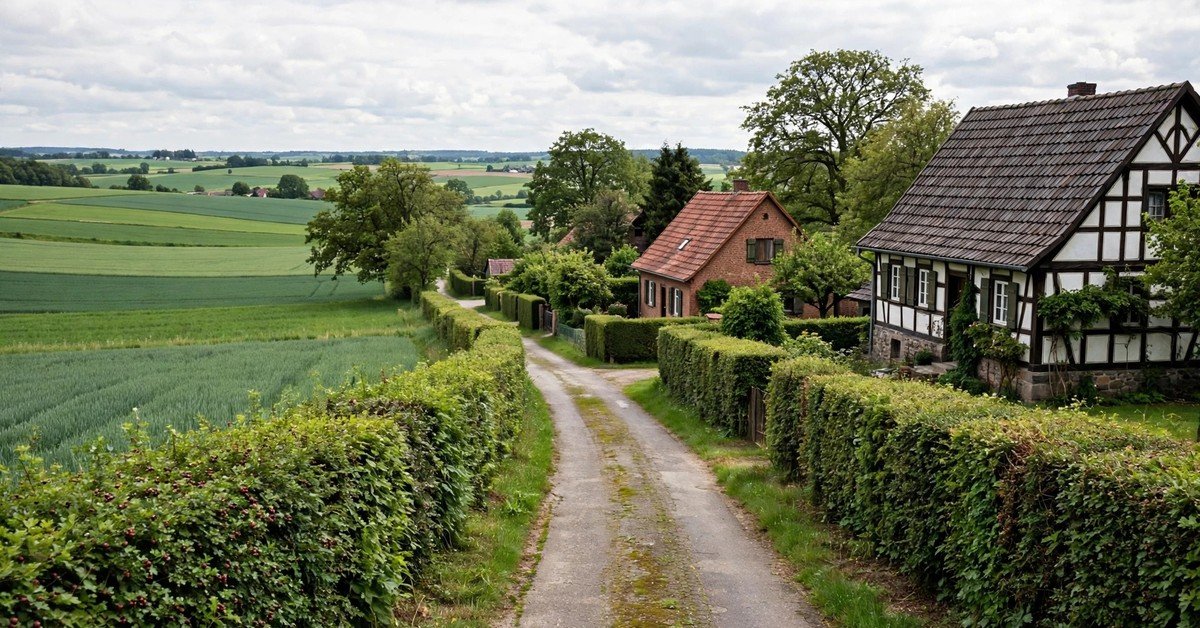
Wehnrath is a locality — in German administrative terms, an Ortsteil — of Reichshof, a municipality in the Oberbergischer Kreis district of North Rhine-Westphalia, in western Germany. Reichshof is not a single town in the usual sense, but a municipality made up of many small localities spread across the countryside, served by one administration. That structure explains a great deal: a locality of fewer than 300 people does not need its own town hall or school, because services are organised at the municipal level and shared across the district.
The wider region is the Oberbergisches Land, the hilly, wooded countryside east of Cologne: rolling green hills, fields divided by hedgerows, patches of forest, and small settlements tucked into valleys. It is a landscape shaped by farming and forestry, and it has kept a rural character even as the cities to the west have grown. The district town is Gummersbach, and the neighbouring town of Bergneustadt lies close by — both hold the shops, stations and services that a small locality does not. A precise search of online maps finds the locality quickly once the current spelling and the municipality are used together; without them, the same search can return nothing at all.
For a researcher, the consequence is practical: there is no separate “Wehnrath town council” to write to, and no separate statistical office for the locality. Population figures and local services are recorded by the municipality of Reichshof, and the most reliable source for facts about the place is the municipality itself, at reichshof.org. Secondary explainers that give no source for their figures are asking to be trusted on faith — and the population discrepancy above shows why that trust should not be automatic.
It is also worth saying plainly what the place is not, in geographical terms: not a city, not a town with its own centre, and not a destination with visitor infrastructure. A small German locality like this one is primarily a residential community — houses, gardens, lanes, fields and woodland, with daily life oriented towards the neighbouring towns.
A Name First Recorded in 1357
The history of the name begins, as far as the available sources can show, in the fourteenth century. Regional research into the first mentions of settlements in the Oberberg area records the earliest form as “Wenegenroede”, reportedly in 1357 — placing it among the medieval settlements of the region, when land was being cleared and new farming communities founded across the hills east of the Rhine. Historical records yield the date and the form, but no story to go with them: no founder is named, no charter is quoted, and no document explains why the settlement was founded where it was.
The ending of the name is where speculation usually begins, and it is where discipline matters most. The recorded form ends in “-roede”, and the modern forms end in “-rath”. In German place names, endings of this family — “-rode”, “-roth”, “-rath” — are associated with historic land-clearing: settlements founded on land cleared from forest. That is a genuine, well-documented pattern, and it is reasonable to mention as background. What it is not, however, is proof of what this particular name meant. A pattern that fits hundreds of names does not explain any one of them, and the first part of the name has no settled interpretation in the sources consulted. The honest statement is short: the exact linguistic origin of the name remains uncertain, and the clearing pattern is context, not a translation.
That uncertainty is not a failure of research. It is the normal condition for a small medieval settlement whose early records, if they survive at all, sit in regional archives rather than in published histories. Large towns have chronicles; small localities have scattered mentions in tax lists, land registers and church records. Between 1357 and the modern period, the sources consulted record no continuous narrative of the locality — no wars, no famous residents, no dramatic events. That silence is itself informative: the record of an ordinary farming community. The lesson is to resist filling it with an invented founder, meaning or founding story, and to say instead what is known, label what is reported, and leave the rest open.
The Business Area: Gewerbegebiet Wehnrath
If the locality is known for one thing inside its own municipality, it is the Gewerbegebiet Wehnrath — the commercial and industrial area that carries its name. A Gewerbegebiet is a designated zone for commercial and industrial use, set aside in municipal planning so that businesses have serviced land with road access and utilities. For a rural municipality, such a zone matters out of proportion to its size: it provides local jobs, keeps businesses in the municipality, and gives the municipal budget revenue that a purely residential settlement cannot provide.
Regional reports from the 1990s discuss Reichshof and neighbouring Bergneustadt developing commercial land around the Wald-Wehnrath area — the wooded land associated with the locality. Small municipalities in the Oberberg region were competing to offer businesses well-located, affordable land as the older industries changed, and a commercial zone on the edge of a small locality was a practical way to do it. The reports describe no single large factory or famous employer, but a planning effort to make land available for the small and medium-sized businesses that form the backbone of the German economy.
That description is deliberately general, because the sources do not support a more specific one. This article does not list the businesses currently operating in the zone, because no reliable, current list was available in the sources consulted. What can be said is that a zone of this kind typically hosts a mix of trades, workshops, logistics and small manufacturing — businesses that need space and road access but not a city-centre address. The commercial area also explains something about the name’s visibility: a locality of fewer than 300 residents would normally appear in very few records, but a commercial zone carrying the same name appears in planning documents, business directories, road signs and logistics paperwork, and each appearance is a chance for the name to travel.
Schwalbe and the Bicycle Connection
The second reason the name travels is a bicycle tyre. Schwalbe is a bicycle-tyre brand operated by Ralf Bohle GmbH, headquartered in Reichshof-Wehnrath. The brand is internationally known among cyclists, and its tyres are used for road riding, mountain biking, touring and commuting, alongside tubes and accessories.
The connection is documented in a way that the medieval history is not. A 2012 article in the archive of the German Bundestag records a visit to the tyre manufacturer at its Reichshof base, and the company’s own materials place its headquarters in the municipality — an institutional record, dated and attributable, rather than a claim repeated from one explainer to the next. Readers who want to follow the source can start at schwalbe.com.
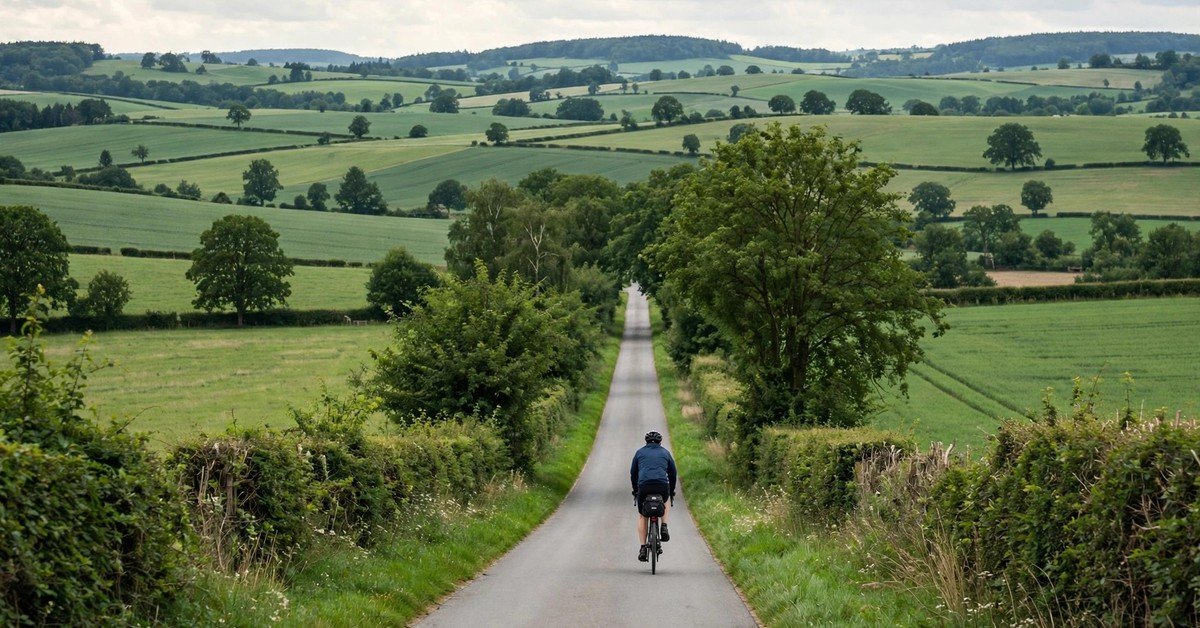
Be precise about what the connection does and does not mean: the company is based in the locality, but the locality is not owned by the company, and the name of the place is not a brand name. Schwalbe is a brand of Ralf Bohle GmbH, and the locality is a residential and commercial community that happens to host the company’s headquarters. Confusing those two things is the single most common error in short pieces about the name. The cycling connection also fits the landscape — the Oberbergisches Land, with its rolling hills and quiet lanes, is natural cycling country — but that is background, not evidence. It does give the name a second life in the world of cycling shops, forums and product reviews, where it appears in contexts that have nothing to do with municipal geography.
Why the Name Keeps Appearing in Searches
By now the pattern should be clear. The name appears in searches for several different reasons: some have met it in a list of keywords; some are tracing a family name or an old address; some have seen it on a product, a parcel or a business directory and want to know whether it is a company. Each deserves an answer that fits, and a single generic explainer cannot give all of them one. Claims made online about unfamiliar names deserve the same treatment: check the primary source before repeating them.
The thin explainers that dominate the results fail in a particular way: they answer every version of the question with the same paragraph, and never sort their facts into verified, reported and unknown. Without that sorting, a reader cannot tell whether the 1357 date is a quoted record or a repeated claim, or whether the meaning of the name is known or guessed at. There is also a circularity problem: when several short pages repeat the same facts in the same order, each looks like confirmation of the others, even though all may trace back to a single source. The remedy is to read the primary sources — the municipality’s own pages, the institutional record of the 2012 visit, and the company’s own site. An independent explainer covering the same ground is available at palnmagazine.com: the strongest of the short explainers, but it quotes no primary municipal source. Read it as a cross-check, not as a final authority.
How to Research It Properly
For readers who want to go further, the method matters more than any single fact.
- Start with the municipality’s own website, using the spelling Wehnrath.
- Use both spellings in archives — try the shorter form as well as the current one when searching historical records or family papers.
- Search with the municipality attached. A search for “Wehnrath Reichshof” filters out unrelated uses of similar words; adding “Oberbergischer Kreis” narrows the results further.
- Check the date on every figure: the 286 figure belongs to 31 December 2024, and a figure without a date is a different claim.
- Distrust unsourced meanings: any page offering a confident translation without citing a source is guessing.
- Use maps with the current spelling. Searching for the older form may return nothing, and that absence is not evidence that the place does not exist.
One more piece of advice applies to every small place: expect the record to be thin, and do not mistake thinness for mystery. A locality of fewer than 300 people will not have a published history or a dedicated archive; its records are the municipal register, the regional first-mentions research, the planning documents for its commercial area, and the institutional records of the businesses based there.
What Wenrath Is Not
Clearing away false ideas is as useful as establishing true ones. The list below states each one plainly.
- It is not a brand. No verified brand, product or company carries this name. The only widely known business connection is Schwalbe, merely headquartered in the locality.
- It is not a company or an app. There is no verified company, application, platform or service by this name.
- It is not a person. There is no verified public figure or founder by this name. The name belongs to a place, not to an individual.
- It is not a city: with 286 residents at the end of 2024, it is a small locality within a larger municipality.
- It is not a tourist destination. There are no visitor attractions, no hotels and no tourist infrastructure in the locality itself.
- It is not a word with a proven meaning. No reliable source establishes a translation or etymology for the name.
- It is not a surname with a documented history. No source consulted establishes a family history or a meaning for the name as a surname.
If a page you have read claims otherwise, ask for its source. A claim about a brand, a founder or a meaning that cites no source is an assertion, not a competing theory.
Frequently Asked Questions
Where is Wehnrath?
Wehnrath is a locality in the municipality of Reichshof, in the Oberbergischer Kreis district of North Rhine-Westphalia, in western Germany. It sits in the Oberbergisches Land, the hilly, wooded countryside east of Cologne, sharing municipal services with the other localities of Reichshof. The district town is Gummersbach, and neighbouring Bergneustadt is close by. Modern mapping technology makes the locality easy to find once the current spelling is used.
Is Wenrath a brand or a company?
No. It is a place name, and no verified brand, product or company carries it. The confusion usually comes from Schwalbe, the bicycle-tyre brand headquartered in Reichshof-Wehnrath.
What does the name mean?
The exact meaning has not been established. The earliest recorded form is reportedly “Wenegenroede”, from 1357, and the ending belongs to a family of German place-name endings associated with historic land-clearing — background, not proof. The first part of the name has no settled interpretation.
How many people live there?
Municipal records put the population at 286 residents on 31 December 2024. A secondary summary gives 295 for 2023, unconfirmed against municipal records — treat it as reported. Both figures come from published records, not from guesses.
What is Gewerbegebiet Wehnrath?
It is the commercial and industrial area of Reichshof that carries the locality’s name — a designated zone for businesses, set aside in municipal planning. Regional reports from the 1990s discuss the two towns developing commercial land around the Wald-Wehnrath area. The zone is the locality’s main claim to visibility.
Can you visit the locality?
You can drive through it on public roads, but nothing there is designed for visitors: no attractions, no hotels, no tourist infrastructure. Base yourself in Gummersbach or Bergneustadt instead, and respect residents’ privacy.
Which spelling should I use?
Use Wehnrath, with the “h”, for official records, maps and addresses. Use both spellings when searching archives or the wider web. Do not “correct” a quotation from an old document.
Final Thoughts
Wenrath remains a small footnote in the geography of North Rhine-Westphalia: a locality of fewer than 300 people, a name first recorded in 1357, a commercial area, and the address of a well-known bicycle-tyre company. None of that is dramatic, and together the facts do not add up to a hidden gem or a secret brand — but to a clear, checkable answer to a simple question.
The value of getting this answer right is not in the place itself, but in the habit it teaches. A small name with a thin record is exactly where careless writing does its damage — where a reported date becomes a quoted fact, a general pattern becomes a proven meaning, and a company address becomes a brand. The remedy is simple: check the municipality, label what is reported, and leave what is unknown alone. Do that, and a mysterious-looking name turns out to be something simpler: a small, ordinary, verifiable place, spelled two ways, with a history from the fourteenth century and a present of fields, lanes and quiet houses.
