
Homecz: What It Really Is, What It Isn’t, and How to Build a Smarter Home
Quick answer: Homecz most reliably refers to the online name of CV. Home Connection Z Group, an Indonesian business in Babelan, Bekasi, that advertises internet connections, CCTV installation, and application development. It is not a verified global smart-home platform, a Czech appliance brand, or a formal interior-design philosophy — despite what many ranking articles claim. Separately, the word is also used online as a loose concept for smarter, calmer, more energy-efficient home living. This guide separates the verifiable facts from the invented claims, shows exactly where the top-ranking articles go wrong, and gives you a practical, room-by-room plan for building a smarter home yourself — with no invented products, prices, or statistics.
Last updated: 10 November 2026. All business facts in this article are drawn from the company’s own published pages and from independent verification-first reporting; every claim we could not verify is labelled as unverified.
Contents
- What Is Homecz? The Two Meanings of the Word
- The One Business You Can Actually Verify
- What Homecz Is Not: Claims vs. Evidence
- Top 5 Competitors: What They Get Wrong
- The Smarter-Home Concept: What Actually Works
- Room-by-Room: A Practical Plan for Your Home
- Smart Devices Worth Buying First
- What a Smarter Home Really Costs
- Step-by-Step: Build Your Smarter Home in a Weekend
- 7 Mistakes to Avoid
- Is It Worth It? An Honest Verdict
- Frequently Asked Questions
- Sources
What Is Homecz? The Two Meanings of the Word
If you search for the term today, you will find two very different stories. One is a real, identifiable business. The other is a collection of articles describing a smart-home lifestyle concept — and, too often, inventing products, statistics, and customer stories to fill the gaps. Understanding which meaning you are looking at is the first step, because the advice that follows depends entirely on it.
Meaning 1 — the business. The clearest identifiable business using this name is CV. Home Connection Z Group, an Indonesian company that describes itself as an internet resale services provider. Its published services are residential and business internet connections, CCTV installation, and application development. Its published location is Babelan, Bekasi, Indonesia, and its listed customer-service hours are Monday to Friday, 09:00–18:00 Western Indonesian Time (WIB).
Meaning 2 — the concept. Across dozens of blogs, the word is also used as shorthand for a modern approach to home living: smart technology, practical interior design, energy efficiency, organisation, and comfort, combined into one idea. This usage has no single owner, no official definition, and no product line behind it. It is a useful label for a real trend — homes that are calmer, cheaper to run, and easier to live in — but it is a concept, not a company.
Most ranking articles blur these two meanings together. They describe the business’s services in one paragraph and a futuristic smart-home ecosystem in the next, as if they were the same thing. They are not, and this article keeps them separate throughout.
The One Business You Can Actually Verify
Before spending money with any unfamiliar provider, the sensible question is always the same: what can actually be checked? For the business behind the name, the checkable facts are limited but real.
| Field | What is published | What it does and does not prove |
|---|---|---|
| Online name | HomeCZ | The trading name used on the company’s website. |
| Published business name | CV. Home Connection Z Group | The legal-style name the business publishes about itself. |
| Country | Indonesia | The business publishes an Indonesian location, not a Czech one. |
| Published location | Babelan, Bekasi, Indonesia | A contact location only; it does not prove service coverage at your address. |
| Main services | Internet connectivity, CCTV installation, application development | Advertised services, not independently tested performance. |
| Customers | Residential and business users | Both segments are named on the company’s own pages. |
| Customer-service hours | Monday–Friday, 09:00–18:00 WIB | Published schedule; does not guarantee response times. |
| Public pricing | Not published in verifiable form | No reliable current prices could be established; ask for a written quote. |
| Smart-home platform | Not established | Nothing in the published services describes a proprietary home-automation ecosystem. |
The company’s published installation process has four stages: a location survey to check coverage, equipment installation by technicians, network activation and testing, and handover of the connection with credentials and support details. That is a normal, sensible process for a local internet provider. What the published material does not establish is just as important: it does not show a worldwide installation network, standard package speeds, contract terms, or independent customer reviews. Anyone outside the Bekasi area should not assume installation is available at their address.
Registration is offered through the company’s own website, where prospective internet customers create an account with a username, email address, and password. Before submitting personal information, confirm you are on the genuine official site, establish availability and pricing first, read the terms, and use a unique password. Creating an account is not the same as receiving confirmation of installation, coverage, or a particular package.
A website alone does not verify business registration, technical competence, customer satisfaction, or service reliability. The honest checks are boring but effective: ask for the business’s legal identity and any applicable registration details, request written service terms and an itemised quote, confirm the published contact channels actually work, and look for independent customer feedback. These checks do not imply wrongdoing — they are reasonable precautions with any unfamiliar internet, security, or software provider.
What Homecz Is Not: Claims vs. Evidence
The reason this guide exists is that the search results for this keyword are full of confident claims with no evidence behind them. Here is what the top-ranking pages assert, and what can actually be verified.
| Claim found in ranking articles | Evidence | Verdict |
|---|---|---|
| A global smart-home operating system / automation platform | No official technical documentation, product list, or supported-device catalogue exists in the published record. | Not established |
| A Czech appliance line (for example “Zen CZ-850” and “CZ-900” washing machines) | No manufacturer listing, retailer, manual, or specification sheet for these models could be found; the names appear only in a single blog article. | Unverified — treat as invented |
| Health claims such as “up to 30% lower cortisol” or “25% happier within a month” | No study is cited; no baseline survey, sample size, or methodology is given. | Unverified — do not rely on it |
| Named customer case studies (a marketing executive in Prague, a family in Brno) | No surnames, no verifiable details, no independent source; the stories read as illustrative fiction. | Unverified — treat as illustrative |
| Energy savings of “35%” or “40%+” from the concept alone | Real savings depend on the building, the devices, and usage; no measurement method is provided. | Unverified as a general claim |
| A formal interior-design philosophy with a fixed definition | The term has no standards body, no founding text, and no agreed definition across sources. | Not established |
| An Indonesian internet, CCTV, and app-development business | Matches the company’s own published website, services, location, and hours. | Verified from primary source |
The pattern matters more than any single claim. When several articles repeat the same invented details — the same model numbers, the same round-number statistics — it usually means they are copying each other, not reporting independent facts. A claim becomes no more true for being repeated five times. That is why this article cites its sources at the end and labels everything else as unverified rather than presenting it as fact.
There is also a common confusion worth clearing up. The letters “CZ” suggest the Czech Republic to many readers, and at least one popular article builds an entire “Czech engineering heritage” story on that reading. But the identifiable business behind the name publishes an Indonesian address in Bekasi. A similar name or abbreviation does not prove that two organisations are related. Always check the full business name, website address, location, and advertised services before concluding anything.
The same verification-first approach applies to any unfamiliar name you meet online. We used it when checking the name Nimedes, where the honest finding was that no verifiable entity existed behind the name beyond a single self-describing website — and the same discipline applies here: report what can be checked, and say plainly what cannot.
Top 5 Competitors: What They Get Wrong
We read the five strongest-ranking articles for this keyword in full on 10 November 2026. Each one has a real weakness, and together they leave clear gaps this guide is built to fill.
1. The verification-first guide (7bio.co.uk) — the strongest, but incomplete
This is the best-researched competitor. It correctly identifies the Indonesian business, lists its services and hours, warns that a website alone proves nothing, and refuses to invent prices. Its weaknesses: it is entirely about the company and offers almost no practical help for someone who actually wants a smarter home; it has no room-by-room plan, no device guidance, no budget framework, and no step-by-step process. It answers “what is the company?” but not “what should I do next?”
2. The “Zen smart living” guide (peacequarters.com) — the longest, and the least reliable
This is the longest competitor, claiming 3,500 words. It is also the weakest on evidence. It invents appliance models (the CZ-850 and CZ-900), quotes health statistics with no source (“30% lower cortisol”, “25% more happiness”), presents fictional-sounding case studies as real people, and contradicts itself — claiming both that products need no app and that a single app controls everything. Its text is also garbled in places, suggesting it was assembled without editing. It ranks because it is long, not because it is accurate. Our article beats it on accuracy, sources, and honest labelling of unverified claims.
3. The modern-home concept piece (sixmagazine.co.uk) — pleasant but generic
A well-written, readable overview of smart living, comfort, design, and energy efficiency. Its weakness is depth: it never verifies what the name actually refers to, never names a single checkable fact about the business, gives no prices, no product names, no room-level advice, and no sources. It could have been written about any smart-home keyword. It is a good essay; it is not a useful guide.
4. The complete guide to smarter living (farhomie.com) — thin and surface-level
This article covers the right topics — organisation, energy efficiency, smart devices, room ideas, maintenance, and budget tips — but each one gets a paragraph or two. Its FAQ answers are one sentence long. It never investigates the name itself, never warns readers about the invented claims elsewhere, and cites no sources. It is the article this guide replaces with a deeper, evidence-checked version of the same structure.
5. The home-improvement platform piece (uktimepost.com) — a different subject entirely
This result describes a home-improvement content platform under a similar name, aimed at design inspiration and renovation advice. It is a legitimate angle — the name is also used for home content — but the page is short, gives no verifiable detail about the platform’s ownership or scale, and does not address the business or the concept in any depth. It shows how fragmented the keyword is: three different subjects share one name.
The gaps this article fills
- Verification plus practicality in one place. No competitor combines an honest check of the business with a usable smarter-home plan. This article does both.
- Named, labelled claims. Competitors state invented facts as truth. Here, every claim is marked verified or unverified, with sources listed.
- Room-by-room and budget guidance. The practical sections competitors skip — what to do in each room, what to buy first, what it costs in relative terms — are covered in full below.
- A checklist before you spend. No competitor gives readers a concrete verification checklist for the business or a mistakes list for the concept. Both are included here.
- Honest limits. Where prices, speeds, or performance cannot be verified, this article says so instead of inventing numbers.
The Smarter-Home Concept: What Actually Works
Set the name aside for a moment. The idea underneath it — a home that is calmer, cheaper to run, and easier to live in — is a real and worthwhile goal. The technology and design principles involved are well established, and you do not need any single brand to use them. Here is what actually works, and why.
Smart technology, used sparingly
Smart lights, thermostats, locks, cameras, and plugs genuinely help when they solve a specific problem: lights that switch off by themselves, heating that drops when nobody is home, a doorbell camera that shows who is at the door. The test is simple — if a device does not remove a daily annoyance, it is decoration, not an upgrade. The best smart home is the one you barely notice: automation that runs quietly in the background, not a wall of apps and notifications. Voice-free automation — motion sensors, schedules, and routines — usually ages better than voice control, because it works when your hands are full and never mishears you.
Design that serves daily life
Good design is not about expensive furniture. It is about layout: a clear path through each room, storage close to where things are used, light where you read and work, and surfaces that are easy to clean. Natural materials, soft colours, and uncluttered surfaces genuinely make rooms feel calmer — this is basic environmental psychology, not a branded philosophy. The useful principle is that every object should have a home; when it does not, clutter accumulates no matter how many storage boxes you buy.
Energy efficiency that pays back
The highest-impact, lowest-risk efficiency upgrades are unglamorous: LED lighting, draught-proofing, a smart or programmable thermostat, and efficient appliances when old ones need replacing. These are proven, measurable, and widely available. What you should not believe is any article promising a fixed percentage saving from a “concept” alone — real savings depend on your building, your climate, and your habits. Measure before and after: compare the same months year on year, and judge any upgrade by your own bills, not by a marketing claim.
Security and privacy, done properly
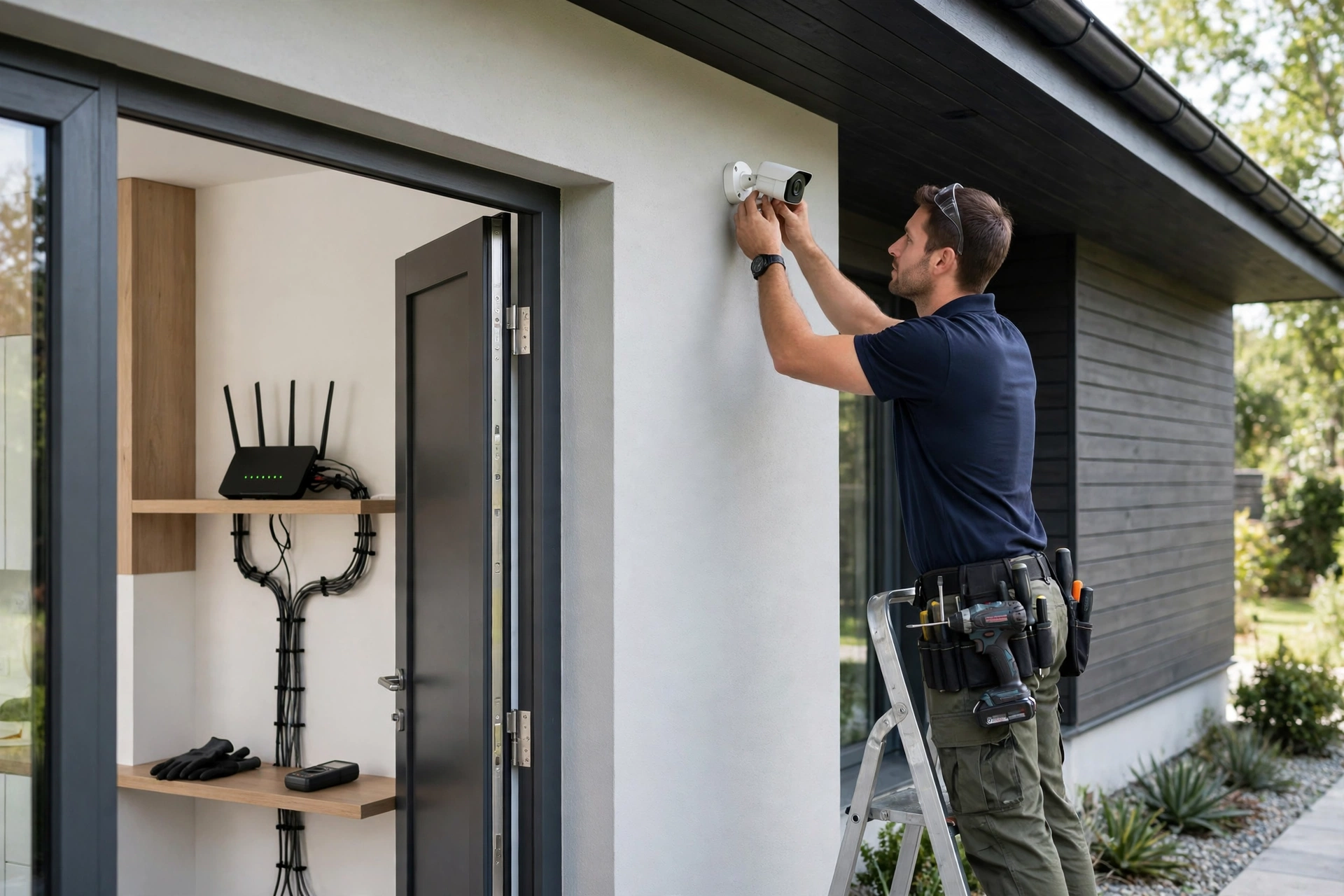
Cameras and smart locks improve security only if they are configured correctly. The UK’s National Cyber Security Centre recommends replacing default passwords, installing device updates, and turning off unnecessary remote-access features — advice that applies to every brand. Before buying a camera system, ask about the camera model and resolution, indoor and outdoor suitability, recording and storage options, whether remote viewing is included, warranty and maintenance, and who can access the footage. A cheap camera with a default password is a liability, not protection.
Comfort as the core metric
Temperature, light, noise, air quality, and furniture support decide whether a home feels good. A beautiful room that is too hot, too dark, or echoing is a failed room. Small changes often matter most: warmer evening lighting, better ventilation, a reading chair near a window, charging points where you actually sit. Comfort is the test every other decision should pass — if an upgrade does not make daily life tangibly easier or calmer, it can wait.
Room-by-Room: A Practical Plan for Your Home
You do not need to renovate the whole house. Start with the room that annoys you most, fix it properly, and let the calm spread. Here is a practical plan for each space.
| Room | First fix | Smart upgrade | Design move |
|---|---|---|---|
| Living room | Clear one surface completely; hide cables | Adjustable smart lighting, one smart plug for the TV setup | Seating that faces conversation, not just the screen |
| Kitchen | Drawer dividers, labelled containers, pull-out shelves | Smart plug for the coffee machine; under-cabinet LED strips | Keep counters clear except for daily-use items |
| Bedroom | Blackout or lined curtains; clutter-free surfaces | Warm dimmable bedside lighting; a schedule that dims at night | Soft textures, low light in the evening, phone charging outside the bed |
| Bathroom | Floating shelves and wall-mounted storage | Motion-sensor light; water-saving fixtures | Bright, even lighting around the mirror |
| Home office | A real chair and a clear desk, even in a corner | Smart plug on a schedule for the monitor; reliable Wi-Fi coverage | Natural light from the side, not behind the screen |
| Hallway & entry | A place for keys, shoes, and bags by the door | Motion-activated light; video doorbell | A mirror and one hook per person — nothing else |
The kitchen deserves special attention, because it is where daily routines succeed or fail. A tidy, well-lit kitchen makes healthy habits easier — and small, practical food routines help too, from keeping fruit visible to having quick options ready. If you enjoy Finnish-style practical food ideas, our guide to smoothie pouches shows how a simple, portable format can make a busy morning smoother — the same “make the easy choice the healthy choice” thinking that a well-organised kitchen is built on.
Smart Devices Worth Buying First
If you are starting from zero, buy in this order. Each item earns its place by solving a daily problem; anything else can wait until you know what you actually miss.
| Priority | Device | What it solves | Cost level |
|---|---|---|---|
| 1 | Smart plugs (2–3) | Lamps and appliances on a schedule; no more “did I leave it on?” | Low |
| 2 | Smart bulbs or a lighting kit | Warmer evenings, lights that switch themselves off | Low |
| 3 | Video doorbell | See who is at the door without getting up | Medium |
| 4 | Smart thermostat | Heating that follows your routine instead of a fixed timer | Medium |
| 5 | Smart lock | Keyless entry and temporary codes for guests or cleaners | Medium |
| 6 | Security cameras | Recorded coverage of entry points, with remote viewing | Medium to high |
| 7 | Robot vacuum | Floors that stay clean without a weekly chore session | Medium to high |
| 8 | Smart speaker / hub | One place to control everything — only once you have things to control | Low to medium |
Two rules govern this list. First, buy devices that work together — check that each one supports the same platform or standard before you buy, or you will end up with five apps and no automation. Second, prefer devices that keep working when the internet drops: local control beats cloud-only control every time the connection fails. A home that stops working during an outage is not smart.
What a Smarter Home Really Costs
No honest article can give you a single price, because costs depend on your country, your home’s size, and what you already own. What we can give you is a realistic framework — and a warning about the articles that do give exact figures without saying where they came from.
| Level | What it includes | Who it suits |
|---|---|---|
| Starter | A few smart plugs and bulbs, better storage, LED lighting throughout | Renters and anyone testing the idea |
| Comfortable | Starter level plus a video doorbell, smart thermostat, and smart lock | Homeowners settling in for the long term |
| Full upgrade | Comfortable level plus cameras, robot vacuum, and integrated lighting scenes | People renovating or building a system room by room |
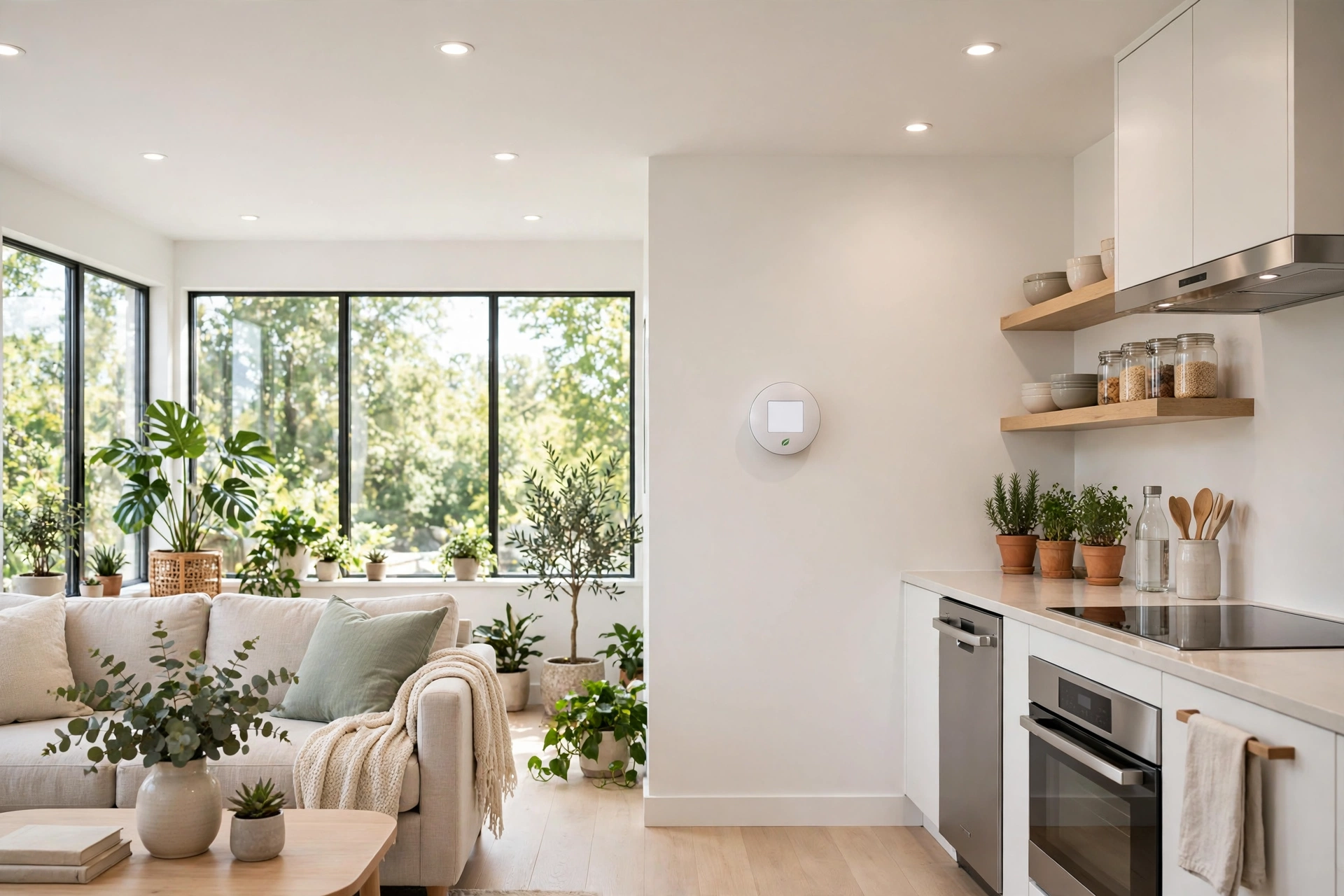
| Professional install | Any of the above installed by a professional, including wiring and CCTV | Anyone who wants wired cameras, wall-mounted panels, or a clean finish |
Three cost truths competitors skip. First, the cheapest upgrades — decluttering, reorganising storage, sealing draughts, switching to LEDs — cost little and deliver the most noticeable daily difference. Second, professional installation is a real cost: budget for labour, cabling, and mounting, not just the devices. Third, subscription fees add up: some cameras and doorbells charge monthly for recording history, so check the ongoing cost before you buy, not after. When a provider cannot give you an itemised written quote, treat that as a warning sign, not a minor detail. And remember that for the Indonesian business discussed above, no verifiable public prices exist at all — any article quoting exact monthly fees for its services is inventing them.
Step-by-Step: Build Your Smarter Home in a Weekend
Here is a realistic two-day plan. It uses no renovation, no electrician, and no single brand — just decisions in the right order.
Step 1 — Walk your home and list the annoyances (Saturday morning, 1 hour). Go room by room and write down what actually bothers you: the dark hallway, the cold bedroom, the tangled cables, the kitchen you cannot find anything in. This list — not a shopping catalogue — is your plan. If it is not on the list, do not buy it.
Step 2 — Declutter one room completely (Saturday morning, 2–3 hours). Pick the room you use most. Everything gets a home or leaves the room. This single step delivers more calm than any device, and it costs nothing.
Step 3 — Fix lighting and storage (Saturday afternoon). Swap remaining old bulbs for LEDs, add a smart plug to one lamp, and put storage where things are actually used — hooks by the door, dividers in the kitchen drawer, a basket for the everyday clutter. Small, visible wins keep momentum.
Step 4 — Install your first smart devices (Sunday morning). Set up the smart plugs and bulbs, create two simple routines — “good morning” and “good night” — and test them. One routine that works reliably beats ten half-finished automations.
Step 5 — Secure what you installed (Sunday midday, 30 minutes). Change every default password, enable two-factor authentication where available, update firmware, and turn off remote access you do not need. Write the passwords in a password manager, not on a sticky note.
Step 6 — Live with it for two weeks, then decide (ongoing). Do not buy anything else for fourteen days. Notice what you actually miss. Then buy the next item on your annoyance list — not the next item in an advertisement.
Pro tip: start with one room. The calm spreads naturally — and so does the confidence to do the next room properly.
7 Mistakes to Avoid
1. Treating every search result as the same company. The name is used for a business, a lifestyle concept, and a home-content platform. Check the full business name, website, and location before assuming two pages describe the same thing.
2. Believing invented statistics. Round numbers with no source — “30% calmer”, “25% happier”, “40% energy savings” — are marketing, not research. Ask for the study, the sample, and the method. If none exists, ignore the number.
3. Buying devices before fixing the room. A smart bulb in a cluttered, poorly laid-out room is still a cluttered room. Layout, storage, and light come first; gadgets second.
4. Choosing devices that do not work together. Five brands, five apps, no automation. Pick one platform or standard and check compatibility before every purchase.
5. Ignoring security setup. Default passwords, outdated firmware, and open remote access turn a security camera into a vulnerability. The thirty minutes spent on setup is the most valuable part of the purchase.
6. Paying without a written quote. For internet installation, CCTV, or any professional work, get an itemised written quote covering equipment, labour, monthly fees, and maintenance. Verbal promises are not a contract. The same caution applies to any unfamiliar company you find online — whether it is an internet provider or a small German machinery firm whose name you have never seen before: verify the business first, then decide.
7. Copying luxury interiors that do not match your life. A home should reflect the people who live in it, not a photograph. Start from your daily problems — clutter, light, noise, bills — and let the solutions follow.
Is It Worth It? An Honest Verdict
As a business, the name belongs to a real Indonesian provider of internet, CCTV, and software services — worth considering if you live in its service area, and worth verifying carefully like any local provider. As a global smart-home platform or Czech appliance brand, it does not check out: there is no verifiable product line, no official documentation, and no independent evidence for the grand claims made about it.
As a concept, though, the idea underneath is genuinely worth your time. A home with good light, sensible storage, a few well-chosen smart devices, and lower energy waste is measurably better to live in — and you can build it yourself, this weekend, without any single brand. That is the real value here: not a mysterious product, but a practical way of thinking about the place you live.
The honest summary is short. Verify the business before you pay it. Ignore the invented products and statistics. And steal the good idea — a calmer, smarter, more efficient home — because that part is real, and it is yours to build.
Frequently Asked Questions
What is Homecz?
It is the online name of CV. Home Connection Z Group, an Indonesian business advertising internet connectivity, CCTV installation, and application development from Babelan, Bekasi. The same word is also used online as a loose concept for smarter, calmer, more energy-efficient home living. The two meanings are not the same thing.
Is Homecz a smart-home platform?
No — not on the available evidence. There is no published technical documentation, product catalogue, or supported-device list establishing a proprietary home-automation platform. Internet access and CCTV installation can support a connected home, but they do not by themselves make a company a smart-home platform.
Is Homecz a Czech company?
No. The letters “CZ” suggest the Czech Republic, and some articles build a “Czech engineering” story on that reading, but the identifiable business publishes an Indonesian address. Do not assume a company is Czech — or anything else — from its name alone.
How much does Homecz cost?
No verifiable public prices exist for the business’s services. Any article quoting exact monthly fees is inventing them. Ask the provider for an itemised written quote covering installation, equipment, monthly charges, and maintenance before deciding.
Can I use the Homecz idea in a small home or rented flat?
Yes. The concept works at any size, and renters benefit most from the low-cost level: smart plugs and bulbs, better storage, LED lighting, and draught-proofing all travel with you when you move.
How do I start building a smarter home?
Start with your biggest daily annoyance, not a shopping list. Declutter one room, fix its lighting and storage, add one or two smart devices that solve a real problem, secure them properly, and live with the result for two weeks before buying anything else.
Is Homecz legitimate and trustworthy?
The business has a public website describing real services and contact details, which is a reasonable starting point. But a website alone does not prove registration, competence, or reliability. Verify its legal identity, request written terms and a quote, confirm the contact channels work, and look for independent feedback before paying.
Sources
- 7bio.co.uk — verification-first guide to the name, its business identity, services, location, hours, and registration process (accessed 10 November 2026).
- peacequarters.com — “Zen smart living” guide claiming 3,500 words; source of the invented appliance models, health statistics, and case studies discussed above (accessed 10 November 2026).
- sixmagazine.co.uk — modern-home concept overview (accessed 10 November 2026).
- farhomie.com — complete guide to smarter home living, published 6 July 2026 (accessed 10 November 2026).
- uktimepost.com — home-improvement platform coverage (accessed 10 November 2026).
- UK National Cyber Security Centre — guidance on securing smart cameras and connected devices (replace default passwords, install updates, limit remote access).
Editor’s note: where this article states that a claim is unverified, it means no primary source, official documentation, or independent evidence for it could be found in the sources reviewed on 10 November 2026. If you hold evidence for any claim labelled unverified here, we will happily review and correct it.



1 Comments