

Assandas: Meaning, Origin and the People Who Carried the Name

Quick Answer
Assandas is a Sindhi given name and surname with no recorded dictionary meaning. It is most closely associated with the people who carried it — above all A. J. Uttam (1923–2005), the writer called the “living encyclopedia of Sindhi literature.” The name is rare, rooted in the Sindh region of present-day Pakistan, and it is not a brand, a product, a place or a word with a common English definition. Anyone telling you it means something specific in English is guessing; the surname databases that track it list its meaning as “not listed.”
Search for this name and you will find fragments: a court judgment from 1967, a biography page, a partition memoir, a company register entry. None of those pages answers the obvious question — what the name actually is. This article puts the fragments together, checks each one against its source, and clears away the lookalike words that search engines keep mixing in. If you carry the name, are researching family history, or simply typed it into a search box out of curiosity, here is everything that can honestly be said about it.
The Name at a Glance
| Fact | Detail |
|---|---|
| Type | Sindhi given name and surname |
| Meaning | Not listed in any surname or name dictionary consulted |
| Script | Written आसनदास, in Devanagari transliteration |
| Where it is found | Most prevalent in Pakistan (Sindh); also recorded in the United States and Spain |
| Common variants | Aasandas, Asandas |
| Most famous bearer | A. J. Uttam (1923–2005), Sindhi writer, critic and journalist |
| What it is not | Not a company, product, app, place or common English word |
What Does Assandas Mean?
The honest answer is that nobody has published a verified meaning. Forebears, the surname database that tracks the name’s distribution, states plainly that the meaning of this surname “is not listed.” That is not a gap in one website’s data — it reflects the reality that the name belongs to a small, specific naming tradition and has never been given a dictionary-style definition in English, Hindi or Sindhi reference works that are publicly available.
What can be said with confidence is where the name sits. It is a Sindhi name. Sindhis are an Indo-Aryan ethnolinguistic group native to Sindh, the province in present-day Pakistan that gives the community its name. The name appears in the records of Sindhi Hindu families who lived in Hyderabad, Shikarpur, Dadu and surrounding towns before the Partition of India in 1947, and in the families who carried it to India — chiefly to Mumbai — afterwards. The diaspora then spread it further: surname records place bearers in the United States and Spain as well as Pakistan.
That scarcity is itself useful information. Globally, the name is the 5,391,485th most common surname in Forebears’ ranking, and the variant spelling Aasandas is rarer still. In Pakistan, the variant Aasandas is carried by only six people, all of them in Sindh. A name this rare will not have a neat one-line meaning, and any website that offers one without citing a source is inventing it.
Where the Name Comes From: Sindhi Naming Traditions
To understand the name, it helps to understand how Sindhi names work. Most traditional Sindhi surnames are patronymics: they are built from an ancestor’s given name plus the suffix -ani, which means “descendant of.” The suffix comes from the Sanskrit word ansh, meaning a part or a descendant. So Advani means the descendants of Adu, Ramchandani the descendants of Ramchand, and Uttamchandani — the surname of the name’s most famous bearer — the descendants of Uttamchand.
The given name itself follows a pattern common in Sindhi Hindu families of the nineteenth and early twentieth centuries, when names were often built from Sanskrit roots and the suffix -das, meaning servant or devotee. The structure suggests a devotional name in the same family as Haridas or Ramdas, but that is a reading of the pattern, not a documented definition — and the distinction matters. A pattern is evidence; a claimed translation without a source is not.
Two spellings circulate in records: “Assandas” with a double “s” and “Asandas” with one. Both refer to the same name. The double-s form is the one attached to the best-documented bearers, including the writer A. J. Uttam and the freedom fighter Bherewani, so it is the spelling this article uses throughout. The variant “Aasandas,” with a doubled vowel, appears in modern surname databases as a separate, even rarer spelling of the same name.
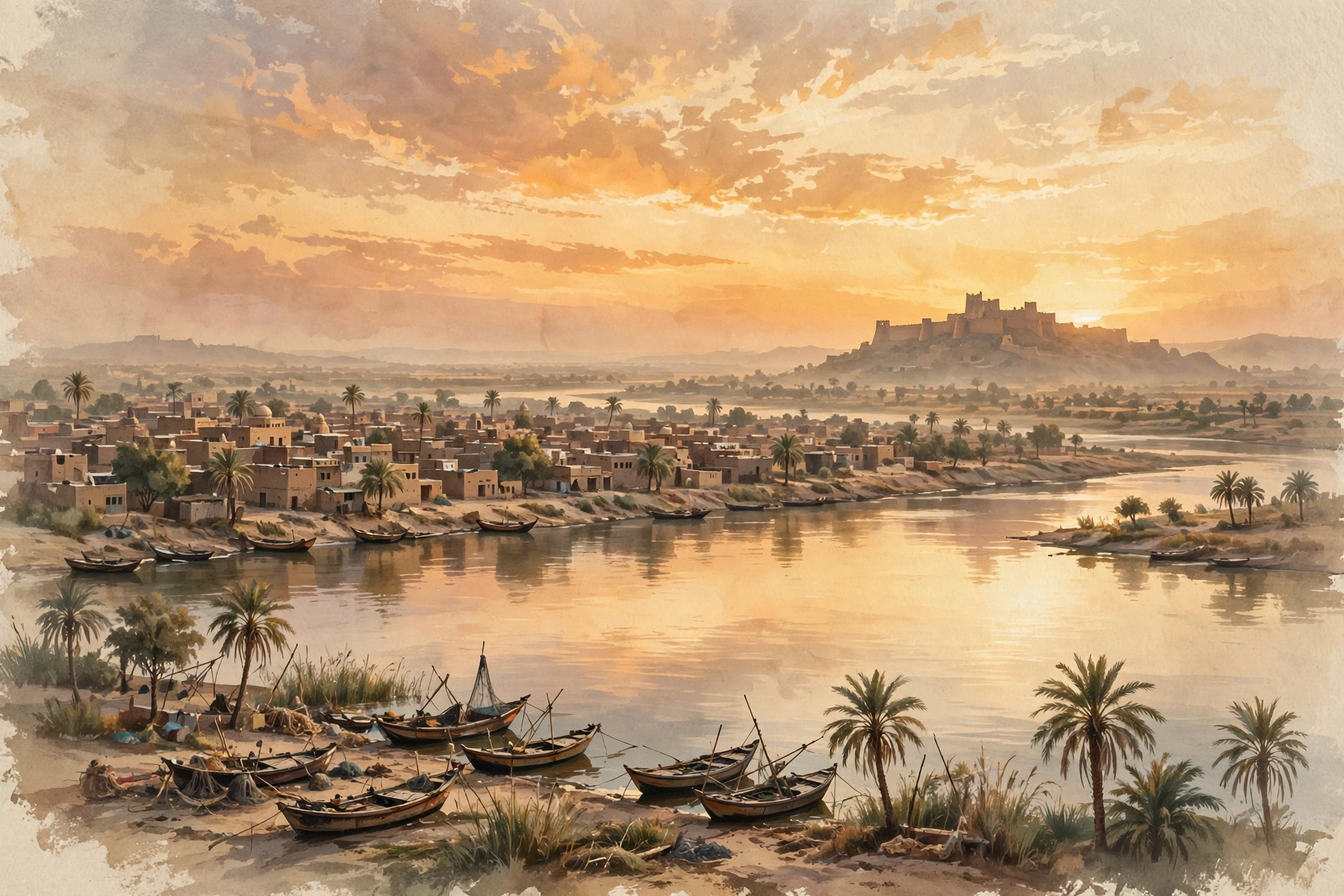
The name’s geography tells its own story. Before 1947, its bearers lived in Sindh’s towns — Hyderabad, Shikarpur, Dadu, Khudabad — as traders, bankers, teachers and writers. Partition scattered the community: families crossed to India, many settling in Mumbai, Ulhasnagar and other cities, while some carried the name onward to the Philippines, Britain, the United States and Spain as part of the Sindhi trading diaspora. Each move left a small paper trail — a company registration here, a department store there, a memoir, a court record — and those trails are how the name survives in the public record today.
The Most Famous Bearer of the Name: A. J. Uttam
The full name was Assandas Jethanand Uttamchandani, but almost nobody called him that. To the Sindhi literary world he was A. J. Uttam — writer, critic, research scholar and journalist — and his contemporaries gave him a title that stuck: the “walking, talking and living encyclopedia of Sindhi literature.” If the name has a legacy, it is his. He wrote continuously from 1941 until the day he died in 2005, a literary career of 64 years.
He was born on 16 December 1923 in Hyderabad, Sindh. His mother and his outspoken father shaped his early love of language, and he was organising before he was an adult: still a schoolboy, he formed the Hyderabad Student Union in 1941 and became its general secretary. On 9 August 1942 he answered Gandhi’s Quit India call, courted arrest, and spent a year in prison. He was eighteen. The experience fixed the two poles of his life — literature and political commitment — and he never really left either one.
The young writer began writing short stories, essays and literary criticism at eighteen, while studying at D. G. National College in Hyderabad, where he edited the college magazine Phuleli in 1946–47. In the same year he founded a progressive writers’ group in Hyderabad, bringing together figures who would define modern Sindhi literature: Professor M. U. Malkani, Lekhraj Aziz, Tirth Basant, Kalyan Advani and Gobind Malhi. His anti-dowry short story “Taraki-a je raha te” (“On the Path of Progress”) became a landmark — and changed his personal life as well: the young Sugani Narwani was drawn to the writer, and the two married on 14 November 1947. She went on to her own fame as the Sindhi novelist Sundari Uttamchandani.
Partition arrived in the middle of all this. Like millions of Sindhis, he was forced to leave Hyderabad and migrate to India in 1947, completing his M.A. in Mumbai in 1949 and taking a job at the Bombay Secretariat. But office work never displaced literature. In 1949 he helped found the Sindhi Sahit Mandal in Bombay — the first major literary and cultural organisation of Sindhis in India — serving as its general secretary and vice president. The Mandal became the engine of the campaign for official recognition of the Sindhi language, a sixteen-year effort that ended in success when Sindhi was included in the Eighth Schedule of the Indian Constitution in 1967.
His great instrument was a magazine. He co-edited the monthly Naeen Duniya from 1950 and ran it himself from 1957 until his death, publishing more than 500 original stories, over 1,000 poems and 200 essays and dramas in its pages, alongside some 100 books. He also edited the Sindhi dailies Sindhu Samachar (1973–1975) and Sindhu Sansar (1975–1978), co-edited the weekly Sindhu Dhara (1959–1967), and in 1959 became the founder general secretary of the Akhil Bharat Sindhi Boli Ain Sahit Sabha, a post he held through 1963 and again from 1970 to 1973.
Twice he made a choice that tells you what the man valued. In 1960, when Bombay State was split into Maharashtra and Gujarat, he resigned a secure government job rather than accept a transfer to Gujarat, because moving would have taken him away from the centre of Sindhi literary life in Bombay. And he kept writing through every decade: his first book, Sarhad Jo Gandhi, appeared in 1947; his last, Adab Ain Tanqeed, in 2003. Between them came 21 books, including the story collections Kashmkash (1971) and Hoo Jehan hi Manu (1991), around fifteen books of essays, and the landmark critical study Sindhi Kahani, Natak Ain Tanqeed (1981). His monographs on the poets Lekhraj Aziz and M. U. Malkani (1985) and on Kalyan Advani (2002) remain reference works, and his stories were translated and published in Russia, Germany and across Sindh.
Recognition came steadily: the Soviet Land Nehru Peace Award in 1965 and again in 1972, the Priyadarshani Academy literary award in 1991, and the Dr Sadarangani Medal in 1994. In 1973 he attended the World Writers’ Conference in Russia, meeting writers including the Marathi poet Narayan Surve, Harivansh Rai Bachchan, Bhisham Sahni and the Bengali writer Subhash Mukherjee. He died on 3 January 2005 in Mumbai, still writing. His daughters Asha and Bina later established the Uttam Sahit Award in his memory.
A. J. Uttam: Key Dates
| Year | Event |
|---|---|
| 1923 | Born 16 December in Hyderabad, Sindh |
| 1941 | Founds the Hyderabad Student Union; begins writing |
| 1942 | Joins the Quit India movement on 9 August; imprisoned for one year |
| 1946 | Edits college magazine Phuleli; founds progressive writers’ group |
| 1947 | Marries Sugani (Sundari) Narwani on 14 November; migrates to India; first book Sarhad Jo Gandhi |
| 1949 | Completes M.A. in Mumbai; co-founds Sindhi Sahit Mandal |
| 1950 | Becomes co-editor of the monthly Naeen Duniya |
| 1957 | Takes over Naeen Duniya; runs it until his death |
| 1959 | Founding general secretary, Akhil Bharat Sindhi Boli Ain Sahit Sabha |
| 1960 | Resigns government job rather than transfer to Gujarat |
| 1965 / 1972 | Soviet Land Nehru Peace Award |
| 1967 | Sindhi included in the Eighth Schedule of the Indian Constitution |
| 1973 | Attends World Writers’ Conference in Russia |
| 1991 | Priyadarshani Academy literary award |
| 1994 | Dr Sadarangani Medal |
| 2003 | Last book, Adab Ain Tanqeed |
| 2005 | Dies 3 January in Mumbai |
Selected Books
| Book | Year | What it is |
|---|---|---|
| Sarhad Jo Gandhi | 1947 | First book |
| Tagore Hik Jhalak | 1961 | Gurudev Tagore’s views on Sindhi literature |
| Kashmkash (Struggle) | 1971 | Short stories |
| Sahitya Ain Sahityakar | 1974 | Essays on literature and writers |
| Sindhi Kahani, Natak Ain Tanqeed | 1981 | Landmark critical study of story, drama and criticism |
| Hoo Jehan hi Manu | 1991 | Short stories |
| Sahitik Parkh | 1997 | Literary assessment and criticism |
| Adab Ain Tanqeed | 2003 | Last book |
From Resident to Refugee: The Freedom Fighter’s Story
The second best-documented bearer of the name is Bherewani, a freedom fighter whose first-person account of Partition is one of the most vivid Sindhi memoirs ever published. Born on 4 February 1920, he was a Gandhian Congressman who served as secretary of the Dadu District Congress and a member of the Congress Socialist Party, working closely with Jayaprakash Narayan. He had already been jailed during the independence struggle when Partition forced him to make the journey he later described in the memoir “From a Resident to a Refugee,” narrated to Sundar Iyer.
His account is specific and unflinching. In October 1947 his family gathered at the port of Karachi, where the Sindh Provincial Congress was distributing tickets for ships to India. Guards searched their baggage and confiscated money and valuables before they boarded. After a miserable crossing, the ship reached Bombay, and the family was trucked to the refugee camps at Powai, where they lived in barracks and tents for nearly eight months. As president of the Panchayat, Bherewani then led truckloads of people to Kalyan Camp — the settlement that became today’s Ulhasnagar — broke open the locked military sheds, and distributed the furniture among the families. When Bombay’s Chief Minister B. G. Kher ordered them to vacate, Bherewani argued their case in person until Kher agreed to allot the sheds to them as housing. The square where they settled became known as Powai Chowk.
Bherewani’s memoir matters for two reasons. First, it is a primary source for the Sindhi Partition experience, a migration that is far less documented than the Punjab and Bengal partitions. Second, it shows the name in a completely different sphere from literature: in the politics of the freedom movement and the practical work of refugee resettlement. He took Jayaprakash Narayan to Ulhasnagar to see the conditions there, and he carried Narayan’s demand — that Sindhis, who had given up their homeland, deserved representation in Parliament — into his later public life. He also kept alive the argument, made at the 1931 All India Congress session, that India should be organised on linguistic lines, and that the Sindhi language deserved a state of its own. The language eventually won constitutional recognition in 1967; the state never came.
The Name Around the World
Mukhi Assanand: The Eighteenth-Century Banker
The name reaches back further still. Mukhi Assanand Dharamdas — the same name, in its older spelling — was born in 1780 at New Khudabad, near Halla in Sindh. He and his brothers were shroffs, traditional bankers, who also dealt in spices and grain. He married into the Uttamchandani family, fathered two sons, Tilokchand and Basantrai, and two daughters, and died in 1838. His grandson Tilokchand, born around 1810, carried the family forward into Hyderabad’s merchant elite.
The Mukhi family’s story is preserved in the Mukhi House Museum in Hyderabad — a mansion built in 1921 that traces the family’s chapters from the eighteenth century to the present. The name appears there as a founding figure, not a footnote: the family tree begins with Mukhi Sagharmal’s sons, and Assanand is listed as the eldest. For anyone tracing the name through genealogy, the Mukhi records are one of the oldest paper trails it leaves.
Beyond the famous bearers, the name turns up in scattered records that map the Sindhi diaspora. In Baguio City in the Philippines, the Assandas Department Store was one of the Indian-owned shops that anchored the city’s trading district: a study published by the University of the Philippines records that it sold toys, underwear, garments, remote-control cars and expensive watches until the late 1980s. It belonged to the generation of Sindhi traders — often called Sindhworkis — who built textile and retail businesses across Southeast Asia from the early twentieth century onward.
In Mumbai, Assandas Investments Private Limited appears in the Ministry of Corporate Affairs register, a company based at Nariman Point. And in the legal record, a man of the name from Ajmer appears as an accused in a 1967 Rajasthan murder case, Tillu v. State, in which he and a co-accused were convicted of murder under Section 302 of the Indian Penal Code and sentenced to life imprisonment. The judgment is a public document, and it is the first result many search engines return — which is why it is worth saying plainly what it is: a court record about one individual, not a definition of the name, and not representative of anything else on this page.

The Language Behind the Name: Sindhi and the Eighth Schedule
No account of this name is complete without the language it comes from. Sindhi is an Indo-Aryan language with roots going back more than a thousand years, native to the Indus valley and the province of Sindh. It is written in two scripts — a Perso-Arabic script in Pakistan and Devanagari in India — and it carries a literary tradition that includes the Sufi poetry of Shah Abdul Latif Bhittai, one of South Asia’s great devotional poets, and a rich body of folk tales, including the tragic romances of Sassui Punhun and Umar Marvi.
Partition put the language in danger. When Sindh became part of Pakistan in 1947, the Hindu Sindhi community that spoke the language migrated almost wholesale to India — and arrived in a country where their language had no state, no official status, and no territory to anchor it. A language without a homeland can vanish in a generation, and the Sindhi community knew it. The campaign to save it became the central civic cause of the post-Partition generation, and the writer profiled above was one of its leaders.
The campaign ran through the organisations he helped build. The Sindhi Sahit Mandal, founded in Bombay in 1949, kept writers publishing and readers reading. The Akhil Bharat Sindhi Boli Ain Sahit Sabha, founded in 1959, gave the movement a national platform. The monthly magazine Naeen Duniya gave it a voice that reached Sindhi homes every month for more than half a century. Step by step, the campaign won ground: in 1957 Sindhi was recognised for the Sahitya Akademi Awards and for programmes on All India Radio, and in 1967 — after sixteen years of organised effort — the language was included in the Eighth Schedule of the Indian Constitution, the list of languages the Indian state formally recognises and supports.
That victory is the reason the name still has a living context today. A name is carried by a language, and a language is carried by its institutions — its magazines, its literary societies, its school syllabuses and its awards. The books listed in the table above, several of which are prescribed in university syllabuses, are part of that institutional memory. When a family today searches for the name, the results they find — biographies, memoirs, family histories — exist because that generation built the organisations that preserved them.
It also explains why the name’s bearers cluster where they do. The trading families took it to the Philippines, East Africa and beyond; the literary families took it to Mumbai and the universities; the Partition generation took it to Ulhasnagar and the refugee colonies. Each branch kept the spelling slightly differently, which is why researchers meet the one-s and two-s variants and the doubled-vowel form. The spelling differences are not errors. They are the footprints of a migration.
What the Name Is Not: Clearing Up the Confusion
Because the name is rare, search engines fill the gaps with lookalikes. Here is what to strike off the list.
| Lookalike | What it actually is | Why it appears |
|---|---|---|
| Asanda / Asande | A Nguni (Zulu/Xhosa) given name from the verb stem -sanda-, meaning to increase or multiply — “may there be increase” | Similar spelling, completely different language family and origin |
| Sandas | A Hindi/Urdu word (संडास) for a latrine or cesspit | Phonetic overlap only; unrelated to the Sindhi name |
| ASDAS | The Axial Spondyloarthritis Disease Activity Score, a medical scoring system | An acronym that happens to share letters |
| Latin assandas | The accusative feminine plural of assandus, the gerundive of assō — “things to be roasted” | A real Latin word form, but a coincidence of grammar, not the name’s origin |
| “A brand / app / product” | No verified company, app, software or product uses the name today | SEO pages invent products for rare keywords; no primary source supports one |
| “A place” | No town, village or landmark of this name is recorded | Confusion with Sindhi place names; the name attaches to people, not places |
The Latin coincidence deserves a sentence because it is genuinely interesting: in Latin grammar, the word is a real inflected form meaning “things that are to be roasted.” It has nothing to do with the Sindhi name — the resemblance is pure chance, the way two unrelated words in different languages sometimes collide. But it is a useful reminder of how the name should be handled: check the language before assuming a meaning.
Why a Rare Name Deserves a Full Story
It is tempting to treat a rare name as a curiosity — a search term with no good answer. But rare names are exactly the ones that reward careful research, because everything verifiable about them is specific. A common name dissolves into statistics; a rare one resolves into people, places and documents. This name resolves into a writer who shaped a literature, a freedom fighter who built a town out of a refugee camp, an eighteenth-century banker whose house is now a museum, a department store in a Philippine mountain city, and a court judgment from 1967.
That range is also a warning about how search results work. The first page of results for a rare name is a collage: a legal database, a community archive, a company register and a surname site, none of which was written to answer the question the searcher actually asked. The gaps get filled by low-quality pages that invent meanings, products and histories for keywords they have never researched. The defence against that is simple and old-fashioned: follow each claim to a primary source, and say plainly when no source exists.
For families, the practical value is concrete. A grandchild searching for a grandfather’s name will find this article’s sources more useful than any definition: the community archive with the full biography, the memoir in the freedom fighter’s own words, the family museum’s history, the surname database’s distribution figures. Names are how families find each other across generations and continents, and the paper trail matters more than the etymology. If this article helps one person connect a name on a document to a life that was actually lived, it has done its job.
There is a final lesson in the Latin coincidence. Two unrelated languages can produce the same string of letters by accident, and the internet will happily treat the accident as a connection. The discipline is to check the language, the date and the document before accepting a meaning — and to admit, when the evidence runs out, that some questions have no answer yet. For this name, the honest answer to “what does it mean?” is that no one has recorded one. Everything else — the history, the people, the migration — is documented, and it is more interesting than any invented definition could be.
How to Research the Name Further
If you are tracing a family connection, start with the variants. Search for “Asandas” and “Aasandas” as well as the double-s spelling, and for the full forms — “Uttamchandani” and “Bherewani” — alongside the given name. Sindhi records before Partition are thin, so the most productive sources are usually community histories rather than government archives: the Sindhi Sangat promoters’ archive, The Sindhu World encyclopedia of Sindhi literature, the Mukhi House family history, and the memoir literature of the Partition, including Bherewani’s account.
For the surname itself, Forebears gives distribution data but no meaning — a useful warning against any site that claims one. For the literary legacy, the dedicated A. J. Uttam archive at ajuttam.sindhisangat.com collects the biography, essays and bibliography in one place. And for the Partition story, Sindhi Shaan’s “From a Resident to a Refugee” is the full text of Bherewani’s memoir, free to read.
- Check the spelling first. One “s” or two changes the results; try both, plus “Aasandas.”
- Separate the people from the word. Nearly everything verifiable about the name is a person who carried it.
- Distrust a meaning with no source. If a page gives a definition but cites nothing, it is guessing.
- Use community archives. Sindhi Sangat, The Sindhu World and Sindhi Shaan hold more than any general name site.
- Look for the full name. “Jethanand Uttamchandani” and “Bherewani” unlock far more than the given name alone.
Frequently Asked Questions
What does Assandas mean?
No verified meaning exists. Forebears, which tracks the surname’s distribution, lists its meaning as “not listed.” It is a Sindhi given name and surname; any English definition offered without a source should be treated as invented.
Is it a first name or a surname?
Both. It is used as a given name — as in the writer A. J. Uttam, whose full name began with it — and it is recorded as a surname in its own right, most commonly in Pakistan and in the diaspora.
Who was A. J. Uttam?
The most famous person to carry the name: a Sindhi writer, critic and journalist (1923–2005), born in Hyderabad, Sindh, author of 21 books and editor of the monthly Naeen Duniya for nearly fifty years. He was known as the “living encyclopedia of Sindhi literature” and helped lead the campaign that won Sindhi a place in the Eighth Schedule of the Indian Constitution in 1967.
Is there a place called by this name?
No town, village or landmark of this name is recorded. The name attaches to people and, historically, to a family business — the department store in Baguio City in the Philippines — not to a place.
How rare is the name?
Very rare. It ranks around 5.39 millionth among world surnames in Forebears’ data, and the variant Aasandas is carried by only six people in Pakistan, all in Sindh.
Is it related to the name Asanda?
No. Asanda is a Nguni name from southern Africa meaning “increase” or “abundance.” The resemblance is a coincidence of spelling, not a shared origin.
Sources
- About A. J. Uttam — Biography, Sindhi Sangat
- A J Uttam — The Sindhu World
- Uttam Jethanand (A. J. Uttam) — Sindhi Sangat
- From a Resident to a Refugee — Bherewani, Sindhi Shaan
- Surname Origin & Distribution — Forebears
- Aasandas Surname Origin & Distribution — Forebears
- Why Do Sindhi Surnames End With -ani? — HouseNama
- Mukhi House — Family History
- Tillu v. State — Judgment, The Laws
- Migration and Business: A Survey of Indian Communities in the Philippines — Asian Studies Journal, University of the Philippines (PDF)
- Latin Verb assa — Word Senses, Kaikki.org (Wiktionary data)
- Meaning and Origin of Asanda — Names.org
Keep exploring: If you enjoyed this deep dive into a rare name with a rich history, you may also like our explainers Oronsuuts — Mongolia’s Soviet-era apartment blocks and the housing story behind them, Byadi — the Arabic fig variety, the South Asian word-meaning and the SaaS claim that did not check out, and JWRE — two different real-estate names, one from the United States and one from the United Kingdom, sharing four letters.



1 Comments