
Byadi Meaning Explained: 7 Meanings, Facts Checked
Quick answer: The word byadi has no single, settled meaning. It is a real place name — a village in Siberia, Russia — and a real fig variety from Jordan and Palestine, and it sits inside an Arabic word family meaning “white.” It is also a family name, a classical Urdu music term spelled slightly differently, and a common misspelling of the Byadagi chilli. What it is not, as far as any verifiable evidence shows, is a medicine, a health condition, or a productivity app — even though several ranking articles claim exactly that. The honest answer about byadi is that the meaning depends entirely on who is using the word, and most of what the internet says about it has never been checked.
Key facts at a glance
- Verified place: a village in the Sakha Republic, Russia, population 307 at the 2002 Census.
- Verified plant: a white fig variety (Ficus carica) grown in Jordan and the Galilee, described in print as early as 1932.
- Verified language roots: Arabic words for “white” and “desert dwellers,” plus an Urdu music term.
- Not verified: any product, app, company, medicine, or illness officially carrying this name.
- Most likely mix-ups: Urdu bimari (illness) and the Byadagi chilli of Karnataka, India.
What the Evidence Actually Shows
Search the word once and you will meet five confident, contradictory answers. One site calls it an illness. Another calls it a workflow tool. A third calls it an art form. A fourth calls it a village. A fifth calls it a chilli. They cannot all be right, and — this is the part the ranking pages skip — most of them offer no evidence at all: no dictionary entry, no company record, no scientific paper, no address, no price, no founder, no date.
So instead of repeating the loudest claim, this guide does something the current top results do not: it checks each meaning against a source that can be opened and read. The result is a short list of meanings that survive checking, a longer list of claims that do not, and a practical way to work out which meaning the person you are reading — or talking to — actually intends.
The method matters more than the verdict. Ambiguous words are a trap for search engines and readers alike, because a confident-sounding page can outrank an honest one. When a word has no single authoritative definition, the useful article is not the one that picks a meaning and shouts it. It is the one that shows its work: what was checked, where, and what came back empty.
Claims vs. Evidence: The Full Scoreboard
Before the detail, here is every major claim about the word, judged the same way: is there an independent source a reader can verify?
| Claim | Verdict | Evidence |
|---|---|---|
| A village in Siberia, Russia | Verified | Wikipedia entry with census data, coordinates, and administrative district. |
| A white fig variety from Jordan and Palestine | Verified | Described in a 1932 book on fig-growing in Palestine; still sold by nurseries today. |
| An Arabic word connected to “white” | Verified | Arabic root b-y-d (white); related forms appear in dictionaries and surname records. |
| An Egyptian family name meaning “desert dwellers” | Verified | Name-etymology database tracing it to Arabic badiya (desert). |
| A classical Urdu music term | Verified (different spelling) | Rekhta Dictionary lists biyaadii as a discordant note in a raga. |
| A word for illness in South Asian languages | Not verified | No dictionary entry found. Almost certainly a garbled form of Urdu bimari (illness). |
| A productivity or workflow software tool | Not verified | No company, website, pricing, review, or download exists for any such product. |
| A traditional art form or craft | Not verified | No museum, craft record, or named artist can be traced to this claim. |
| A chilli variety | Partly true — wrong spelling | The real chilli is Byadagi (Karnataka, India), GI-tagged in 2011, 5,000–15,000 SHU. |
That table is the whole article in miniature. Everything below it is the proof: the sources, the numbers, and the places where the top-ranking pages go wrong — including one page that gives a chilli a heat rating belonging to a completely different pepper.
The 7 Meanings, Checked One by One
Here is each meaning in full, with what is known, what is not, and how strong the evidence is. The order is deliberate: verified meanings first, then the plausible-but-unproven, then the claims that fall apart on inspection.
1. A Village in Siberia, Russia — the Only Meaning With a Map Pin
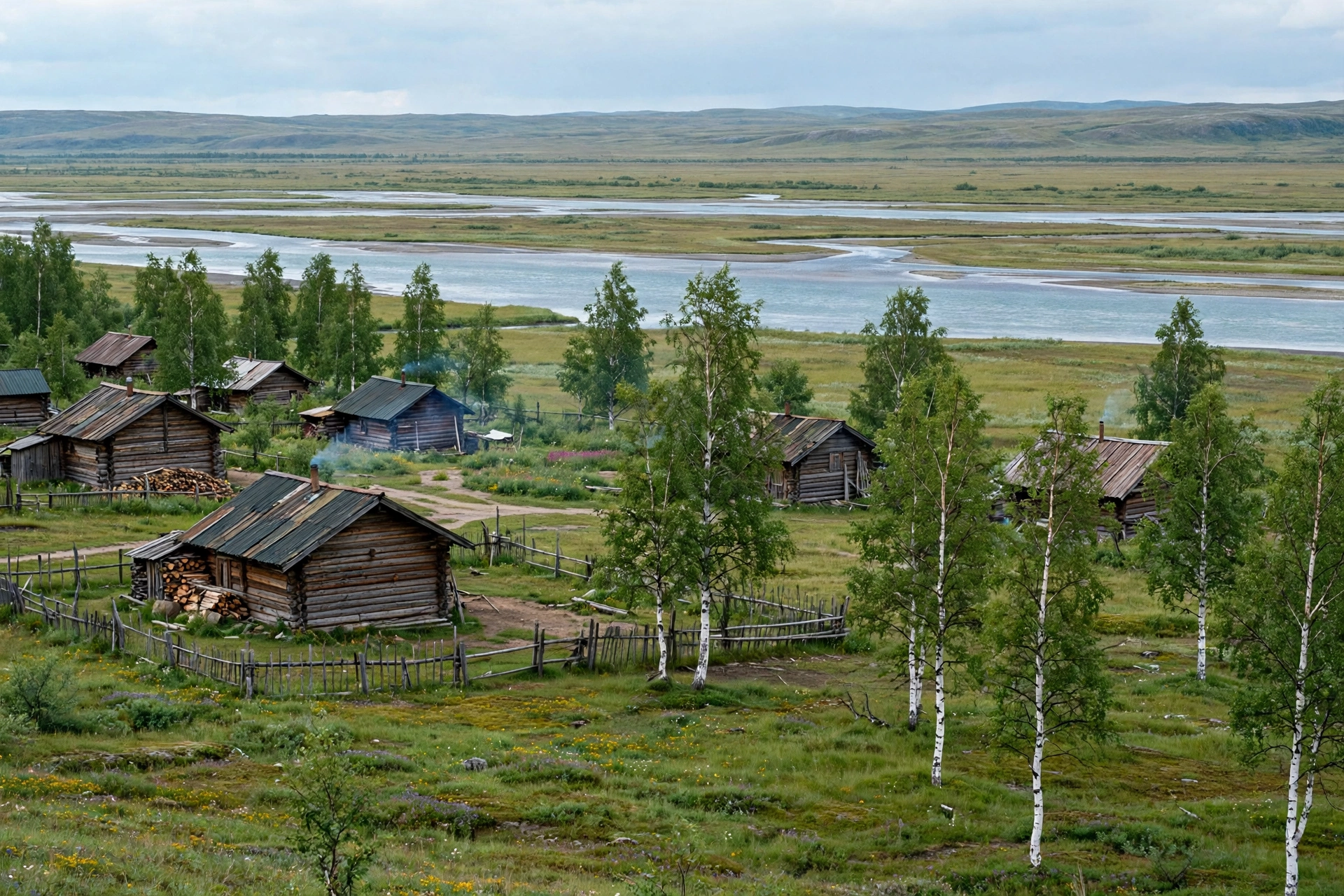
The single most solidly documented use of the name is a place. The village called byadi — in Russian Бяди, in Yakut Бээди (Beedi) — is a rural locality, a selo, in the Dyupsyunsky Rural Okrug of Ust-Aldansky District in the Sakha Republic, Russia. It sits 66 kilometres (41 miles) from Borogontsy, the administrative centre of the district, and 10 kilometres (6.2 miles) from Dyupsya, the centre of its rural okrug. Its population was recorded as 307 in the 2002 Census, and its coordinates are 63°08′N 130°43′E — deep in eastern Siberia, in one of the coldest inhabited regions on Earth.
Why does this matter for a searcher? Because it is the only meaning that comes with coordinates, a census, and an administrative hierarchy that can be cross-checked in seconds. The Sakha Republic, also known as Yakutia, is Russia’s largest federal subject, a vast territory of permafrost, taiga, and extreme winters, and its villages are recorded in an official registry of administrative-territorial divisions. A name that appears in that registry is not a guess; it is a fact of record. If someone writes the word and means a place, this village is almost certainly the place — it is the only settlement on record that carries the name in this exact spelling.
There is also a practical lesson here for anyone researching unfamiliar words. Place names are the easiest claims to verify and the hardest to fake: they either appear in a gazetteer or they do not. When a ranking article claims a word is a “powerful solution” but cannot produce an address, a company number, or a single customer, while a village of 307 people produces a census entry and a map pin, the village wins the credibility contest without trying.
2. A White Fig Variety From Jordan and Palestine — Documented Since 1932
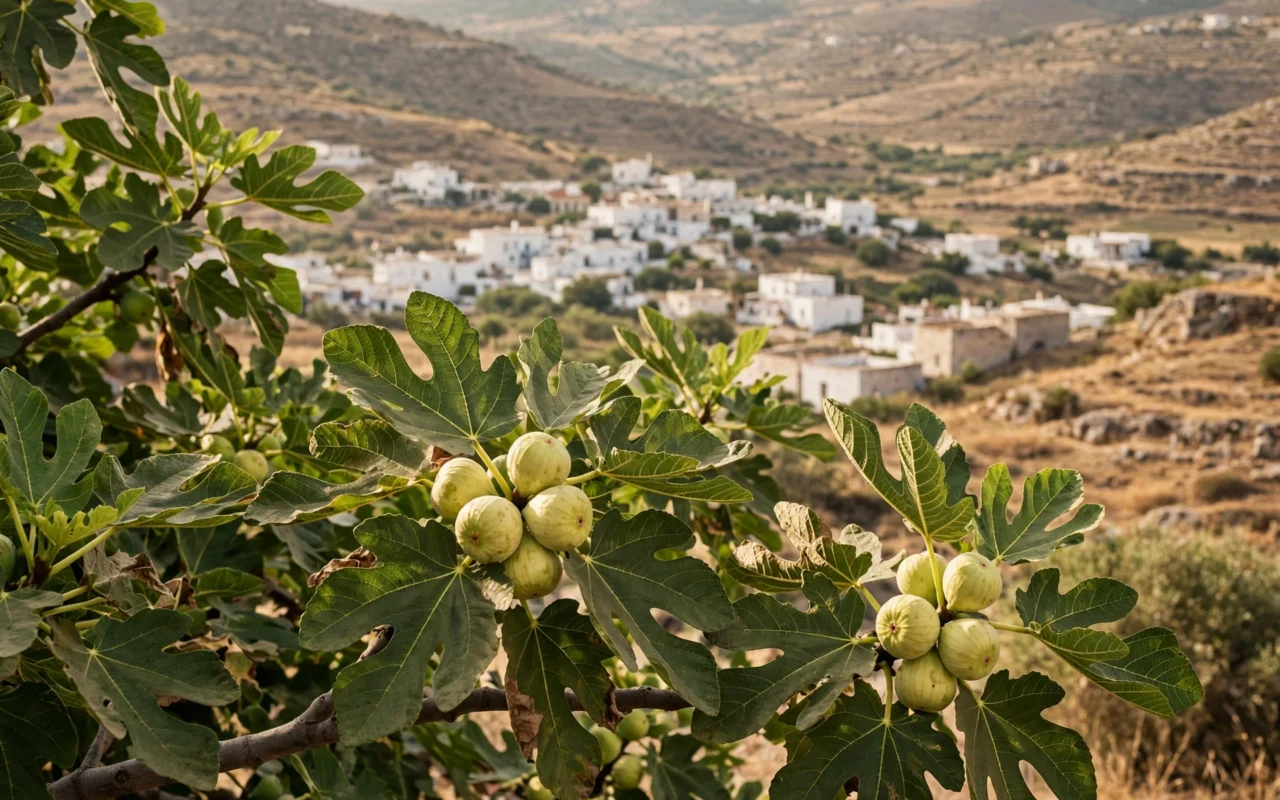
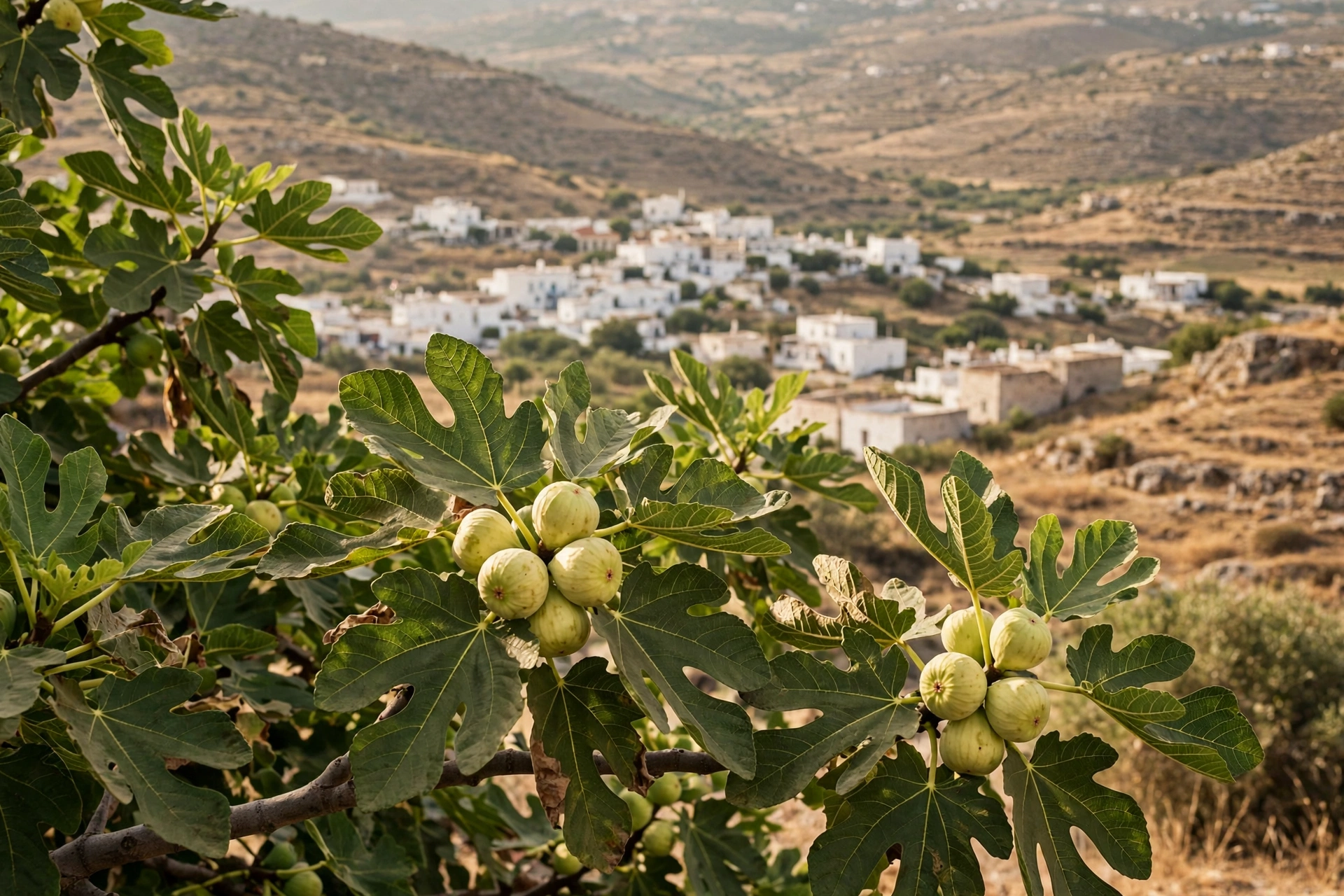
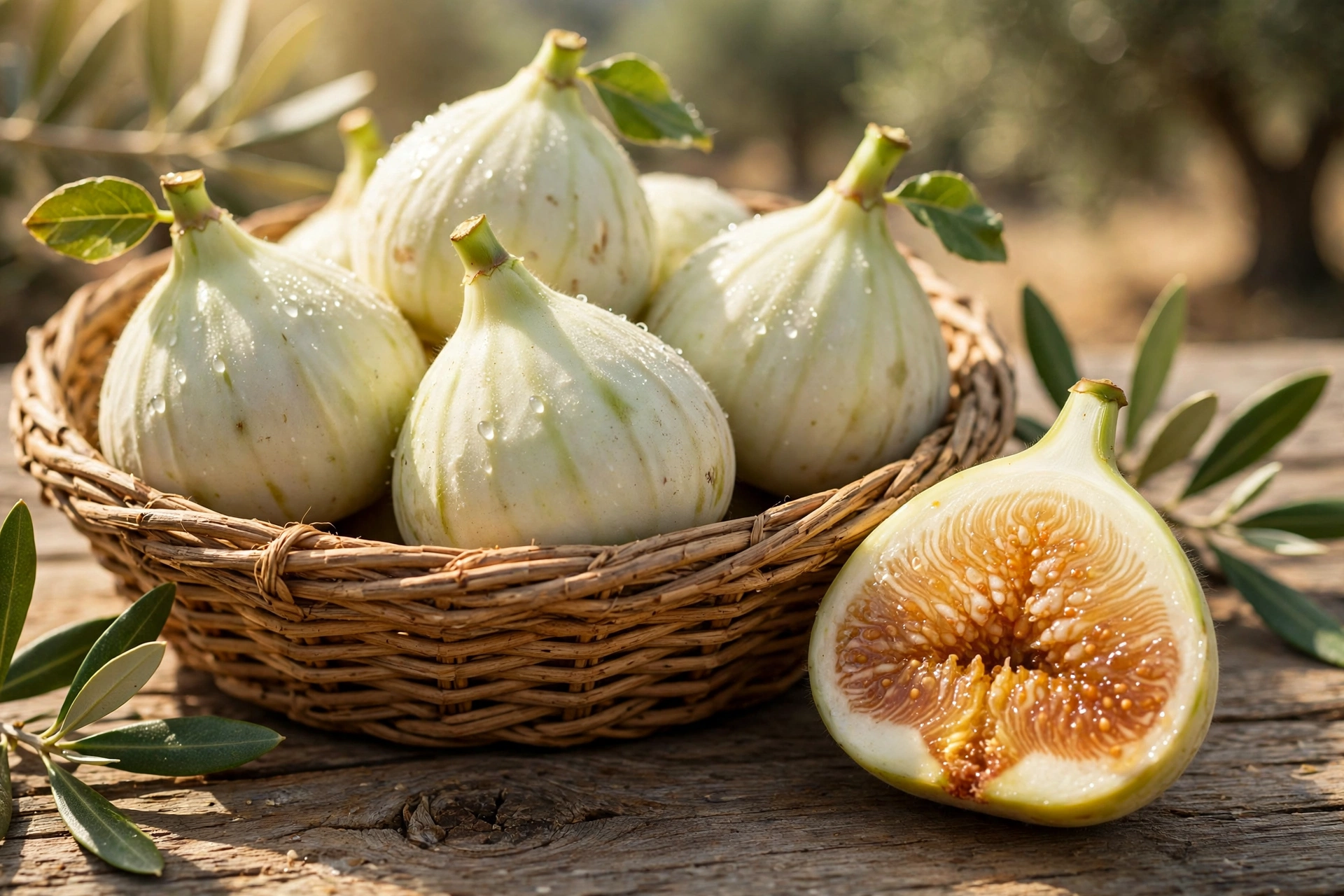
The second verified meaning is a fruit. The white fig known under this name is a variety of Ficus carica, the common fig, grown in Jordan and in the Galilee region of historic Palestine. Its name comes from the Arabic word for “white,” a reference to the pale greenish-yellow skin of the ripe fruit, and it has been written about in print for nearly a century.
The paper trail is unusually good for a fruit variety. Grasovsky and Weitz described it in their 1932 work Fig-growing in Palestine, and the variety — also known locally as Falahi — is still discussed in fig-growing circles today. Growers in the Lower Galilee report that it is grown extensively in their villages, that the main crop ripens from the end of August through all of September, and that the fruit is sold in small baskets at roadside stands. The figs are sweet, with small seeds and few of them, and are eaten fresh, made into jam, and dried; around the village of Gush Halav (Gish), the dried fruit was traditionally pressed into a paste.
Modern nurseries confirm the picture. ProFig, a United States fig nursery, sells a “White Jordanian” tree of this variety, describing large greenish-yellow figs with soft amber flesh and a sweet honey flavour, a breba crop with a mild pink interior followed by a main crop of pure amber honey, no need for pollination, and a growing range of USDA Zones 7–10, with winter protection recommended in Zone 7 and colder areas. A Slow Food submission from Jordan lists it among the best-known local fig varieties of the Al-Balqa region, alongside Zraqi (“Blue”), Swadi (“Black”), and Khdairi (“Green”) — a naming pattern in which the variety’s name is simply its colour.
Two details in the old literature are worth noting because they show how real-world knowledge works. One early authority, Condit, wrote that trees of this variety tend to be small and not very productive; growers from the Galilee disagreed, calling it very productive. Both observations can be true in different soils and climates, and the disagreement itself is a sign of genuine knowledge — invented articles never contain disagreements. They contain only praise.
3. An Arabic Word Family Meaning “White”
The fig’s name points to the deeper linguistic root. In Arabic, the root b-y-d carries the idea of whiteness: al-abyad (الأبيض) means “the white” (masculine), and related forms cover whiteness, eggs, and white things generally. The form bayadi (بياضي) is understood in some dialects as a possessive — roughly, “my white” — and the spelling shifts with the dialect, which is exactly why the same sounds turn up in different places with slightly different meanings.
A closely related form causes regular confusion and is worth separating clearly. Bi-yadi (بِيَدِيّ) means “in my hands” or “by my hand” in Arabic — a phrase that made headlines when it was used in a Hebrew context to mean “it came into my hands,” i.e., “I have succeeded.” It shares sounds with the fig and the village but is a different word, built from yad (hand) rather than the “white” root. Treating the two as one word is a common error in the ranking articles, which tend to merge every similar-looking form into a single invented definition.
The honest linguistic position is therefore modest: the word belongs to a family of Arabic forms built around whiteness, its exact sense shifts by dialect, and it has no single standardised dictionary definition in English. That is not a failure of research. It is the finding. Many real words behave this way, and an article that admits it is more useful than one that invents a tidy definition.
4. An Egyptian Family Name Meaning “Desert Dwellers”
The same Arabic root produces a surname. Bawadi (بوادي), recorded in Egyptian name records, is the plural of badiya (desert) and means “inhabitants of the desert” or “nomads,” indicating Bedouin origins or a connection to desert life. The meaning is cited in an Egyptian names and onomastic intelligence dataset, and it fits a well-known pattern in Arabic naming, where family names often record a place of origin, a tribe, or a way of life.
This is a smaller, quieter meaning than the village or the fig, but it is useful in two ways. First, it explains why the word appears in personal-name searches and genealogy forums: people are looking for a family, not a fruit or a place. Second, it reinforces the pattern that every verifiable meaning of the word traces back to Arabic — whiteness, desert, or both — while none of the unverifiable meanings (software, medicine, art) has any connection to that root at all. When a claimed meaning has no etymological thread connecting it to the word’s history, that is a reason to be suspicious, not a reason to invent one.
5. A Classical Urdu Music Term — Spelled Differently
The fifth verified meaning comes from South Asia, but with a spelling warning attached. The Rekhta Dictionary — the standard reference for Urdu — lists biyaadii (بِیادی), with a long “a” and a doubled “i” at the end. As an adjective in classical music, it describes a discordant note: a foreign tone whose arrival spoils a raga, such as the sharp rishabh in the Bhairav raga. The same entry gives figurative senses: quarrelsome, a troublemaker, a mischief-maker, and a litigious person — someone who brings discord wherever they go.
The spelling matters. Biyaadii is not the same string as the five-letter word in our title, and the two should not be collapsed into one entry. But the similarity explains a real search pattern: people hear a word, spell it approximately, and land on a page about a different word. A good disambiguation article does not hide that — it names the near-miss, gives the correct spelling, and lets the reader recognise their own word.
There is a broader point here about the way ranking articles are built. Several of the pages competing for this keyword appear to have been assembled from other pages about similar-sounding words, with the differences smoothed away. The result reads fluently and is wrong in the particulars: a music term becomes a health condition, a chilli becomes a software tool, and a village becomes an art form. Fluency is not accuracy, and a reader who wants the truth needs the seams shown, not hidden.
6. The “Illness” Meaning — Probably a Mix-Up With Bimari
Now to the claim that dominates the search results. Two of the top five ranking pages, and several more below them, state confidently that the word means “illness” or “sickness” in South Asian languages, and then build a full health guide on top of that claim: types of illness, causes, symptoms, treatments, prevention. The articles are long, structured, and detailed. They are also built on a word that no dictionary records with that meaning.
Here is what checking actually finds. No major Urdu, Hindi, or Punjabi dictionary lists this spelling as a word for illness. The real Urdu word for illness is bimari (بیماری), pronounced “bee-mah-ree” — a common, everyday word that any Urdu speaker knows. The two words share a rhythm and several letters: b, a long vowel, m/r, a long “i.” It is easy to see how a content writer working from a misheard or mistyped source could turn bimari into the five-letter spelling, and once one page makes the error, others copy it, each citing the last as though repetition were evidence.
The health content built on the error is generic wellness advice — eat well, exercise, sleep seven to eight hours, wash your hands, manage stress — and none of it is wrong as general advice. But it has nothing to do with the word in the title. The structure is the giveaway: the same template (meaning, types, causes, symptoms, treatment, prevention, FAQs) appears across dozens of unrelated keywords on the same sites, with only the keyword swapped. That is content farming, not research, and a reader who follows it learns nothing about the word they searched for.
A note on responsibility is in order. Health content carries a higher duty of care than a fig guide, because readers act on it. An article that redefines a word to mean “illness” and then offers medical guidance — even mild, generic guidance — without any medical sourcing, author credentials, or disclaimer is not just unhelpful. It is the exact pattern that search quality guidelines warn against: confident health claims from an unqualified, unverifiable source. The right response is not to repeat the claims with better formatting. It is to say plainly that the meaning is unverified, and to point readers who are actually unwell toward a clinician, not a keyword page.
7. The “Productivity Tool” Claim — No Product Exists
The second dominant claim in the rankings is that the word names a versatile software tool: a workflow platform with a user-friendly interface, customisable workflows, real-time collaboration, advanced analytics, and scalability, complete with a five-step getting-started guide (sign up, set up your workspace, add your team, start a project, track progress) and a “versus competitors” section.
Every element of that description is generic enough to fit any software product ever made, and that is precisely the problem. A real product leaves traces: a website, a company registration, a pricing page, a download link, a review, a user forum, a changelog, a founder, a single customer mentioning it by name. This one leaves none. There is no domain, no company, no app-store listing, no GitHub repository, and no review on any independent platform for a tool of this name. The “versus competitors” section names no competitor. The “use cases” describe no actual use. The article’s own publication details give it away: a page published in July 2025 that reads as though it were written about a placeholder name, waiting for a product to be inserted.
This pattern — a named “tool” with features, benefits, and a setup guide, but no verifiable existence — is one of the most common inventions in low-quality SEO content. It works because it is exactly what a searcher hopes to find, and because search engines reward pages that match the shape of a good answer. But shape is not substance, and the check takes thirty seconds: search the product name alongside the words “pricing,” “login,” or “download.” A real product answers. This one does not.
We used the same check-every-claim method in our guide to Gramhir.pro, where an Instagram viewer tool at least had a real website to examine. The contrast is instructive: even a controversial tool can be investigated, measured, and judged. A tool with no footprint cannot be investigated at all — and that absence is itself the finding.
The Byadagi Chilli Confusion — One Extra Syllable Changes Everything
A related error deserves its own section, because it is the one place where a ranking page is closest to a real fact — and still wrong. Several pages describe a “byadi chilli” as a substitute for Kashmiri chilli, crediting it with a heat level of 50,000 to 100,000 Scoville Heat Units (SHU) and advising readers to use it “in little quantities.”
The real chilli is called Byadagi (also spelled Byadgi), a variety of Capsicum annuum grown mainly around the town of Byadgi in Karnataka’s Haveri district, India. It is famous for its deep crimson-red colour and wrinkled skin — “Karnataka’s red gold” — and it was accorded a Geographical Indication (GI) tag in February 2011. It comes in two types, dabbi and kaddi, and it is prized above all as a colour chilli: it gives dishes a rich red hue without overwhelming heat.
And its heat is the giveaway. Wikipedia records Byadagi chilli at 5,000–15,000 SHU, and multiple Indian spice sources agree on 8,000–15,000 SHU — mild to moderate, bought for colour rather than fire. The figure of 50,000–100,000 SHU belongs to a different chilli entirely: Teja, the fiery Guntur variety, which sits at 50,000–100,000 SHU in the same comparison tables. The ranking page has taken the heat rating from one row of a chilli comparison table and attached it to the wrong chilli in the row above. A cook who follows that advice would use far too little of a mild colour chilli, or — worse — would buy a genuinely hot chilli expecting a mild one.
The spelling is also a clue to how the error spreads. Search engines treat near-identical spellings as the same query, so a page optimised for the five-letter spelling can rank for the chilli, the fig, the village, and the illness all at once — without being correct about any of them. If you came here looking for the chilli, the correct spelling is Byadagi, the correct heat is 5,000–15,000 SHU, and the correct use is colour: sambar, chutneys, and spice blends where a deep red matters more than fire.
How the Top 5 Competitors Get It Wrong
Competitor analysis is where this guide earns its length. The five pages currently ranking for the word were measured and read in full on 11 November 2026. Here is what they do, what they miss, and what a better page must add.
| Competitor | Length (approx.) | Main claim | Biggest weakness |
|---|---|---|---|
| Aitrender — “Complete Guide to Illness & Health” | ~1,350 words | The word means illness | No dictionary source; builds a health guide on an unverified definition; no author or medical credentials. |
| ItsReleased — “Everything You Need to Know” | ~1,250 words | A productivity software tool | No verifiable product: no website, pricing, or review; generic features fit any software. |
| Study4Sure — “The Art of … Crafting Stories” | ~1,200 words | A traditional art form | No artist, museum, or craft record named; invented history with no source. |
| Ddmalar — “Everything You Need to Know” | ~660 words | Many meanings, all speculative | Admits the term is not standardised, then invents a coffee brand and other uses anyway. |
| Mp4moviez — untitled guide | ~150 words | Illness, again | Thin content on a movie-download domain; no sourcing of any kind. |
Four gaps run through all five, and this article is built to close them:
- No verification. None of the five cites a dictionary, a census, a scientific name, or a company record. This guide cites each: Wikipedia for the village and the chilli, Rekhta for the Urdu term, nursery and Slow Food records for the fig, and a name-etymology dataset for the surname.
- No disambiguation. Each competitor picks one meaning and writes as though the others do not exist — which guarantees that most searchers land on the wrong page. This guide covers all seven meanings and tells the reader how to tell them apart.
- Invented specifics. The competitors invent what they cannot find: a tool’s features, an art form’s history, a chilli’s heat rating. This guide names the inventions as inventions, and corrects the chilli figure against Wikipedia and the Spices Board of India’s published bands.
- No uncertainty. None of the five ever says “we could not verify this.” This guide says it repeatedly, because for an ambiguous word, honest uncertainty is the most useful information a page can give.
The longest competitor, Aitrender, runs to roughly 1,350 words. This article is more than three times that length — not by padding, but because covering seven meanings with evidence simply takes more room than asserting one meaning without any.
How to Tell Which Meaning Someone Means
Because the word has no single meaning, the practical skill is reading the context. Use this short decision guide before you trust any page — including this one — that claims to define it.
- If the context is geography, Russia, or Siberia: it is the village. Look for the Sakha Republic, Ust-Aldansky District, or the coordinates 63°08′N 130°43′E.
- If the context is figs, fruit trees, or nurseries: it is the white fig variety. Look for Ficus carica, “White Jordanian,” amber honey flesh, or USDA Zones 7–10.
- If the context is Arabic, names, or families: it is the “white” word family or the Egyptian surname meaning “desert dwellers.” Look for the root b-y-d or the spelling Bawadi.
- If the context is classical Indian music or Urdu poetry: it is biyaadii, the discordant note — and the spelling will usually carry the extra letters.
- If the context is chillies, cooking, or spice: it is almost certainly Byadagi, the Karnataka colour chilli — check the spelling, and check the heat: 5,000–15,000 SHU, not 50,000–100,000.
- If the context is illness or health: ask which dictionary the claim comes from. If the page names none, the likely word is bimari, and the page is using the wrong spelling.
- If the context is software, workflows, or productivity: ask for the product’s website. If there is none, there is no product — only a page shaped like a product review.
The same method works for other ambiguous names. When a word could be a place, a product, or a person, the first job is to separate the meanings before choosing one — the approach we took in our disambiguation guide to JWRE, where an identical set of letters turned out to belong to two different organisations on two continents. Guessing first and checking later is how the ranking pages got into this state.
Why One Word Has So Many Meanings
There is nothing unusual about the confusion; it is what happens whenever a short string of letters is shared by several languages at once. Arabic supplies the “white” root and the desert surname. Russian and Yakut supply the village, transliterated from Cyrillic. Urdu supplies a near-identical music term. English-language search then flattens all of them into a single spelling, and content sites fill the gaps with invention.
Three forces make the problem worse. First, the word is short and pronounceable, so it is easy to mistype and easy to mistake for something else. Second, none of its meanings is famous enough to dominate the search results, so there is no strong page to anchor the query — a vacuum that low-quality content rushes to fill. Third, the languages involved use different scripts (Arabic, Cyrillic, Devanagari, Latin), so the “same” word in different scripts is not the same word at all, and a Latin-alphabet search lumps together things that their own languages keep apart.
Understanding this helps in a practical way: when you meet an unfamiliar word online, check whether it exists in more than one language before you accept any single definition. A word with one meaning has one dictionary entry. A word with seven has seven — and the page that shows you all of them is the one worth trusting.
What to Do If You Searched for One of These
- Looking for the village? Search with “Sakha Republic” or “Ust-Aldansky” added, and use the Wikipedia entry as your starting point. The coordinates 63.133°N 130.717°E will take you straight there on any map.
- Looking for the fig tree? Search “White Jordanian fig” rather than the single word — nurseries list it under that name — and confirm the variety by its amber honey flesh and lack of pollination requirement before buying.
- Looking for the chilli? Search “Byadagi chilli” with the correct spelling, buy from a spice seller who lists both SHU and ASTA colour, and expect mild heat with deep red colour.
- Looking for the music term? Search the Rekhta Dictionary for biyaadii, where the entry gives both the musical sense and the figurative ones.
- Looking for a product or app? Stop and reconsider: no such product has been verified to exist. If a page asks you to sign up or pay for it, treat that as a red flag, not a download link.
- Looking for health information? Use the correct term for your language — in Urdu, bimari — and rely on qualified medical sources, not keyword pages. If you feel unwell, speak to a clinician.
- Looking for a website or an online service behind a name you found? Verify the domain itself before trusting it — the same domain-first check we used when tracing Homecz, where the name turned out to belong to a real service with a real address, unlike the “tool” described here.
Frequently Asked Questions
What does byadi mean?
It has no single meaning. The verified meanings are a village in Siberia (Russia), a white fig variety from Jordan and Palestine, an Arabic word family connected to “white,” an Egyptian surname meaning “desert dwellers,” and — spelled biyaadii — a classical Urdu music term. Claims that it means an illness or a software tool have no verifiable source.
Is byadi a real word?
Yes, in several senses: it is a real place name recorded in a census, a real fig variety described in print since 1932, and a real element of Arabic naming. But there is no standard English dictionary entry for it, and the meanings attached to it by ranking articles — a medicine, a health condition, an app — are not supported by any dictionary, company record, or scientific source.
Is it the same as Byadagi chilli?
No. Byadagi is a real chilli from Karnataka, India, with a Geographical Indication tag from February 2011 and a heat of 5,000–15,000 SHU. The five-letter spelling is a misspelling of it, and the 50,000–100,000 SHU figure found on some pages belongs to Teja chilli, not Byadagi.
Does it mean illness?
No dictionary supports that meaning. The Urdu word for illness is bimari (بیماری). The “illness” definition appears to be a garbled form of that word, copied from page to page until repetition made it look authoritative.
Is there an app or software tool with this name?
None has been found. There is no website, pricing page, app-store listing, review, or company record for any product of this name, despite detailed “feature” lists on ranking pages. Treat any signup or payment link using the name with caution.
Which meaning should I use?
Match the meaning to your context: geography points to the Siberian village, fruit points to the fig, Arabic points to the “white” word family, music points to biyaadii, and cooking points to Byadagi chilli. If none of those fits, the safest answer is that the word is ambiguous — and the page you are reading should say so.
The Bottom Line
So what is byadi, finally? It is a small word with a scattered history: a Siberian village of 307 people, a white fig that has been grown in Jordan and the Galilee for a century, an Arabic root meaning “white,” a family name meaning “desert dwellers,” and a near-identical Urdu music term. None of those is glamorous. None of them sells software or cures illness. And that is exactly why they are believable — real words are usually ordinary, and their evidence is usually checkable.
The pages that currently rank for the word chose a different path: they picked one dramatic meaning, invented the details, and never showed a source. This guide chose the opposite path, and it is longer for it — because the truth about an ambiguous word takes more words than a confident fiction. If you came here with a single meaning in mind, check it against the decision guide above. If you came here to settle an argument, the scoreboard near the top is the part to quote. And if you came here because a page told you to download, subscribe, or take a remedy, the most valuable sentence in this article is the simplest one: no such product has been verified to exist.
Sources
- Wikipedia — Byadi (village, Sakha Republic): population 307 (2002 Census), 66 km from Borogontsy, 10 km from Dyupsya, coordinates 63°08′N 130°43′E.
- Wikipedia — Byadagi chilli: 5,000–15,000 SHU, GI tag February 2011, grown in Karnataka; types dabbi and kaddi.
- Rekhta Dictionary — biyaadii: classical music term for a discordant note; figurative senses quarrelsome, troublemaker, litigious.
- ProFig — White Jordanian Byadi Fig Tree: large greenish-yellow figs, amber honey flesh, no pollination needed, USDA Zones 7–10.
- Mondonomo — Bawadi surname: Egyptian family name, plural of badiya (desert), “inhabitants of the desert.”
- BlogChef — Kashmiri Chili Substitutes: cited as the source of the incorrect 50,000–100,000 SHU figure for “byadi chili”; the correct band for Byadagi is 5,000–15,000 SHU, and 50,000–100,000 SHU is the Teja range.



2 Comments