

JWRE: Two Real Estate Businesses, One Abbreviation — What It Really Means
Quick answer: The abbreviation jwre is not one company. It points to two different real estate businesses, and the right meaning depends entirely on where you are looking. In the United States, it stands for Jason Will Real Estate, an Alabama brokerage on the Gulf Coast. In the United Kingdom, it is linked with Jonathan Woods, an estate agent working in Earlsfield, London, under the banner of eXp UK. If you are searching for “jwre” online, check the location first — the country, the city and the person behind the name tell you which business you have actually found. This guide separates the two, gives you only facts that can be checked against named public sources, and shows you how to verify any listing or agent before you trust it with your money.
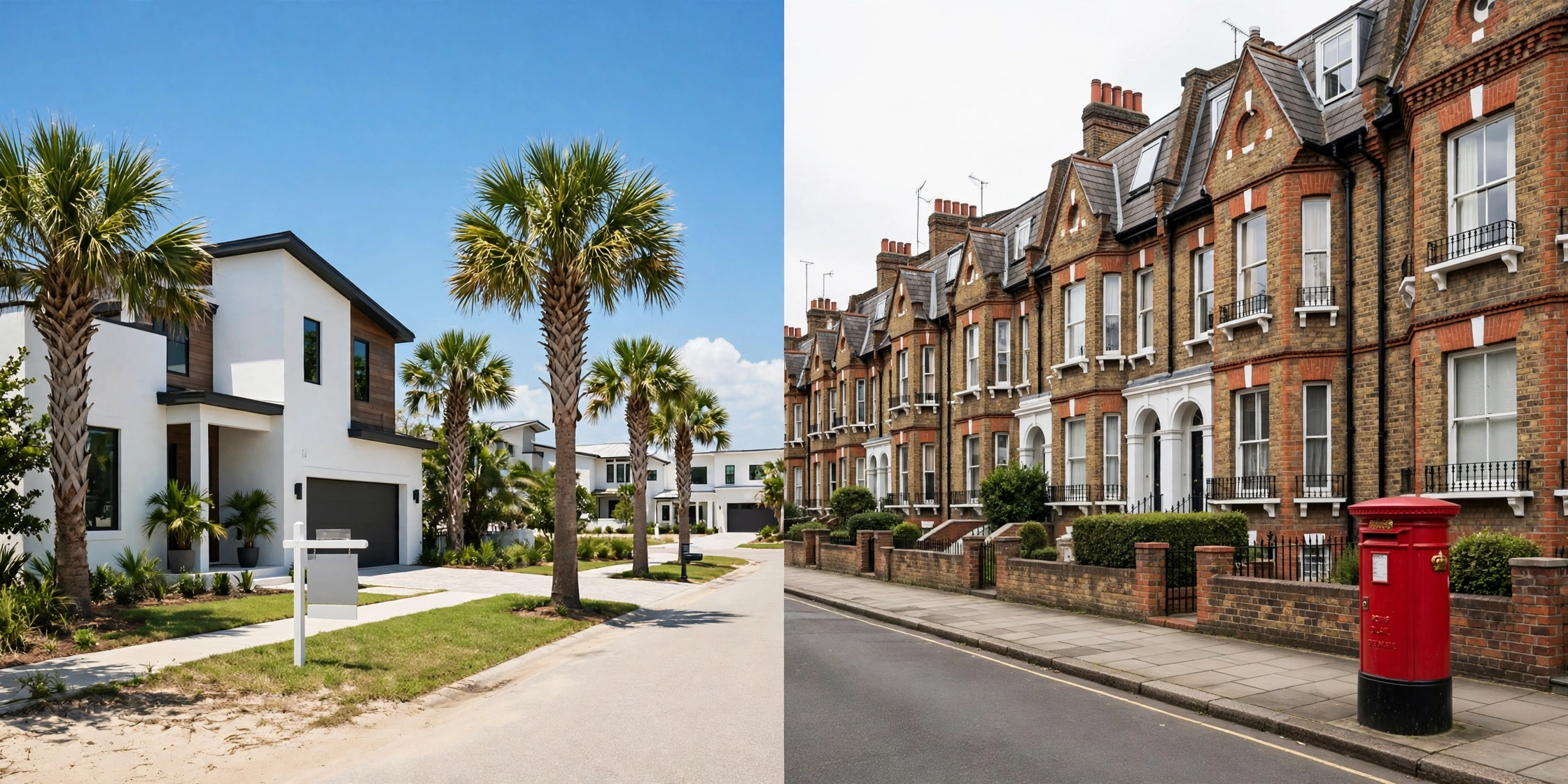
Four letters can cause a surprising amount of confusion. A homebuyer in Birmingham, Alabama, and a renter in Earlsfield, London, can both type the same four letters into a search box and land on completely different businesses. Neither of them is wrong, and neither business is pretending to be the other. The confusion comes from the abbreviation itself: it is short, it is memorable, and it has been used independently on both sides of the Atlantic. Add in a journal, an engineering firm and a ship that all share similar letters, and a simple search turns into a puzzle.
Most of the articles that already rank for this term do not solve that puzzle. They describe the abbreviation in general terms, repeat a few unverified claims, and move on. They do not give you a registered company number, a dated news report, a licence number, or a way to check whether the agent in front of you is who they say they are. This article does. Every specific fact below — every address, date, company number and headcount — comes from a named public source that you can open and check yourself: a podcast transcript, a property portal profile, two dated trade-press reports, the UK Companies House register, and the agent’s own page on the eXp UK website. Where the sources disagree, this article says so. Where the evidence has gone quiet, this article says that too, instead of filling the gap with a guess.
Which JWRE Are You Looking For?
Before anything else, work out which side of the Atlantic your search belongs to. The table below is the fastest way to do it. Find the country, the city and the person in your search result, then match it to a row.
| Detail | United States | United Kingdom |
|---|---|---|
| Full name | Jason Will Real Estate | Jonathan Woods (Jonathan Woods Property Ltd), linked with the initials |
| Country and area | United States — Alabama, centred on the Gulf Coast | United Kingdom — Earlsfield, London |
| Key person | Jason Will, founder and owner | Jonathan Woods, estate agent |
| Known locations | Fairhope, Gulf Shores, Birmingham, Hoover, Huntsville | 722 Garratt Lane, London SW17 0NN |
| Business structure | Independent brokerage; reported as “powered by JPAR Impact” in 2022 | Private limited company, operating under the eXp UK brand |
| Public record to check | Alabama real estate licence 88702 (Jason Will) | Companies House company number 13571170 |
| Best source | RISMedia report, 22 July 2022 | Companies House register and eXp UK agent page |
If your result mentions Fairhope, Gulf Shores, Mobile or Huntsville, you are looking at the American business. If it mentions Earlsfield, Garratt Lane or eXp UK, you are looking at the British one. If it mentions neither — if it is just a bare abbreviation on a directory page with no location, no person and no source — treat it as unverified until you can place it. A listing that cannot be placed on a map or tied to a named person is not a lead; it is a question mark.
There is one more habit worth building before you go further: read the date on anything you find. The American business was written about in trade press in 2019 and 2022, and the British company was incorporated in 2021. A page that quotes a 2022 affiliation as if it were today’s news may be out of date, and a directory profile may have been updated since the brokerage changed hands or changed partners. The sections below give you the dates alongside the facts so you can judge for yourself how fresh each claim is.
JWRE in the United States: Jason Will Real Estate
On the Alabama Gulf Coast, the abbreviation belongs to Jason Will Real Estate, a brokerage founded and owned by Jason Will. In a podcast interview, Will described it as “an independent real estate brokerage on the Alabama Gulf Coast and expanding throughout the state of Alabama.” That is the clearest statement of what the firm set out to be: local to the coast, independent in structure, and growing across the state rather than staying in one town.
The firm’s footprint, as reported in the trade press, stretched well beyond a single office. A RISMedia report dated 22 July 2022 described the business as “JWRE, powered by JPAR Impact, Birmingham, Alabama”, and put its size at four offices and 84 agents, serving Fairhope, Gulf Shores, Birmingham, Hoover and Huntsville. That spread matters, because it tells you the firm was not a one-desk operation: it covered the Gulf Coast resort towns, the Birmingham metro area and Huntsville in the north of the state. The same report places the firm inside the JPAR network at that point in time — a detail that matters for anyone trying to understand who the firm was working with, and one that should not be treated as permanent, as the caution note below explains.
An older address also survives in the public record. A 2019 RISMedia report about the firm’s partnership with JP & Associates Realtors gave a Fairhope address of 154 N. Section Street, Fairhope, AL 36532. That address is now several years old, and it is given here as a historical record, not as a current direction: offices move, partnerships change, and an address from 2019 should be confirmed before you drive to it. What it does usefully show is that the firm’s roots were in Fairhope, a small city on the eastern shore of Mobile Bay, which fits with the “Alabama Gulf Coast” description in the podcast interview.
The Founding-Year Conflict: 2013 or 2014?
Here is a good example of why this article checks its sources instead of repeating them. Two credible sources give two different years for when the brokerage began, and neither can simply be declared wrong.
- 2013 — In the podcast interview, when asked “When did JWRE come into existence?”, Jason Will answered: “Not til 2013.” The phrasing is conversational, but the year is explicit, and it comes from the founder himself.
- 2014 — The Homes.com agent profile for Jason Will states: “Jason founded JWRE in 2014.” That is a written profile statement, presumably supplied or approved by the agent, and it gives a different year.
There is no way to settle this from the public record available today without asking the founder directly, and this article will not pretend otherwise. The difference of a year may look small, but it matters for a simple reason: any article, directory or agent bio that states one of these years as settled fact without mentioning the other is overstating what it knows. If you see a profile that says the firm was “founded in 2013” or “founded in 2014” with total confidence, you now know that the other year is also on the record, and you can ask which one the person in front of you stands behind. A trustworthy agent will not mind the question; an evasive answer tells you something too.
It is also worth noting what the conflict does not mean. It does not mean the business does not exist, and it does not mean either source is unreliable in general. Founding dates get remembered differently, profiles get written at different times, and a business that began informally in one year and was formally launched in the next can honestly be described both ways. The honest position is to report both years and let the reader decide — which is what this section does.
The JPAR Period and the Affiliation Question
The 2022 RISMedia report is the strongest evidence for a specific chapter in the firm’s history: the period when it operated under the JPAR Impact banner. JPAR — JP & Associates Realtors — is a brokerage network, and the 2019 report about its expansion into Alabama through a partnership with Jason Will Real Estate shows the relationship beginning at least three years before the 2022 headcount report. Read together, the two reports describe a firm that grew from a Fairhope-based independent brokerage into a multi-office operation working inside a larger network.
But here is the caution that matters most for anyone dealing with the firm today. A current listing on Homes.com now places Jason Will at BluePrint Realty Company in Hoover, Alabama, and gives his Alabama licence number as 88702. That is a different brokerage name from the one in the 2019 and 2022 reports. It does not prove that Jason Will Real Estate has closed, been sold, been renamed or been absorbed — any of those things could be true, and none of them can be confirmed from a single directory listing. What it does prove is that the firm’s present affiliation cannot be assumed from reports that are two to five years old.
So this article deliberately does not claim that the Alabama business is still independent, and it does not claim that it is still powered by JPAR. Both of those statements were true at the time they were reported; whether they are true now is a question for a fresh check of the firm’s own website and current listings. If you are a buyer or seller in Alabama and someone introduces themselves to you under this name, ask them directly: which brokerage are you with today, and where is your current licence held? Then check the answer against the Alabama Real Estate Commission’s public records. A legitimate agent expects that question. It takes minutes, and it is the single most useful check in this whole article.

What the American Firm Is Known For
Within the limits of what the public record actually shows, the Alabama business is a general residential brokerage story: a locally founded firm, grown across the state’s main markets, with a coastal base. The podcast interview and the trade-press reports focus on growth, agent numbers and geography rather than on a narrow specialism, and this article will not invent one. There is no verified public record in the sources used here of the firm specialising exclusively in luxury homes, or in commercial property, or in any single price band — and claiming such a specialism would be guessing.
What can fairly be said is that a brokerage with offices in Fairhope and Gulf Shores, on the Gulf Coast, is operating in a market where waterfront homes, holiday properties and second homes are a large part of the trade, while its Birmingham and Huntsville offices sit in Alabama’s two largest inland job markets. That is geography, not a claim about the firm’s marketing: the towns themselves shape the kind of homes that come to market there. A buyer looking at the Gulf Coast should expect questions about flood insurance, hurricane history and rental rules for holiday lets; a buyer in Huntsville should expect questions about relocation, new-build estates and commute times to the city’s research and defence employers. Those are questions to raise with any agent in those markets, not promises about this particular firm.
JWRE in the United Kingdom: Jonathan Woods
Across the Atlantic, the same four letters lead somewhere entirely different: to Earlsfield, a residential neighbourhood in south-west London, and to an estate agent named Jonathan Woods. The British side of this story is, in some ways, better documented than the American one, because the key facts come from two official or semi-official registers rather than from interviews alone.
The company record is the starting point. Jonathan Woods Property Ltd is listed on Companies House — the UK’s official register of companies — as an active private limited company, incorporated on 17 August 2021, with its registered office at 722 Garratt Lane, London SW17 0NN, and a standard industrial classification of 68310, which is the code for real estate agencies. The company number is 13571170. Those are not marketing claims; they are entries in a public register, and anyone can look them up free of charge on the Companies House website. The 2021 incorporation date also gives a useful sense of scale: this is a young company, set up in the last few years, not a long-established high-street name.
The second source is the agent’s own professional page. On the eXp UK website, Jonathan Woods is presented as an estate agent in Earlsfield, “powered by eXp”, with the same Garratt Lane address, the phone number +447498214463, and the email address jonathan.woods@exp.uk.com. eXp UK is the British arm of eXp Realty, a model in which agents work as self-employed partners under a shared brand rather than as employees of a traditional high-street branch. That structure matters for a customer to understand: when you deal with this agent, you are dealing with an individual professional operating under the eXp umbrella, and the service you receive will depend a great deal on that individual — which is exactly why the verification steps later in this article matter.
Earlsfield itself is worth a sentence, because it explains the market the agent works in. It sits between Wandsworth and Tooting in south-west London, served by Earlsfield station on the line into Waterloo, and its housing stock is dominated by Victorian terraces, Edwardian houses and a growing number of flats. A local agent there spends most of their time on family homes, first-time-buyer flats and rental valuations — the ordinary business of a London neighbourhood market, rather than prime central London property. Again, that is geography and market context, not a claim taken from the agent’s own marketing.
What the Initials Do — and Do Not — Prove
Here the article has to be careful, because this is the point where many directory pages and short explainers overstate their case. The Companies House record says “Jonathan Woods Property Ltd”. The eXp UK page says “Jonathan Woods”. Neither of them shows the business trading under the four-letter abbreviation, and neither of them spells out the words “Jonathan Woods Real Estate” as a trading name.
The connection between the agent and the abbreviation is therefore an inference: the initials of “Jonathan Woods” plus “Real Estate” produce the same four letters, and at least one published explainer has associated the two. That is a reasonable association to make, and it is very likely how searchers arrive at the agent’s page — but it is not the same as a verified trading name. So this article describes the British business as “linked with” or “associated with” the initials, and it does not claim that the agent trades as that name. If you visit the agent’s own website and it does use the abbreviation as a brand, that would be new evidence — and it would be worth noting the date you saw it, because websites change.
Why does this distinction matter in practice? Because a trading name is a promise about who you are dealing with, and a set of initials on a search results page is not. If you are a seller in Earlsfield and someone contacts you using the abbreviation, check that the person, the company number and the eXp UK page all line up before you agree to anything. The company number is the anchor: 13571170 is either the company you are dealing with or it is not, and the Companies House register will tell you in seconds.

What JWRE Is Not
Part of answering a search like this one is clearing away the lookalikes. Several organisations and things share most or all of the same letters, and none of them is either of the two real estate businesses above.
- The journal — the same letters with an extra “I”. The International Journal of Water Resources Engineering uses an abbreviation that adds an “I” to the front of the same four letters. It is an academic journal, published biannually since 2015, with the electronic ISSN 2456-1606. If your search result is about water resources engineering, dams or hydrology, you have found the journal, not a property business. The extra letter is the giveaway.
- JREW Engineering Ltd. This is an Indian engineering company working in material handling. The letters are transposed — J-R-E-W rather than J-W-R-E — which is easy to misread at a glance and easy to mistype. If the result talks about conveyors, cranes or industrial equipment, it is this firm, and it has nothing to do with houses.
- A ship’s call sign. The same four letters also appear as the international call sign of the vessel STRIL MAR. A call sign is a radio identifier for a ship, not a business name, and it has no connection to property in Alabama or London. If your result comes from a maritime or vessel-tracking site, that is why.
These lookalikes are not trivia. They are the reason a bare search for four letters can return results from three different industries, and they are the reason this article keeps coming back to the same advice: place the result before you trust it. Country, city, person, industry — if you cannot find at least two of those four in the result, you have not identified anything yet.
Services a Real Estate Agency Typically Offers
So far this article has stuck to what can be verified about two specific businesses. This section is different, and it is labelled as such: it describes what estate agencies and brokerages of this kind generally offer, so that a first-time buyer or seller knows what to expect. None of the items below is claimed as a service of either firm unless a source in this article says so. Treat the list as a map of the territory, not as a brochure for either business.
| Service | What it usually involves | Who it suits |
|---|---|---|
| Sales — acting for sellers | Valuation, photography and floor plans, listing on property portals, viewings, negotiating offers | Homeowners selling a property |
| Sales — acting for buyers | Property search, arranging viewings, advice on offers, liaison with solicitors or conveyancers | Buyers, especially first-time buyers |
| Lettings and rentals | Finding tenants, referencing, inventories, rent collection, managing the tenancy | Landlords and tenants (mainly a UK service) |
| Valuations | An estimate of market value, usually free when tied to a sale or letting instruction | Anyone considering selling or remortgaging |
| Property management | Day-to-day running of a rented property: repairs, inspections, tenant contact | Landlords, including overseas owners |
| New-build and relocation help | Advice on new developments, relocation support for people moving for work | Relocating buyers and investors |
Two cautions belong with this table. First, the mix of services differs sharply by country: lettings and property management are a large part of a British estate agent’s work, while an American brokerage is usually more focused on sales, with property management often handled by separate firms. Second, fees differ sharply too. In the UK, a seller typically pays the agent a percentage of the sale price, and the percentage is negotiable; in the US, the commission structure has changed in recent years and varies by state and by agreement. This article gives no fee figures, because any figure given without a date and a source would be out of date before it was published. Ask for the fee in writing, with the terms, before you sign anything — in either country.
For related reading on how online property and search tools work, see our guides to Gramhir.pro and Homecz, and for a lighter look at a very different kind of consumer search, our explainer on smoothie pouches. They are not about this abbreviation, but they use the same approach: check the source before you trust the claim.
How to Verify a Listing or Agent Before You Trust It
Everything in this article points to one practical skill: checking. The table below turns that skill into a checklist. Work through it before you pay a fee, sign an agreement, share identity documents or transfer a deposit. Most of the checks take minutes, all of them are free, and any genuine agent will welcome them.
| Check | How to do it | What a good result looks like |
|---|---|---|
| Match the person to the business | Ask for the agent’s full name and the brokerage or company they work for today | The name, company and location match the public record |
| Check the company record (UK) | Search the company name or number on the Companies House register | Status “Active”, with the registered office you were given |
| Check the licence (US) | Search the agent’s name on the Alabama Real Estate Commission’s public records | An active licence under the brokerage named to you |
| Confirm the current affiliation | Ask which brokerage the agent works for now, not two years ago | A clear answer that matches the licence or company record |
| Visit the official page | Open the agent’s page on the brokerage or network site directly, not through an advert | Same name, photo, phone number and area as the person contacting you |
| Check the phone and email | Call the number on the official page; email the official address | The person who answers matches the person you have been dealing with |
| Ask for terms in writing | Request the fee, the contract length and the cancellation terms before signing | A written agreement with figures you can read and compare |
| Search the name plus “complaint” or “review” | Run a quick search for the agent and the company with those words added | Either no pattern of complaints, or complaints that were answered |
| Never pay before you have verified | Do not transfer a deposit, fee or holding payment until the checks above pass | Payment only to a named, verifiable business account |
Two of these checks deserve emphasis, because they are the ones that catch most problems. The first is the licence check in the United States: an agent’s licence is a public fact, and the brokerage it is held under is a public fact too. If the person in front of you says they work for one brokerage while their licence is held under another, something has changed — and you are entitled to a straight explanation of what. The second is the company record in the United Kingdom: Companies House will tell you in seconds whether a company exists, whether it is active, and where its registered office is. A company that cannot be found there, or one whose status is dissolved, is a serious warning sign, whatever the website says.
Red Flags — and What to Ask Instead
Most agents, in both countries, are honest professionals. But the property market attracts a small number of operators who rely on urgency, vagueness and flattery, and a four-letter abbreviation that already confuses people is useful cover for them. Watch for these signs, and use the questions alongside them.
- They will not say which company they work for. Ask: “What is the full legal name of the company, and what is its company number or your licence number?” A real agent answers immediately.
- They pressure you to decide today. Ask: “Can I have the terms in writing and 48 hours to read them?” A genuine deadline — another buyer, a viewing slot — can be explained; a fake one cannot.
- The valuation is far above every other estimate. Ask: “Can you show me three comparable properties that sold recently at this price?” An inflated valuation is a classic way to win an instruction, and it costs the seller months.
- They ask for money before you have met them or seen terms. Ask: “What exactly is this payment for, and can I have an invoice first?” Deposits and holding payments have a place in property, but only after the business has been verified.
- Their only contact is a messaging app. Ask: “Can I call you on the number listed on your company’s official page?” A business with no verifiable phone number or office address is not a business you should pay.
- The listing has no address, no floor plan and stock photos. Ask: “Can I see the property’s exact location and recent photos?” In both the US and the UK, a genuine listing has specifics; a vague one may be a bait advert for a property that does not exist.
- They claim a founding year, an office count or an award without a source. Ask: “Where can I check that?” You now know that even the founding year of the Alabama firm is reported two different ways — a confident, unsourced claim about history is worth very little.
None of these signs, on its own, proves dishonesty. A new agent may have a thin online footprint, and a busy market really does move fast. The point is not to treat every flag as a verdict, but to treat a cluster of them — vagueness, pressure and upfront payment together — as a reason to stop and run the checklist in the previous section before going any further.
Frequently Asked Questions
Is JWRE a single company?
No. The abbreviation is used by at least two different real estate businesses: Jason Will Real Estate in Alabama, United States, and Jonathan Woods, an estate agent in Earlsfield, London, United Kingdom. There is no evidence that the two are connected to each other in any way. Always check the location first.
Which country is the business I found in?
Look for the city and the person. Fairhope, Gulf Shores, Birmingham, Hoover or Huntsville, together with the name Jason Will, means the American business. Earlsfield or Garratt Lane in London, together with the name Jonathan Woods, means the British one. If your result names neither a place nor a person, it is not yet identified — keep checking.
When was the Alabama brokerage founded?
That is genuinely uncertain. The founder said in a podcast interview that the business came into existence in 2013, while the Homes.com profile states that he founded it in 2014. This article reports both years because neither can be settled from the public record. Any source that gives one year with total confidence is overstating what is known.
Is the Alabama firm still independent, or still working with JPAR?
That cannot be confirmed from the sources available for this article. A 2022 trade-press report described the firm as powered by JPAR Impact, but a current directory listing places Jason Will at BluePrint Realty Company in Hoover, Alabama. The affiliation may have changed. Ask the agent directly which brokerage they work for today, and check the answer against the Alabama licence records.
Is the London agent a real, registered business?
Yes — the company behind it, Jonathan Woods Property Ltd, is listed on Companies House as an active private limited company, incorporated on 17 August 2021, company number 13571170, with a registered office at 722 Garratt Lane, London SW17 0NN. The agent also has a published page on the eXp UK website with the same address and contact details. Both can be checked free of charge.
Does the London agent trade under the four-letter abbreviation?
Not as far as the public record shows. Neither the Companies House record nor the eXp UK page uses the abbreviation as a trading name. The link is an inference from the initials of the name. This article therefore describes the British business as associated with the initials rather than trading as them.
How can I contact the London agent?
The eXp UK agent page lists the phone number +447498214463 and the email address jonathan.woods@exp.uk.com, with the office address at 722 Garratt Lane, London SW17 0NN. Those details come from the agent’s own published page, dated at the time this article was researched; confirm them on the live page before relying on them.
What is the difference between the abbreviation and the journal’s abbreviation?
The journal’s abbreviation is that of the International Journal of Water Resources Engineering, an academic journal published biannually since 2015. It has an extra “I” at the front and nothing to do with property. If your search result is about water engineering, you have found the journal.
Should I trust a listing that uses only the abbreviation, with no company name or address?
No — not until you have verified it. Run the checklist in this article: match the person to a company or licence, check the company register or licence record, call the number on the official page, and get the terms in writing before you pay anything. A genuine listing survives those checks; a misleading one does not.
The Bottom Line
Four letters, two businesses, and a handful of lookalikes — that is the whole story, and it is simpler than it first looks once you separate it by location. In Alabama, the abbreviation belongs to a Gulf Coast brokerage founded by Jason Will, a firm that grew to four offices and 84 agents by 2022 and whose present affiliation deserves a fresh check before you rely on old reports. In London, it is associated with a young, registered company and an individual agent working under the eXp UK brand in Earlsfield. Neither business is the other, neither one is a journal, an engineering firm or a ship, and the founding year of the American firm is reported two different ways — facts that any honest account of the subject has to include.
If you take one habit away from this article, make it this: place the result before you trust it. Country, city, person, and a check against the public register — those four steps take minutes, and they are the difference between dealing with a real, verifiable business and dealing with four letters on a screen. The sources named throughout this article are open to anyone, and checking them yourself is the best protection you have, whether you are buying on the Gulf Coast or renting in south-west London.




1 Comments