
Oronsuuts: Mongolia’s Modern Apartment Living, Explained
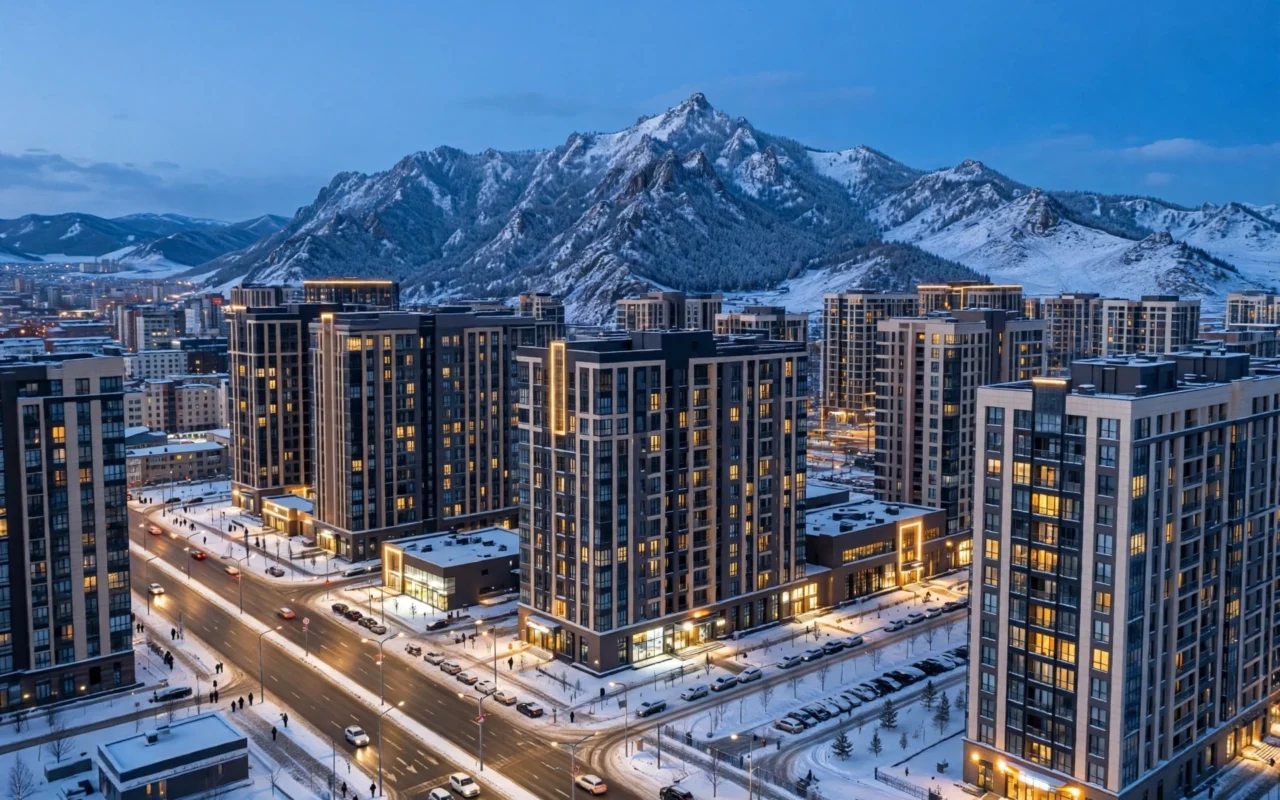
Quick answer: Oronsuuts (Орон сууц) is the Mongolian word for “housing”, “apartment” or “residential property”. It is not a brand, an app or a trend. In practice it means organised apartment living in Ulaanbaatar: a flat in a managed building with central heating, running water, electricity, security and maintenance — the urban alternative to a ger (yurt) or a detached house in the ger districts. This guide explains what it is, how it developed, where to find it, who can buy it, and how to check a listing before you pay — using verified figures, with sources, and without the invented prices and stories that fill most of the blogs ranking for this word.
What an Oronsuuts Actually Is
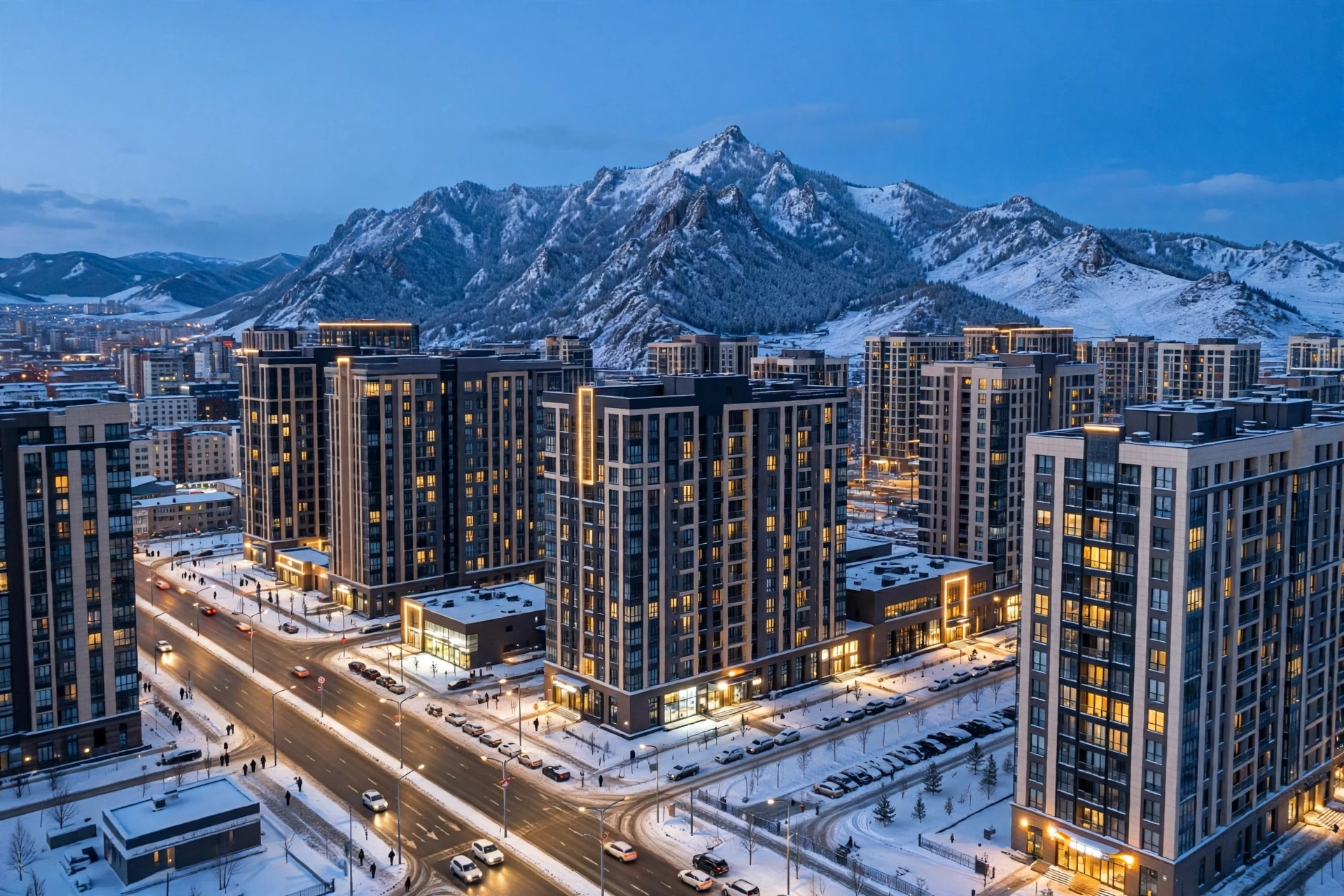
An oronsuuts is, at its simplest, a flat in a managed apartment block. The word itself is ordinary Mongolian: every serious source checked for this article — from the housing guide Peace Quarters (15 October 2026) to the explainer at Tribute Most Haunted (29 March 2026) — agrees that Орон сууц translates as “housing”, “apartment” or “residential property”, and that it is one of the most common real-estate search terms in Mongolia. Mongolia’s own Law on Housing, passed on 22 April 1999, defines “housing” in the same plain way: a public or private residential building, apartment or home.
What makes the idea worth a whole article is what the word carries with it. An apartment in this system is not just four walls. It is a package: a building with shared services — district heating, water and electricity — plus a manager, known as the jijuur, who looks after the common areas, and an owners’ association that shares responsibility for the building’s upkeep. Mongolia even has a separate law for that: the 2003 Law on the Legal Status of Associations of Apartment Owners, which sets out how owners collectively manage shared property in public residential buildings. In other words, the word describes a housing system, not just a property type — something closer to condominium living than to renting a room.
That system is what separates apartment life from the other two ways of living in the capital. A ger — the round felt tent of Mongolia’s nomadic tradition — is a home you heat yourself, usually with a coal stove, and a home you supply with water yourself, usually by carrying it from a kiosk. A detached house in the ger districts, known as a baishin, is a step up in permanence but often shares the same problem: no connection to the city’s water, sewerage or heating networks. The apartment block solves all three at once, which is why it has become the default aspiration for Ulaanbaatar’s growing middle class and for the expats who work in the city’s mining, banking and development sectors.
It is also worth saying plainly what the word is not, because a surprising amount of the English-language web gets this wrong. It is not a company, not a product, not a design style and not a philosophy. Some keyword-stuffed sites describe it as garments, handmade artefacts or a “structured way of thinking”. Those claims cite no source, contradict the word’s plain Mongolian meaning, and appear on pages that exist only to rank for the term. They are dealt with properly in the “What It Is Not” section below — but the short version is: if a page tells you the word means something mystical, close the page.
From Soviet Panel Blocks to 2026 Towers
Ulaanbaatar’s apartment story begins in the Soviet era. Mongolia urbanised rapidly between the 1920s and the 1990s, and the state built standardised panel-block apartments — prefabricated concrete buildings put up quickly to house workers. For thousands of people who had known only nomadic life, these blocks were a revolution in daily living: running water, central heating and electricity, all provided by the state, in a city where winter temperatures can fall to minus 40 degrees Celsius. Ulaanbaatar is the coldest capital city in the world, a fact that shapes every decision about housing there. A home that stays warm without anyone feeding a stove is not a luxury in that climate; it is the difference between a manageable winter and a dangerous one.
The turning point came with the democratic revolution of 1990. State construction gave way to private developers, and the old Soviet blocks began a long process of refurbishment — new windows, better insulation, upgraded heating systems — while bright new high-rises went up in the central districts. By the 2010s a different product had appeared: luxury serviced apartments aimed at expats in mining, banking and tourism, with concierge services, gyms and furnished units. The market had moved from “a flat the state gives you” to “a home you choose”.
That history still shows in the city today. The housing stock is a mix of three generations: the Soviet panel blocks, many now renovated; the post-1990 mid-range developments; and the new towers with underfloor heating, triple-glazed windows and underground parking. A buyer or renter in 2026 is choosing between generations as much as between locations, and the age of the building is one of the first things a serious listing should state. The 1999 Law on Housing and the later owners’-association law give the legal frame, but the practical difference between a renovated 1980s block and a 2020s tower is something you feel the first winter you live in it — in the heating bill, in the draughts, and in whether the hot water runs on a cold morning.
One thing the history also explains is why the word matters so much in Mongolia. Housing was the state’s promise during the Soviet period, then a market good after 1990, then an investment asset as the mining economy grew. Each of those eras left its mark on the buildings and on the law. Understanding that the word carries all three meanings — home, system and asset — is the key to reading any listing, any government programme and any news story about the city’s housing debates.
Apartment Living vs Ger Living: An Honest Comparison
No honest guide to this subject can avoid the ger districts, because they are the other half of Ulaanbaatar. The World Bank’s long-running account of the city describes ger districts as home to around 60 percent of the capital’s population — people living in settlements without water, sanitation or basic infrastructure, often in traditional gers. The blog was first published in 2009 and updated in 2024, and the figure is consistent with academic work: a University College London study of the city puts the ger-district share at approximately 60 percent of the population and roughly 83 percent of the city’s built form. Ulaanbaatar’s population is now about 1.5 million, so that 60 percent represents roughly 900,000 people.
There is a second number that is often confused with the first, and it is important to keep them apart. A 2025 study in npj Urban Sustainability, which used satellite imagery to detect gers across the capital, put ger households at an estimated 22 percent of households in Ulaanbaatar. The same study cites the 2020 Population and Housing Census figure of 84,755 households living in gers in six sub-districts of the city. So: about 60 percent of the population (World Bank, 2009, updated 2024) and about 22 percent of households (2020 census, via the 2025 study). They measure different things, and any source that quotes one of them without saying which should be treated with caution.
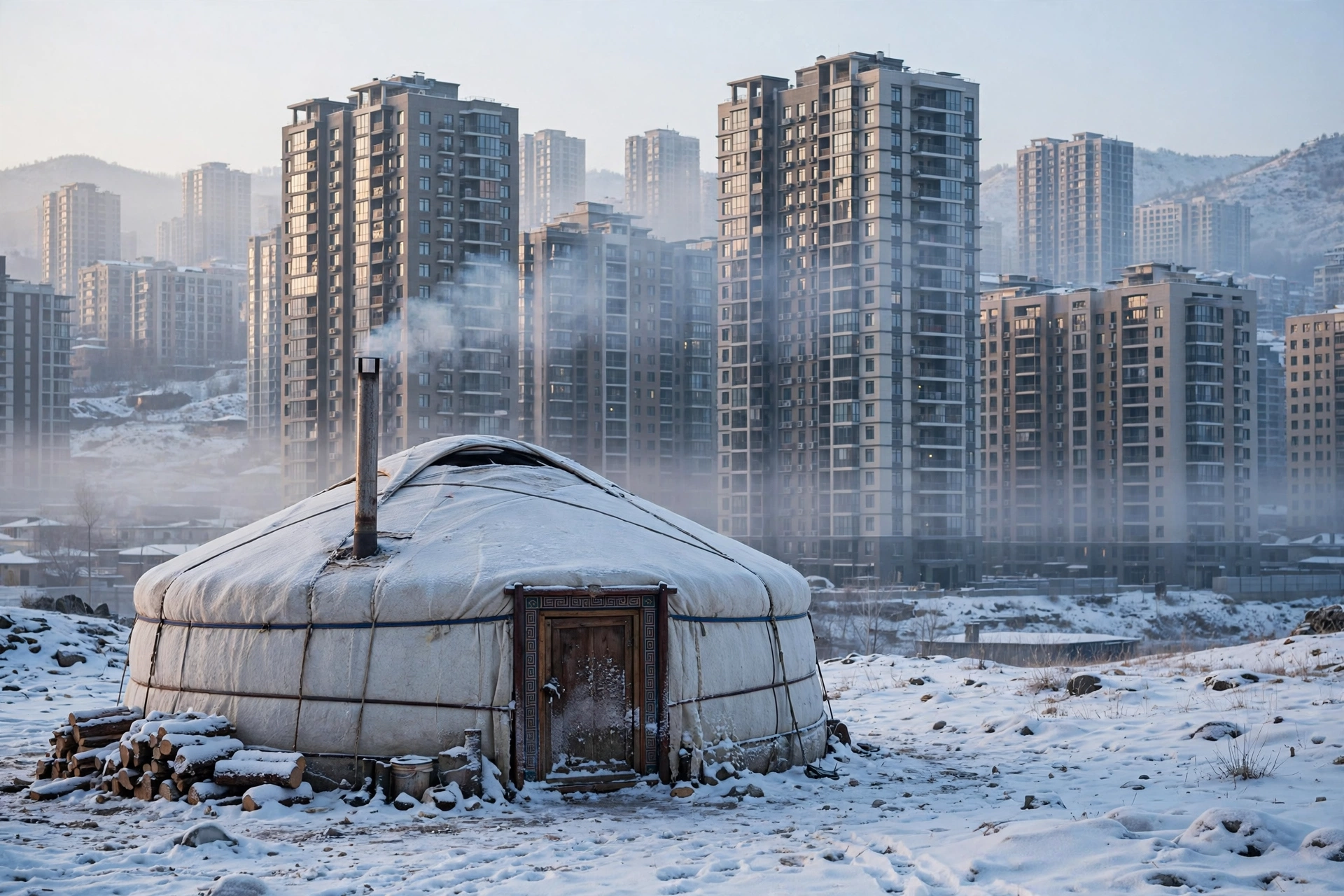
The health stakes are real. A World Bank post from 2026 reports that wintertime indoor PM2.5 levels in sampled ger-district homes averaged 175–180 micrograms per cubic metre — nearly twelve times the World Health Organisation’s guideline level. The smoke comes from the coal stoves that heat homes without district heating, and it is the main reason Ulaanbaatar’s winter air is among the most polluted of any capital. Central heating is therefore not just a comfort feature of apartment life; it is a health feature, and it is the single biggest practical difference between the two ways of living.
| Feature | Apartment living | Ger-district living |
|---|---|---|
| Heating | Central district heating, included in the building service; no stove, no coal | Coal or wood stove you feed yourself; indoor smoke a serious health risk |
| Water | Running water in the flat | Carried from a water kiosk; no piped supply in most areas |
| Sanitation | Connected sewerage and indoor bathroom | Often an outdoor latrine; no sewer connection |
| Winter air | Indoor air protected from outdoor smog; air purifiers common | Indoor PM2.5 in sampled homes averaged 175–180 µg/m³ in winter (World Bank, 2026) |
| Maintenance | Building manager (jijuur) and owners’ association handle common areas | Household’s own responsibility, entirely |
| Cost | Higher monthly cost; purchase price or rent plus building fees | Lower cash cost if you own the plot; high hidden costs in fuel, water and time |
| Community | Neighbours in one building; shared facilities | Strong neighbourhood ties; extended family often nearby |
| Culture | Modern urban life; less connection to nomadic tradition | Direct link to Mongolia’s nomadic heritage; many families keep a ger for summer |
The table is deliberately even-handed, because the honest answer is that neither way of living wins on every count. Apartment life wins on health, convenience and winter comfort. Ger-district life wins on cost, space, family closeness and cultural continuity — and many families who move into an apartment keep a ger for summer trips to the countryside. What the comparison does show is why the apartment is the direction of travel for the city: as Ulaanbaatar grows, the infrastructure gap between the two halves of the city is the single biggest housing problem it faces, and every government housing programme is, in one way or another, an attempt to close it.
Where to Find Them: Ulaanbaatar’s Districts
Ulaanbaatar has nine districts, and apartment living is concentrated in five of them. The differences between districts are real — central versus green, expensive versus affordable, new-build versus renovated Soviet stock — and they matter more than the difference between two similar flats in the same building. The table below uses only district names and characters that are consistent across the sources checked for this article; it gives no prices, because the prices quoted online for these districts are unsourced (see the note on prices below).
| District | Character | Best suited to |
|---|---|---|
| Sükhbaatar (city centre) | The core of the city: Sükhbaatar Square, the State Department Store, embassies and government offices. Walkable to almost everything. | Professionals and anyone who wants to live without a car |
| Khan-Uul (Zaisan area) | Greener and more spacious, close to the Zaisan Memorial, with views towards Bogd Khan Mountain. Home to many of the newer luxury developments. | Families and expats who want space and mountain views |
| Bayanzürkh | Fast-developing, with newer mid-range construction at lower cost than the centre. | Young couples and first-time buyers |
| Chingeltei | Central and established, with a mix of renovated older blocks and new buildings. | People who want a central location at a lower cost than Sükhbaatar |
| Songino Khairkhan | Large, sprawling district on the western side; more affordable, with older stock being upgraded. | Budget-conscious renters and buyers |
A practical point that every guide agrees on: the far ger districts are a different world from the apartment districts, and a listing that describes itself as “Ulaanbaatar” without naming a district should be treated as incomplete. Ask for the district, the building’s age, and how far the nearest bus stop, school and shop are — in winter, a ten-minute walk in minus 30 degrees is a different proposition from the same walk in summer. Location in this city is measured in winter minutes, not in kilometres.
Inside a Modern Apartment
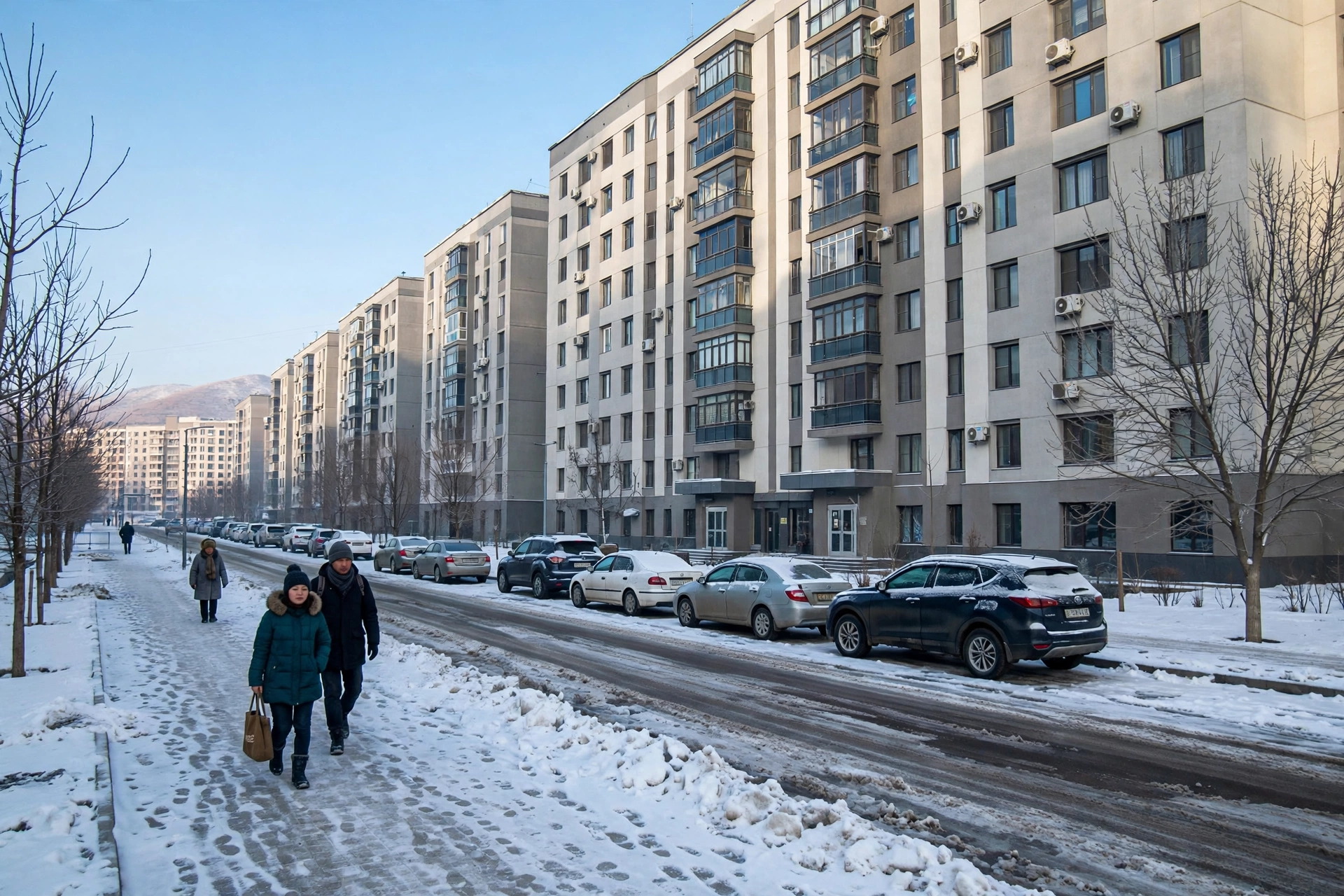
Step inside a new-build flat in 2026 and the first thing you notice is the heating. Underfloor heating and triple-glazed windows are standard in the better developments, and they are the two features that matter most in the world’s coldest capital. Thick insulation keeps the heat in; the glazing keeps the draughts out. Older renovated blocks may have radiators rather than underfloor heating, and single- or double-glazed windows that were replaced during refurbishment — which is why “renovated” is a word to interrogate, not to accept. Ask what year the windows were replaced and whether the heating system was upgraded at the same time.
The second thing you notice is that the flat is built for a climate most readers will never experience. Kitchens are fitted to a Western standard, with full-size fridges, induction stoves and, in the better buildings, dishwashers. There is no coal smell anywhere, because there is no coal. Entry is usually keyless, with a coded door or a fob. High-speed fibre internet is standard in new buildings — a real consideration for the digital nomads and remote workers who have started to base themselves in the city. And because the outdoor air in winter is so polluted, air purifiers have become a normal household item rather than a luxury.
The building itself does a lot of the work. A modern block typically offers underground parking — essential when a car left outside in January may not start — a gym, a children’s play area, a rooftop terrace for the short summer, a 24-hour concierge and, increasingly, electric-vehicle charging. Serviced apartments, aimed at short-stay expats, add weekly cleaning and sometimes airport transfers. None of this is universal: a renovated Soviet block may offer a secure entrance and a working lift and little else. The gap between the two is the gap between “a flat” and “a managed building”, and it is the main reason two flats of the same size can feel like entirely different products.
Day-to-day life in the system has a rhythm that regular residents describe in similar terms across the sources: children walk to a nearby international school, the commute is short, the jijuur knows every household by name and can solve a plumbing problem in minutes, and summer brings rooftop barbecues and Naadam celebrations in the courtyard. It is not a perfect life — traffic in the centre is notorious, and the winter smog reaches everyone who steps outside — but for most people who have lived both ways, the apartment is the easier winter and the ger is the freer summer.
How to Rent or Buy an Oronsuuts
The process is straightforward, but it has traps for anyone who treats it like buying a flat in London or New York. The steps below are the ones that appear consistently across the guides and agency material checked for this article.
- Start with the listings, not the agencies. The platforms most often named are unegui.mn, one of Mongolia’s largest classified-ad sites, and barilga.mn, a construction and property portal, alongside Facebook groups where owners list directly. Use them to learn the shape of the market — which districts, which building ages, which layouts — before you talk to anyone about money.
- Use a reputable agency for the transaction. The two agencies named most often in English-language material are Mongolian Properties and M.A.D. Urban. For an expat, an agency that works in English is worth its fee, because the paperwork is in Mongolian and the registration system is not forgiving of errors.
- Check the government portal. The address oronsuuts.mcud.gov.mn is cited by two independent guides as the portal of the Ministry of Construction and Urban Development for state-supported housing programmes and apartment allocation. Our own check of the address on 11 November 2026 could not reach it (a network/DNS failure, not proof that the portal is down), so treat it as a lead to follow rather than a link we have verified live, and check whether a programme you are interested in is listed there before relying on it.
- Inspect in person, in winter if you can. Check the heating system and the windows yourself. Run the hot water. Look at the lift, the stairwell and the entrance — they tell you how the building is managed. If you can only visit in summer, ask for the winter heating bills.
- Negotiate. Cash deals and longer leases are the two things most often reported to move the price. Furnished units are common, and many are offered ready to move into with nothing but a suitcase.
- Hire a lawyer for a purchase. This is standard practice, not a sign of distrust. A local lawyer checks the title, the registration and the building’s legal status — and, for a foreign buyer, the land question below.
Can a foreigner buy one?
Yes — with one important limit. The international law firm GRATA, in its guide to registering real-estate rights in Mongolia, states plainly: “There is no restriction for foreign nationals to purchase immovable property such as buildings, houses, and offices (excluding land).” Land ownership and possession rights, by contrast, are only open to Mongolian citizens, companies and organisations, under Article 6.3 of the Law on Land. A foreign buyer therefore owns the apartment but not the land under the building; land use is available through leases, which for foreign-owned companies typically run up to 60 years with the possibility of extension. Mongolian Properties’ own buying guide says the same thing in plainer language: Mongolia operates a “floating freehold” system, where the owner holds a freehold interest in the property but not in the land it sits on.
Two warnings belong here. First, if a building is legally inseparable from its land, the land restriction can bite even on a building purchase — GRATA flags exactly this edge case — so a lawyer should confirm the position for the specific building. Second, ignore any claim about a fixed percentage cap on foreign ownership in a building. One secondary source mentions a 30 percent cap; we could not verify it against any primary source, and no such cap appears in the GRATA material. Do not rely on it, in either direction, without a lawyer’s confirmation.
Visas and renting
For renters, the practical tip that recurs in the guides is that a business or work visa makes long-term renting easier, and that many buildings now offer short-term corporate leases aimed at expats on assignment. Serviced apartments are the usual answer for stays of a few months: higher monthly cost, but cleaning, utilities and a concierge included, and no need to set up a household from scratch. For a digital nomad, the combination that matters is fibre internet, reliable heating and a building with a generator or good power resilience — all questions to ask before signing, not after.
A Note on Prices: Why This Guide Has No Price Table
Most of the pages ranking for this keyword include a confident table of rents and purchase prices — studio flats at a few hundred dollars a month, luxury three-bedroom flats at a few thousand, and so on. The longest competitor, Peace Quarters, presents exactly such a table, described as “averages from central/upscale areas”. The problem is that none of those numbers comes with a source, an agency, a date or a sample size. There is no way for a reader to check them, and no way for us to verify them without access to live listing data on the day of reading.
We have therefore not reproduced them. A price table that cannot be checked is worse than no price table: it gives a false sense of precision, and a reader who budgets on the basis of an invented average will be misled by hundreds of dollars a month. The honest answer is that prices vary sharply by district, building age, floor, furnishing and season, and the only reliable way to learn them is to check live listings on unegui.mn or barilga.mn, or to ask an agency for current asking prices in the specific building you are considering. The same applies to claims about rent growth — one competitor states that rents climb 8–12 percent a year, again without a source — and to claims about investment returns. If a site quotes you a growth rate with no source and no date, it is telling you a story, not a fact.
What Oronsuuts Is Not
A short section, because the confusion is short-lived once the real meaning is clear — but worth including, because the wrong meanings are widespread enough that a searcher may have met them first.
- Not a brand or an app. No company called by this name sells a product, and no app carries it. It is a common noun in Mongolian, used the way “housing” is used in English.
- Not garments or handmade artefacts. A handful of keyword-stuffed pages describe it as clothing or craft objects. These pages cite nothing, and the claim contradicts the word’s plain meaning and its use in Mongolian law, where it means residential property.
- Not a trend, a lifestyle philosophy or a “structured way of thinking”. Some pages present it as a concept or a mindset. It is none of those things. It is a practical word for where people live.
- Not a mystery. A few pages frame it as a puzzle to be solved, with “hidden meanings”. There is no hidden meaning. The word is in everyday use in Mongolia, in the law, in government portals and in millions of property listings.
The reason these wrong meanings exist is simple: an unusual foreign word is easy to build thin content around, and the people writing that content have usually never checked a Mongolian dictionary or a Mongolian law. The test for any claim about the word is the same test this article applies throughout: can it be traced to a Mongolian source, a law, a census or a named institution? If not, it is filler.
How to Verify a Listing Before You Pay
Whether you are renting or buying, the checks are the same, and they are cheap compared with the cost of getting them wrong. Use this table as a checklist on a viewing.
| Check | What to look for | Why it matters |
|---|---|---|
| Heating | Underfloor or radiator? Ask for a winter heating bill. | Heating is the largest running cost and the biggest comfort factor in a minus-40 climate. |
| Windows | Triple-glazed? Year replaced? Any draughts or condensation? | Old windows undo good insulation; replacement is expensive. |
| Water pressure | Run the hot tap on the top floor at a busy hour. | Pressure drops in older blocks, especially on upper floors. |
| Building management | Meet the jijuur; look at the stairwell, lift and entrance. | The common areas show how the building is really run. |
| Title and registration | Ownership must be registered to be legally effective; a lawyer should verify it. | Under Mongolian law, ownership of immovable property arises on registration, not on signing the contract. |
| Land position | For foreign buyers: confirm the building/land position in writing. | Foreigners may own the building but not the land; inseparable cases need legal advice. |
| Fees | Building service fee, what it covers, and how often it rises. | Fees vary widely between managed towers and older blocks. |
| District and transport | Bus stop, school and shop distances — measured in winter minutes. | A short summer walk can be a long winter one. |
| Air quality measures | Air purifier included? Ventilation with filtration? | Winter smog makes indoor air quality a real health question. |
| Listing honesty | Photos of the actual flat, not a show unit; a named district and building age. | Stock photos and missing details are the two most common signs of a misleading listing. |
One further check costs nothing and catches a surprising amount of trouble: search the building’s name and the agency’s name before you pay anything. A building with a history of heating failures or a management dispute will usually have left a trace in a local forum or a review, and an agency that has misled buyers before will have left one too. If a listing cannot tell you the building’s name, ask why.
The Honest Downsides
A guide that only lists advantages is a brochure, not a guide. Apartment living in Ulaanbaatar has real drawbacks, and they should be weighed before any decision.
Cost. The honest version of the price question is that a flat costs substantially more than a home in the ger districts, both to buy and to run. Building fees, heating charges and the purchase price itself put it out of reach for many of the city’s residents — which is one reason the ger districts keep growing. Anyone who tells you apartment living is cheap in Ulaanbaatar is comparing it with London or Seoul, not with the alternative a Mongolian family actually faces.
Air pollution does not stop at the door. Central heating removes the coal stove from your own home, but the smog outside is a city-wide problem. On the worst winter days, stepping outside means breathing air far above safe limits, and no apartment can fully protect against that. Air purifiers help indoors; they do nothing for the walk to school.
Traffic and the centre. The central districts are walkable, but the city’s traffic is notorious, and a flat in the centre trades quiet for convenience. Families who choose Khan-Uul partly do so to escape the congestion of Sükhbaatar.
Earthquakes and building quality. Mongolia is seismically active, and construction standards have improved over time — which is another way of saying that the oldest blocks were built to older codes. A pre-purchase survey should include the building’s structural history, and a buyer should ask what seismic standard a new building was built to.
Dependence on the system. A flat depends on the city’s district heating, water and power networks. When those work, life is easy; when they fail, a flat can be colder and more helpless than a ger with its own stove. This is a rare event rather than a routine one, but it is worth knowing that apartment comfort is rented from the city’s infrastructure, not owned outright.
The Future: Greener, Smarter Blocks
The direction of travel is towards better insulation, smarter management and greener certification. The World Bank’s 2026 housing post notes the BestGER certification, developed by the Mongolian Green Building Council, which rates buildings on efficiency and resilience — a sign that the market is starting to measure what used to be left to the developer’s word. Solar panels and rainwater systems appear on some new projects, and smart-home features — keyless entry, remote heating control, fibre throughout — are becoming standard in the top tier rather than optional extras.
None of this should be read as a promise. One competitor claims the city’s apartment complexes will be “net-zero by 2030”; it offers no source, no plan and no definition, and we do not repeat it here. What can be said with evidence is that the incentives are all pointing the same way: energy is expensive, winters are cold, and a well-insulated building with efficient heating is worth more than a leaky one. The market is learning to price that difference, and buyers who check insulation and heating first are buying ahead of the trend rather than behind it.
There is also a larger question that will shape the next decade: whether the city’s redevelopment programmes can move a meaningful number of ger-district households into apartments without destroying the communities that make those districts work. The 2025 satellite study found that ger settlements have been pushed towards the city’s periphery since 2015, and that progress on informal housing has fallen behind official projections by an average of 2.8 percent since the pandemic. Apartments are part of the answer, but they are not the whole answer — and a city that solves housing only for those who can already afford it has not solved housing at all.
Frequently Asked Questions
What does oronsuuts mean?
It is the Mongolian word (Орон сууц) for “housing”, “apartment” or “residential property”. It is an everyday real-estate term in Mongolia, not a brand, an app or a concept, and it is one of the most common property search terms in the country.
Is it the same as a ger?
No. A ger is a traditional round felt tent, heated by a coal or wood stove and supplied with water by carrying it from a kiosk. An apartment is a flat in a managed building with central heating, running water, electricity and a building manager. Many families have experience of both, and some keep a ger for summer use in the countryside.
Can a foreigner buy an oronsuuts in Mongolia?
Yes. Foreign nationals may buy and own apartments and other buildings, but they may not own the land underneath. Land ownership is reserved for Mongolian citizens, companies and organisations; foreigners can obtain land-use rights through leases, typically up to 60 years. Because a building that is legally inseparable from its land can complicate this, a lawyer should confirm the position for the specific building before you sign.
How cold does it get, and does the heating cope?
Ulaanbaatar is the coldest capital city in the world, and mid-winter temperatures can fall to minus 40 degrees Celsius. Modern apartments cope through district heating, underfloor heating, triple-glazed windows and thick insulation. Older blocks vary, which is why the heating system and the windows are the two things to check first on any viewing.
Where is the best district to live?
There is no single best district. Sükhbaatar suits professionals who want to walk everywhere; Khan-Uul (Zaisan) suits families and expats who want greenery and mountain views; Bayanzürkh suits first-time buyers; Chingeltei and Songino Khairkhan suit those looking for lower costs. Visit in winter if you can, and measure distances in winter minutes.
How do I find a trustworthy listing?
Start with the big listing platforms, unegui.mn and barilga.mn, and with Facebook groups where owners list directly. Then use a reputable agency — Mongolian Properties and M.A.D. Urban are the two most often named in English-language material — and a lawyer for any purchase. Always inspect in person, and work through the verification checklist in this guide before paying anything.
Why doesn’t this guide give prices?
Because the prices published by the blogs ranking for this keyword are unsourced: no agency, no date, no sample. We would rather give you no price than an invented one. Check live listings on unegui.mn or barilga.mn, or ask an agency for current asking prices in the specific building you are considering.
Sources
- World Bank, “Mongolia’s growing shantytowns: the cold and toxic ger districts”, East Asia and Pacific blog, first published 8 July 2009, updated 16 March 2024 — ger districts home to around 60 percent of Ulaanbaatar’s population, without water, sanitation or basic infrastructure. https://blogs.worldbank.org/en/eastasiapacific/mongolias-growing-shantytowns-the-cold-and-toxic-ger-districts
- World Bank, “Improving Housing Can Create Jobs in Mongolia’s Cities”, published 3 June 2026 — more than half of Ulaanbaatar’s population in ger districts; indoor PM2.5 in sampled ger homes averaged 175–180 µg/m³ in winter; BestGER certification by the Mongolian Green Building Council. https://blogs.worldbank.org/en/sustainablecities/housing-jobs-mongolia-cities
- Yang, Lee, Park, Lee and Cha, “AI-based Ger detection reveals post-pandemic delay in informal housing progress in Mongolia”, npj Urban Sustainability, 2025 — ger districts an estimated 22 percent of households in the capital; 2020 census figure of 84,755 households in gers in six sub-districts. https://www.nature.com/articles/s42949-025-00273-1
- GRATA International, “What are the specific features of registering real estate rights in Mongolia?” — no restriction on foreign nationals purchasing buildings, houses and offices (excluding land); land ownership and possession only for Mongolian citizens, companies and organisations. https://gratanet.com/publications/what-are-the-specific-features-of-registering-real-estate-rights-in-mongolia
- Mongolian Properties, “A step by step guide to buying a property in Mongolia” — the “floating freehold” system; certified passport copies and registration at the Property Registration Office. https://blog.mongolia-properties.com/visual/step-by-step-guide-to-buying-property-mongolia
- Law of Mongolia on Housing, 22 April 1999 (unofficial English translation, legalinfo.mn) — “housing” means a public or private residential building, apartment or home. https://legalinfo.mn/en/edtl/16760272032141
- Law of Mongolia on the Legal Status of Associations of Apartment Owners, 18 June 2003 (unofficial English translation, legalinfo.mn) — collective management of shared property in public residential buildings. https://legalinfo.mn/en/edtl/16960000594001
- Peace Quarters, “Modern Apartment Living in Ulaanbaatar & Mongolia”, published 15 October 2026 — the longest competitor article on this keyword (about 2,000 words); its price table, rent-growth figures and resident stories are unsourced and were not used as facts in this guide. https://www.peacequarters.com/oronsuuts/
- Tribute Most Haunted, “What Does It Really Stand For?”, published 29 March 2026 — translation of the word and description of the government housing portal. https://tributemosthaunted.co.uk/blog/oronsuuts-meaning/
- Hamiduddin et al., “From the ger districts to the city centre: contrasts and inequities of access and mobility in Ulaanbaatar, Mongolia”, University College London — ger districts approximately 60 percent of the population and roughly 83 percent of the city’s built form; city population about 1.5 million. https://discovery.ucl.ac.uk/id/eprint/10137047/3/Hamiduddin_Ger%20District%20to%20City%20Centre_Not%20Anonymous_Revised_09-07-21.pdf
Note on the government portal: the MCUD portal address is cited by Peace Quarters and by Tribute Most Haunted as the Ministry of Construction and Urban Development portal for state-supported housing programmes. A direct check of the address on 11 November 2026 could not reach it because of a network/DNS failure, so it is cited here as a lead named by other guides rather than as a link verified live by Dow Magazine.
Keep Exploring on Dow Magazine
If this guide was useful, you may also like our recent explainers: Byadi: the Arabic fig variety, the South Asian word and the SaaS claim, separated, JWRE: the two companies behind one set of initials, and Gramhir.pro: what the Instagram viewer tool really does. Each one follows the same approach as this article — check the claim first, then explain it.



2 Comments